
LinkedIn Recruiting: Attracting Talent, Generating B2B Leads, and Driving Growth
A shortage of skilled workers and empty order books at the same time—for many B2B service providers and small and medium-sized enterprises, this is no longer a vision of the future, but a bitter reality. LinkedIn offers a strategic lever here that is still massively underestimated by most SMEs: the platform reaches not only potential customers but also qualified professionals right where they are professionally active and open to new opportunities. Those who strategically combine LinkedIn for recruiting and B2B marketing can solve two of the most pressing growth challenges at once using a single channel.
Why LinkedIn Is the Go-To Recruitment Platform for B2B Companies
In recent years, LinkedIn has evolved from a purely career-focused network into the leading B2B communication platform in the DACH region. With over 21 million members in Germany alone and a user base that consists disproportionately of professionals and executives, it offers a reach that no other social network can match in a professional context. For HR managers at SMEs, this means: The target audience is already active—all that’s missing is the right approach.
Key Facts and Figures About LinkedIn Recruiting
There are over 21 million LinkedIn users in Germany—the majority of whom hold decision-making and professional roles in the B2B sector
According to LinkedIn itself, about 70% of users are passively open to changing jobs—that is, they are open to new job offers without actively searching—which represents enormous potential for active sourcing
The infographic shows which social media channels—such as LinkedIn and Instagram—deliver the best results for recruiting and how you can target candidates effectively.
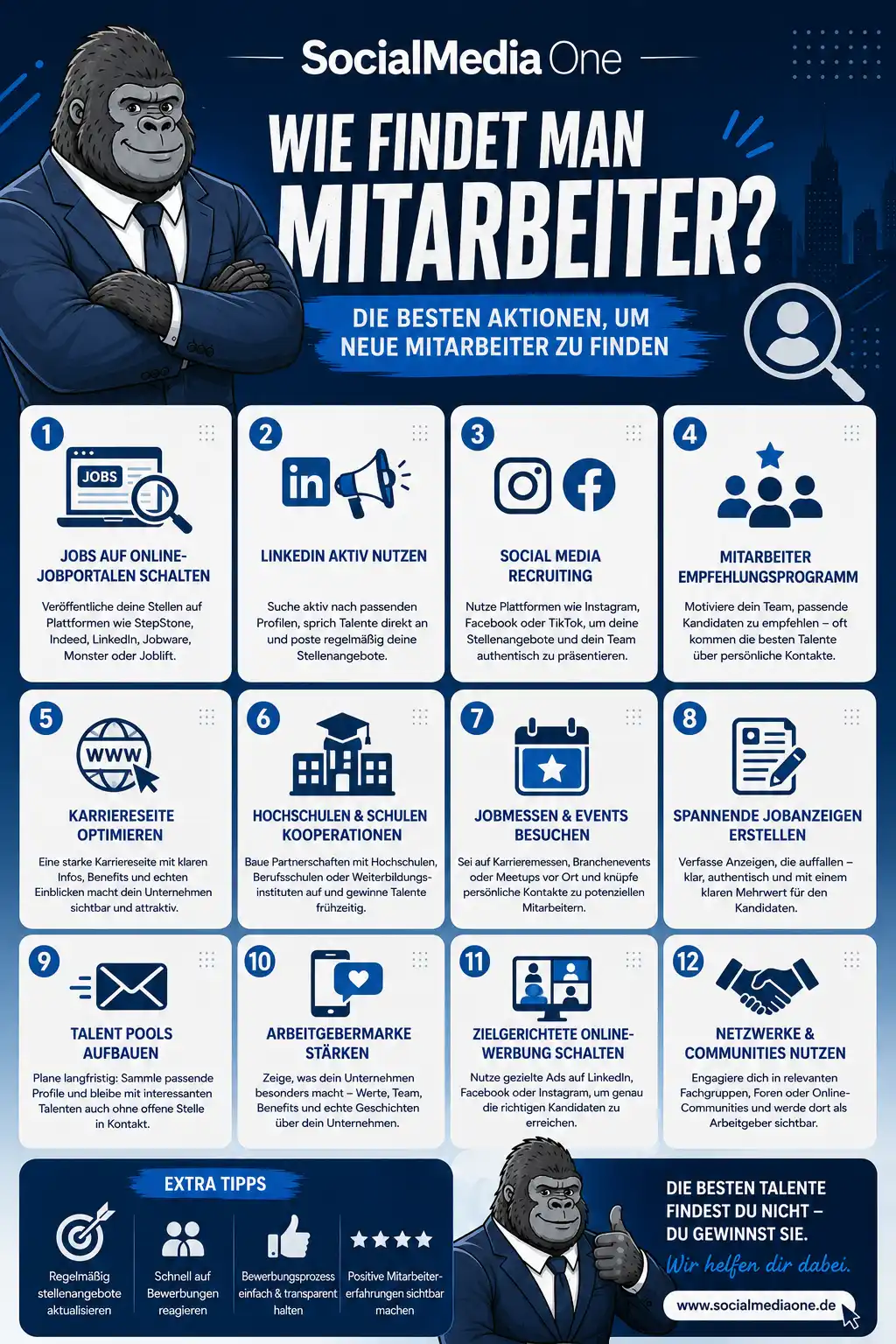
Job postings on LinkedIn receive, on average, up to three times as many qualified applications as traditional job boards when combined with organic content
According to HubSpot , B2B companies that post regularly on LinkedIn generate277% more leads than those that are active exclusively on other channelshttps://www.instagram.com/p/CZyaRSFtas7/zu
The average cost per hire via LinkedIn Ads in the DACH region ranges from 800 to 2,500 euros—significantly lower than the total cost of traditional headhunting methods
According to a LinkedIn study, companies with an active employer branding presence on LinkedIn receive up to 50% more applications for job postings
That sums up the main point:
For B2B service providers, LinkedIn is no longer just an optional marketing channel—it’s the most direct link to the professionals and decision-makers who determine whether a company grows or stagnates.
How Mid-Sized Companies Strategically Use LinkedIn for Recruiting
The most common mistake HR managers at SMEs make on LinkedIn is posting a job ad and then waiting. However, professional LinkedIn recruiting works as an ongoing process that combines visibility, trust, and targeted outreach. The combination of organic content, a well-maintained company profile, and paid reach through LinkedIn Ads creates the sustainable talent pool that growth-oriented companies need.
Practical Steps for Effective LinkedIn Recruiting
Position the company website as a recruitment channel
Regular insights into company culture, employee stories, and employer benefits increase organic reach and build trust among passive candidates
Active Sourcing via LinkedIn Recruiter or Sales Navigator
Target specific professionals based on industry, position, region, and qualifications—without having to wait for detailed applications
LinkedIn Job Ads with Targeting
Job postings are displayed specifically to users whose profiles match the candidate profile being sought—based on professional field, experience level, company size, and location
Empower Employees as Brand Ambassadors
When current employees share company content or write their own posts, organic reach increases significantly without requiring an additional advertising budget
Combining Content Formats
Short-form videos, carousel posts, and text posts with a personal tone generate significantly higher engagement rates on LinkedIn than job postings alone
| Action | Target Audience | Average range | Suitability for SMEs |
|---|---|---|---|
| Organic Business Posts | Passive Candidates, Followers | 500–5,000 impressions per post | Very high – cost-effective |
| LinkedIn Job Ads | Active Searchers, Matched Profiles | Scalable depending on your budget | High – measurable and precise |
| Active Sourcing (Sales Navigator) | Passive, Willing to Switch | Direct 1:1 communication | Moderate – requires a time commitment |
| Employee Advocacy Programs | Employee Network | 3–10x organic reach | Very high – multiplier effect |
| LinkedIn Employer Brand Content | Broad Target Audience, Talent Pool | Long-Term Development | High – strategically crucial |
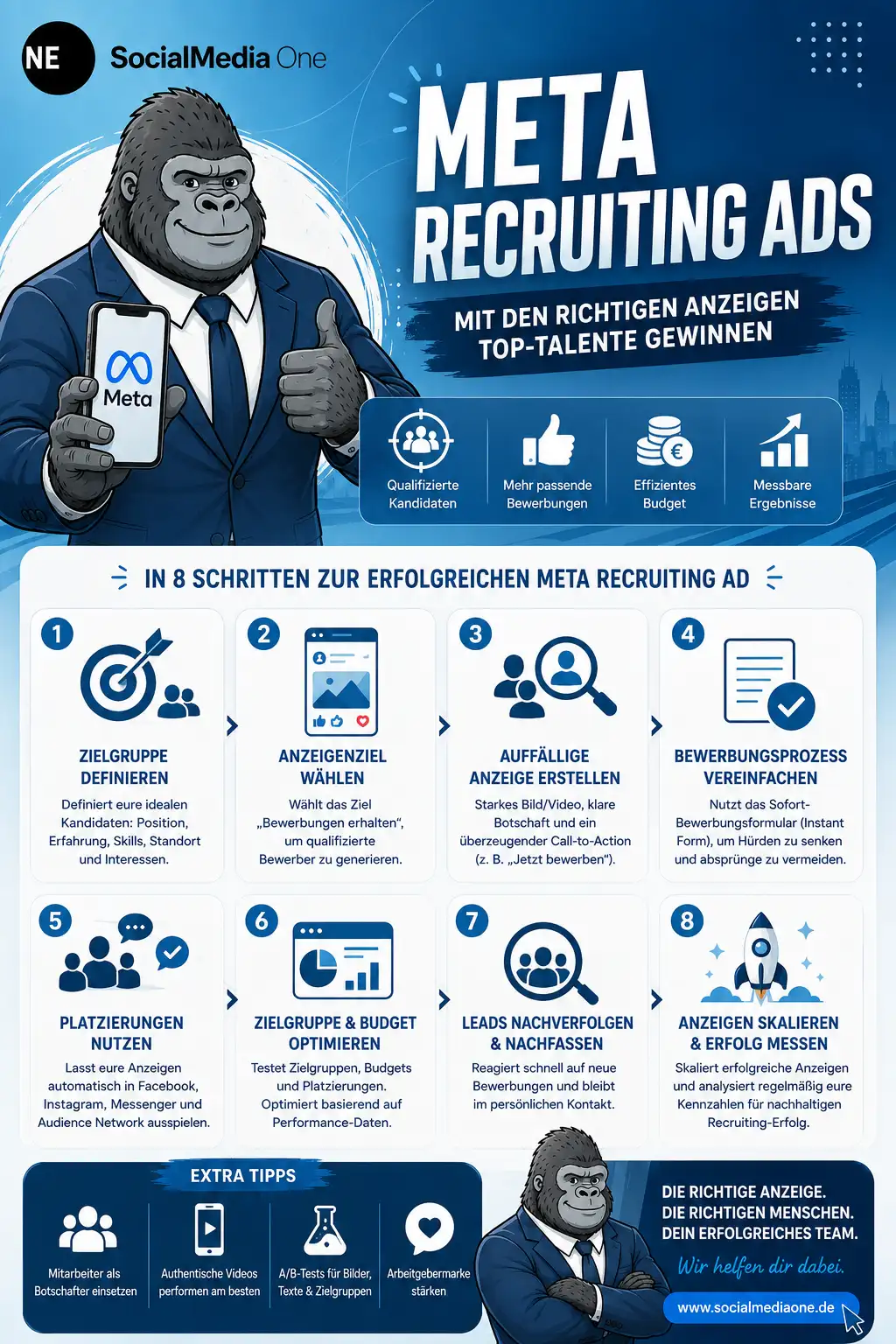
The SME Strategy: Attracting Contracts and Skilled Workers at the Same Time
What sets B2B service providers apart: The target audience for new customer acquisition and the target audience for recruiting overlap significantly on LinkedIn. Decision-makers from industry, skilled trades, or the service sector are the very same people who are relevant as customers—and who are also connected to potential candidates within the network. An integrated social media strategy that uses LinkedIn marketing simultaneously for brand building, customer communication, and talent acquisition thus achieves a significantly higher return on investment than isolated, individual measures. For small and medium-sized businesses that need to conserve resources, this synergy effect is crucial. Companies that establish their employer branding professionally automatically appear more credible to potential customers as well—because a company perceived as an attractive employer conveys stability and quality.
Complemented by paid campaigns via Meta Ads on Facebook and Instagram, as well as parallel social media recruiting efforts, this creates a cross-channel ecosystem that appeals to both job seekers and customers alike. Many SMEs and HR managers underestimate just how much professional talent marketing enhances a company’s overall public image—and how quickly measurable results can be achieved when an experienced recruiting agency handles the implementation.
- LinkedIn combines customer acquisition and recruiting.
- Decision-makers are both customers and recruiters.
- An integrated strategy significantly maximizes ROI.
- Employer branding strengthens credibility with customers.
- A multi-channel approach appeals to both target groups.
- Professional HR marketing enhances the company’s public image.
Conclusion
For B2B service providers and small and medium-sized enterprises, LinkedIn has long since ceased to be just a nice-to-have tool and has become a strategic infrastructure for sustainable growth—both in recruiting and in acquiring new customers. HR managers at SMEs who continue to rely exclusively on traditional job boards are missing out on significant potential in a candidate market that rewards visibility, authenticity, and speed. The key question isn’t whether LinkedIn works, but how consistently and professionally it is used. Those who invest now in a structured LinkedIn strategy—ideally with the support of a specialized agency like Social Media One—position themselves as the employer of choice while securing a growth advantage over the competition.
- LinkedIn Is Strategic Infrastructure for SME Growth
- Traditional job boards alone are not enough
- Visibility, authenticity, and speed are crucial
- A professional LinkedIn strategy creates a competitive advantage
- Specialized agencies support successful implementation
- This investment positions companies as top employers

Increasing Reach: The Most Important Leverage Points for Each Channel

Influencers in Marketing: How Brands Use Influencers to Expand Their Reach

More Likes on Social Media: What Really Leads to More Engagement
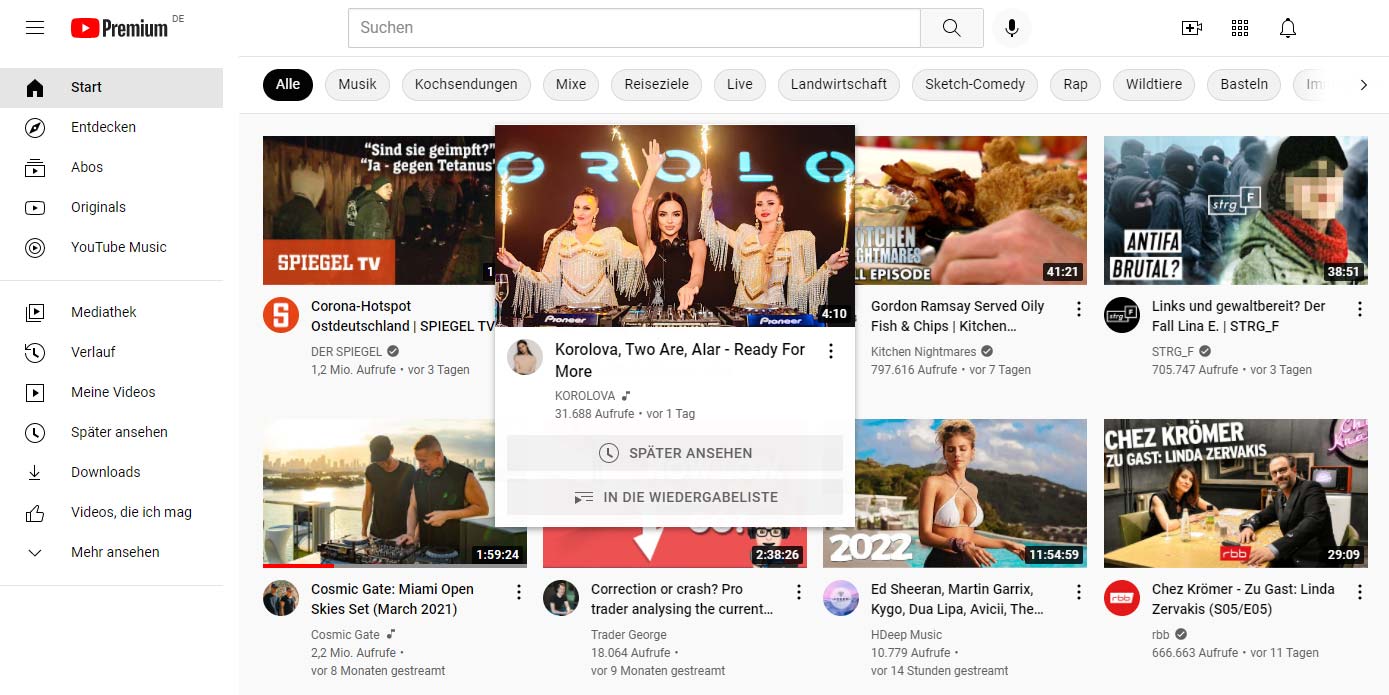
YouTube Streaming in Marketing: Live Events, Product Launches, and Community Building
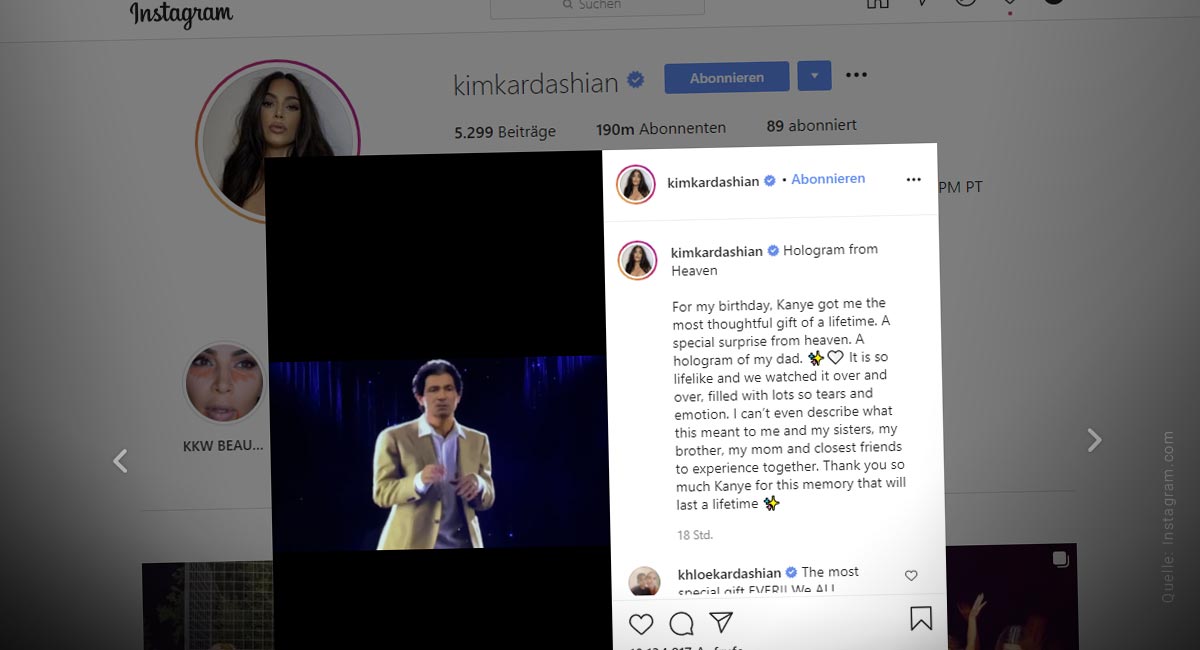
Live Commentary in Marketing: Real-Time Community Engagement

Developing a Social Media Strategy: Case Study on Product Reviews and ABC Analysis














 4.9 / 5.0