E-Commerce
E-commerce agency: marketing, strategy, ads for brands.
E-Commerce
E-commerce agency: marketing, strategy, ads for brands.
How does e-commerce work? Today we take a closer look at the benefits and risks of e-commerce. How do current marketing strategies work in e-commerce? From the basic structure to marketing through search engine optimization (SEO) to advertising on Google (AdWords), social media marketing and social ads. What are the trends in online marketing and performance marketing? We show you the latest e-commerce marketing strategies and measures for scalable success.
Questions? Talk to us or write to our store experts: Contact
Your agency for e-commerce management and performance marketing 2026:

Stephan M. Czaja, owner
CXMXO Group
Digital commerce in online stores, with its extremely diverse and modern possibilities, from content management systems and search engine marketing to payment providers that enable real-time transfers. The work of an e-commerce manager in active marketing begins with the choice of content management system.
The more flexible the platform, the more possibilities there are. Let’s take a brief look at the world of content management systems in e-commerce! What are the biggest advantages but also the biggest risks when using certain systems and extensions in online retail? How do e-commerce marketing strategies work and what recommendations do we have as an e-commerce agency? Here are our tips! First, the risk assessment:
Advantages of e-commerce – There are of course many advantages to online trading, but we would like to take a brief look at the most important advantages of e-commerce. First of all, decentralized trade should be mentioned.
Primarily, no expensive store space in a frequently frequented location is needed to attract customers. Social marketing allows you to reach customers in Berlin, Cologne, Düsseldorf, Munich, Hamburg and throughout Germany 24 hours a day, 7 days a week with your own product range. E-commerce also offers an excellent opportunity for scaling.
Simply put, you can quickly jump from a city like Düsseldorf to Hamburg or Berlin through search engine optimization. As soon as you have your first inquiries and customers, you can start your business. Again, no additional retail space or employees are required at a new location. You can fall back on existing resources, e.g. storage space and employees. At the same time, this has the further advantage that you have your own direct advertising space available quickly and effectively for product launches.
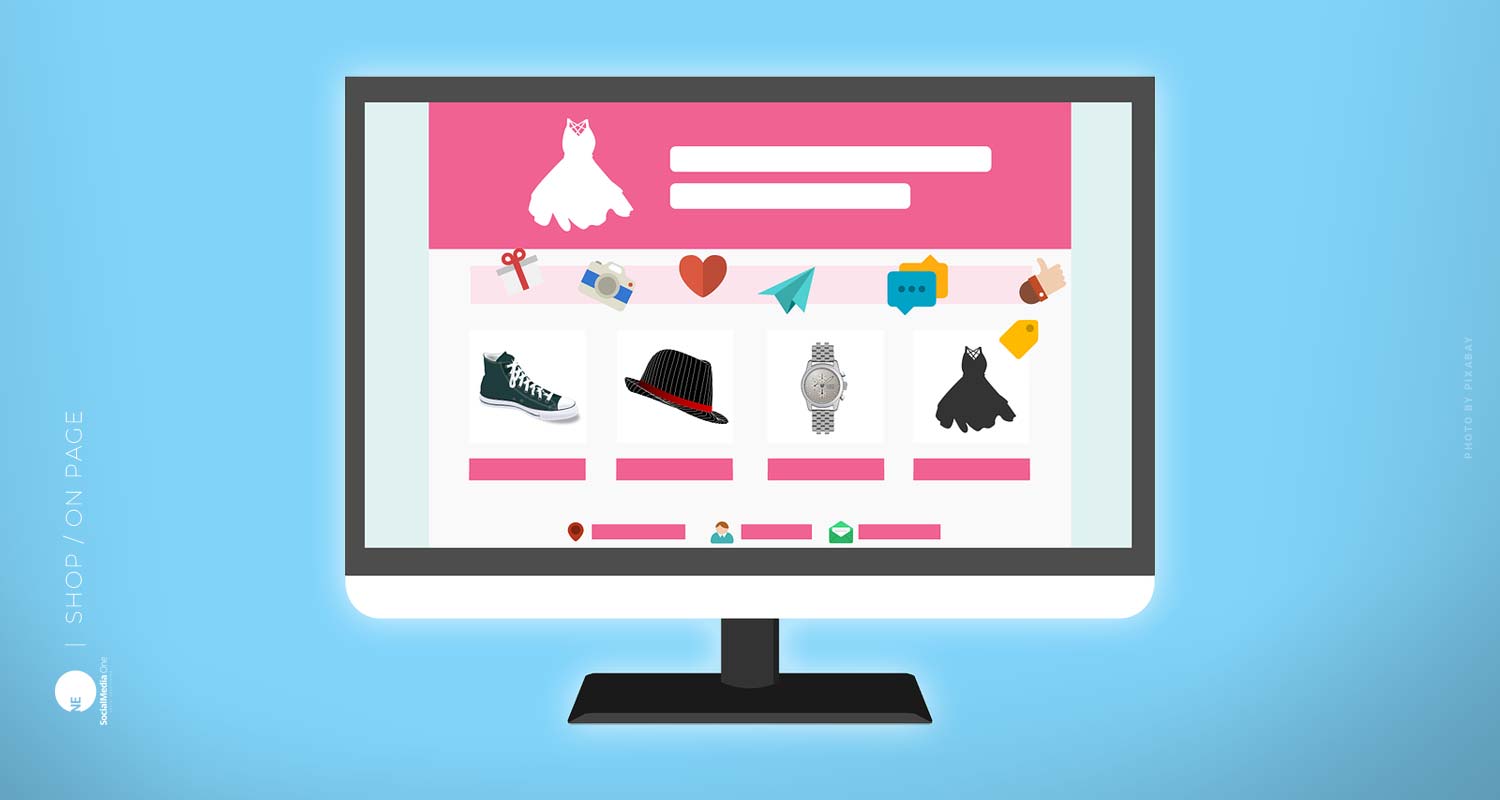
Risks in e-commerce – From our experience as an e-commerce agency, the biggest risk is that you become tied to a less flexible software for your own merchandise management.
There are many providers on the Internet who charge a monthly fee for their own software, for example, which can quickly add up to €500, €1,000 or even €2,000 a month; a year is already €12,000 to €24,000 for an inflexible solution.
Of course, the amount is feasible for large companies, but there are many other disadvantages. Above all, the lack of flexibility for extensions. Possible system expansions have to be paid for and purchased at great expense.
One of the largest and most popular providers is WordPress in combination with WooCommerce, for example.
However, if you want to start with e-commerce, you also need the right know-how in the company, i.e. an e-commerce manager who is responsible for managing the system. This is very specialized know-how, because e-commerce has only been really big for 10 or 12 years. This is why methods are constantly evolving, strategies are expanding and concepts are becoming more comprehensive, as are systems.
Just think of the diverse online marketing mix for search engine optimization, marketing in display advertising, e-mail funnels and much more. The larger your company is, the more interesting it becomes as a target for hackers. Accordingly, the system must be well protected, not only because of your own product data, but of course also because of sensitive and personal information of your buyers, such as credit card data.
The possibilities and enhancements are increasing day by day. From real-time payment to automatic stock reconciliation, product variations and multi-level domains for online stores that operate internationally, in several countries and languages.
Do you want to place Google Ads? How does advertising on Google actually work? It is particularly important to have a very well-structured and clean system for the subsequent work with Google Ads. If hundreds or thousands of individual, small campaigns are later run against each other in the test, the data must be quickly available, properly stored and of course also maintained; keyword pagespeed for good rankings.
As this topic is very detailed, we have written an extra article for you here on the subject of advertising on Google with Google Ads, remarketing and much more!
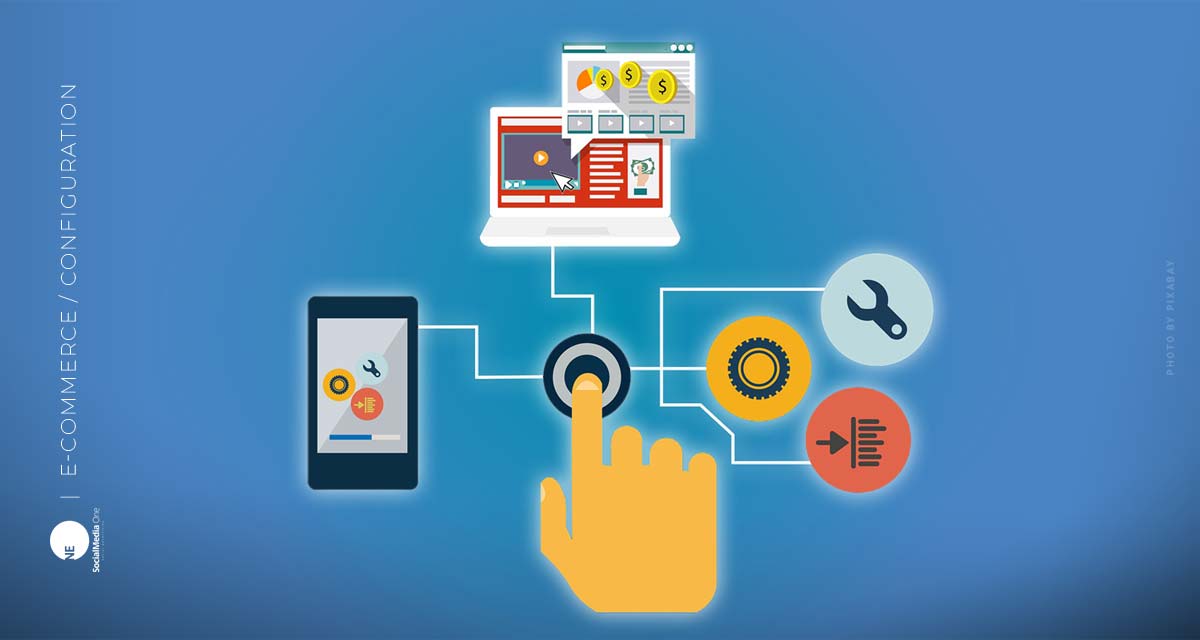
Do you want to have a new online store created or completely redesign your existing store? E-commerce agencies can do this for you. From solutions such as WordPress in combination with Woocommerce, Shopware and other online store providers, each of which offer special functions and modifications.
Choosing the right e-commerce agency depends on many factors. Most important, however, is experience and best practice projects, so that you can be sure that the agency has sufficient expertise in terms of collaboration, software, administration, analysis, optimization and reporting.
In addition to the best practice projects, it is also about the size of the existing online stores. Depending on the system and server, online stores with over 1,000, 10,000 or even hundreds of thousands of products require different, individual, customized solutions.
In addition to the number of products, it is also about the number of visitors. Each new visitor requires server capacity, which must be provided. The more queries take place simultaneously and in parallel, the faster the system is utilized. The worst case! The crash of your own e-commerce system is the greatest possible risk. After all, you lose money every minute. If such a server goes down at 2 a.m. on a Saturday morning, for example, it can take time for a technician to repair everything. Accordingly, it is also important to check the capacities of the e-commerce agency. Does the agency have sufficient staff and capacity? Not only for the creation, but also for such emergency situations.
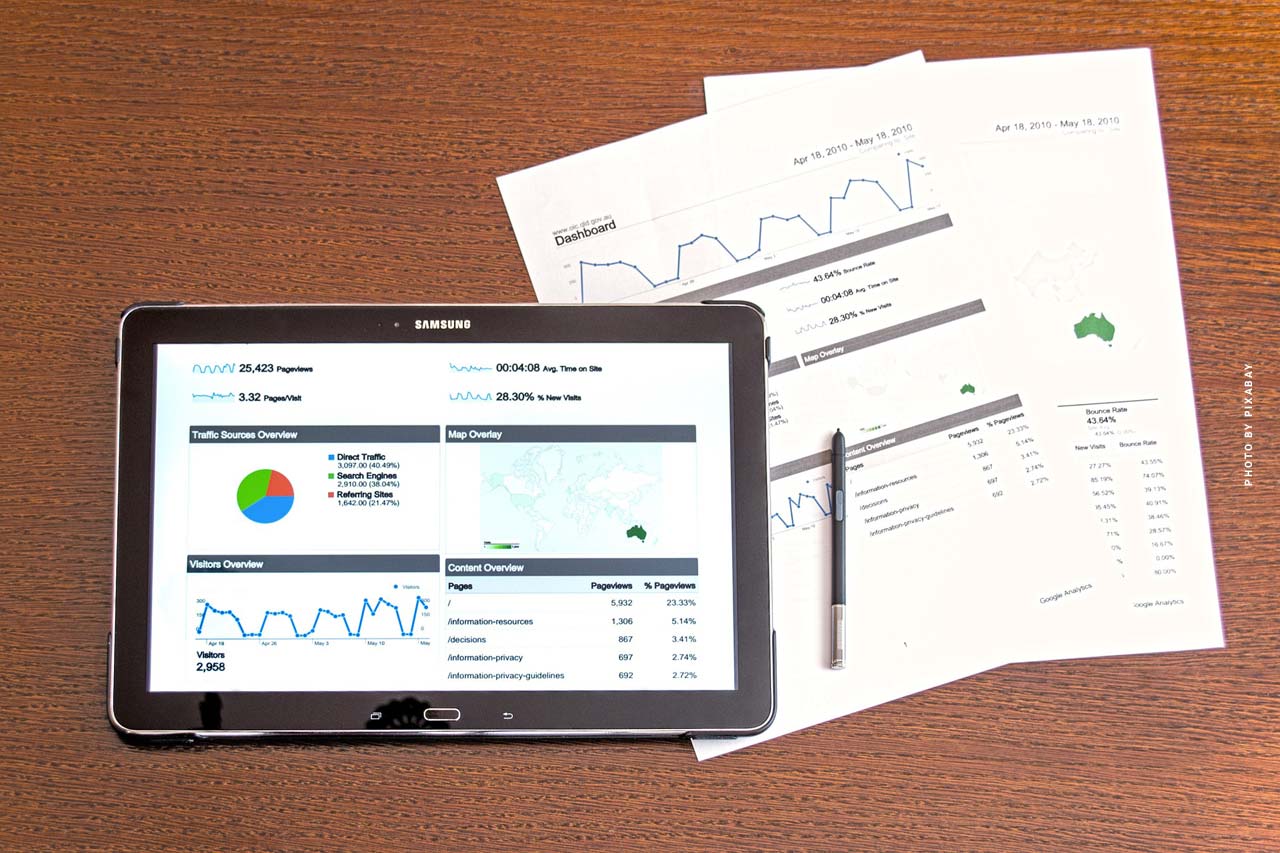
Search engine marketing includes not only Google Ads, but of course also search engine optimization (SEO). But what is SEO?
SEO companies specialize in creating unique content through content marketing. This content is so informative that it is ranked higher by the search engine algorithm. The more individual and better such content is designed, the higher it rises. The big goal in search engine optimization is to reach the top spot on Google and other search engines such as Bing, Yahoo, Duck Duck Gogo or Startpage.
Are you looking for a good company for your e-commerce search engine optimization? We have many recommendations for you, read more here in our top recommended search engine agencies in Germany.
Once the store setup has been set up, suitable software has been found and the search engine structure has been optimized, it’s time for active marketing!
E-commerce strategy – Marketing products is the core objective of any e-commerce marketing strategy.
In order to sell products online, targeted reach must be built up through means such as organic reach, e.g. search engine optimization, or paid reach, e.g. through Google Ads. Of course, there are many more online marketing strategies, e.g. social media marketing, but also brand new influencer marketing. Which method is really effective and which concept is worthwhile for your company?
Let’s take a look at the various strategies in detail.
The marketing mix used to be relatively straightforward, but digital possibilities mean that the marketing mix is constantly expanding. New trends are constantly emerging, particularly in online marketing, which sooner or later develop into typical tools.
Strategies differ depending on whether a goal is to be achieved in the long or short term. In the long-term objective, search engine optimization plays a particularly important role in e-commerce. Short-term performance and sales are achieved through paid reach, e.g. through Google Ads or social ads.
But what is the difference between organic and paid reach? In order to expand organic reach through search engine optimization, you need content marketing and, accordingly, new, informative and well-structured articles on a regular basis. They are submitted to the search engines via the so-called sitemap. Search engines then evaluate the individual pages on the basis of the algorithm and compare them with the previous offerings of your competitors.
The better your content marketing is set up and structured, the faster you can become a competitor in online retail.
To beat existing competitors, however, you need a certain number of pages. Depending on the industry, this varies from 500 to 10,000 individual pages and articles – a lot of work! Preparation takes a correspondingly long time. After all, you not only have to create as many pages as your competitor, but also deliver more in order to be ranked higher.
Competition + x
Accordingly, methods are needed that build up reach in the short term. The most effective way is through advertisements. These are displayed extremely precisely using various methods, e.g. to a specific target group if certain interests and characteristics apply.
However, the ads can also be sent to visitors who have already interacted with your brand or product through remarketing. For example, when visiting your online store. A user looks at a certain product, places it in the shopping cart, but does not complete the sales process. These users can be precisely segmented and targeted with the product in the subsequent remarketing campaign. As a result, the willingness to buy is significantly higher.
In short, these are the central e-commerce marketing strategies:
Let’s take a closer look at commerce marketing strategies for paid reach. Reach at the touch of a button! This is the secret of paid reach through Google Ads or social ads on Facebook, Instagram or YouTube.
Google Ads advantages – The biggest advantage of Google Ads is the moment of the ad; immediately when users have a concrete need or desire.
While all other marketing strategies aim to draw the user’s attention to a product first, a Google ad plays itself at the moment when a user is actively searching for information or a product. Accordingly, no new interest needs to be generated in the user! He or she is already interested in the information or product. The big question is which online store will he or she click on?
This is exactly where Google Ads come into play, as they allow you to get to the top of the search engine directly and immediately! As you have already read in our article about Google Ads, the most important thing is to be ranked number 1 in the search engine.
The majority of users, over 90%, click on the first offer
Individual advertisements are referred to as campaigns.
If you want to advertise on Google, you need excellent campaign management. This is because every single campaign is tested so that the ads become more and more effective. Keyword campaign optimization. Social ads on Facebook, Instagram and YouTube work in the same way as Google Ads.
Are you interested in Google Ads? Read more about our Google Ads agency here.
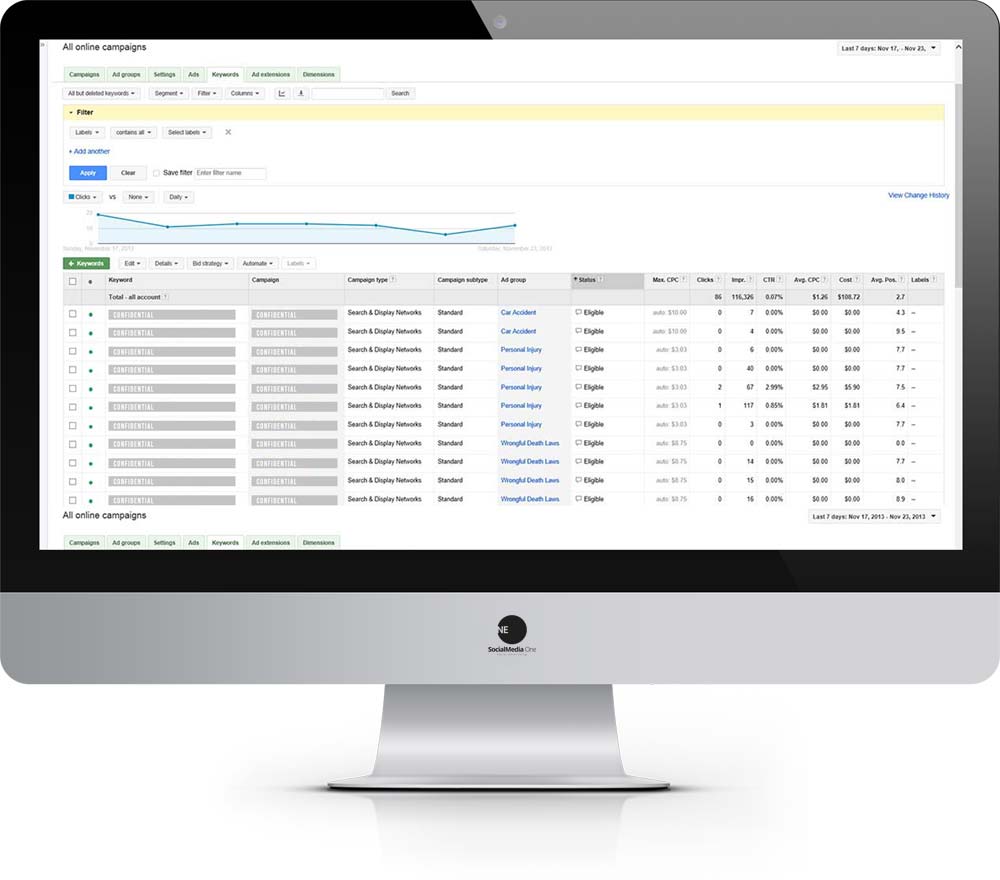
Social media ads work in the same way as advertising on Google in terms of structure and principle. The most important thing is target groups and knowledge about their interests, demographic characteristics, but also connections, e.g. to brands. The more information available about the individual user, the better user groups can be formed from it, the so-called target groups in online marketing.
We have described in detail how such advertisements work in social networks in our article Facebook Ads. Due to the strong American influence, there are many technical terms and abbreviations in the field of social that you need to get to know. CPC, CPM, retargeting, remarketing, pixel, lookalike audience, customer audience and many more.
The most important thing, however, is the target groups, which form the basis for the advertising to be displayed. Depending on the demographic characteristics of a particular user, they will be shown an advertisement.
For example, interests can be used to determine whether a person has a close connection to a certain sports brand, type of sport or something similar. Sports fashion retailers can then target these people specifically, e.g. with products for the new season. The winter campaign, for example, is even more precise. Here, people and target groups with an interest in skiing are specifically filtered out, for example through certain athletes, brands or events, or by following their fan pages or accounts. So we know that person XY has a strong connection to winter sports and is therefore an excellent target group for the new winter fashion in sports retail.
Regional and seasonal marketing is interesting for many sectors, not just sports brands.
This extremely precise approach to people and target groups is what makes social ads so special for companies in e-commerce and naturally also makes them indispensable as a strategy in online marketing.
Remarketing campaigns are even more interesting. These no longer target new users, but users who have already engaged with your brand, products or services.
Remarketing campaigns – The absolute highlight of a remarketing campaign is that it no longer targets new people, but people who have already interacted with your brand, product or service.
Briefly explained, this could be, for example, a user who was interested in a particular property. Although this person did not click on the contact page and therefore did not make contact, they were interested in the property. Several of these people can now be analyzed in more detail. People who have spent an average of more than 60 seconds on the page and have spent more time looking at the property could therefore also be potential buyers. Through remarketing, these people are now targeted again, e.g. through an advertisement within their own social media world on Facebook, Instagram, YouTube or platforms such as LinkedIn.
The possibilities from Google Ads to social media ads are so extremely diverse and of course also multifaceted in the various methods and strategies that it is definitely recommended to hire an experienced and renowned agency.
We will advise you and show you how best to market your e-commerce in digital media. Get in touch with us now, we look forward to your call or e-mail.
The tasks and services of an e-commerce agency are broadly based, but basically always form one big, central goal: building organic and paid reach through systematic action for more profit. With the right methods in the current online marketing mix, great success can be achieved and, above all, scalability can be driven forward. The more visibility, the more reach, the more attention for your brand, but also for your products and, of course, new product launches.
Strategic consulting, conceptual support, graphic design as well as workshops for employees, teams and operational management of marketing & communities are all part of our tasks in e-commerce marketing. Thanks to our experience and expertise as an e-commerce agency, we offer you first-class advice and modern strategies for the expansion of your e-commerce structures.
Questions about consulting, workshops, strategy development? And get in touch with our contacts now!
Native ads (native advertising or native display ads) refer to all paid advertising formats that are discreetly labeled as ads. Simply put, native advertising is advertising that does not look like advertising. Native ads offer minor disadvantages, but above all advantages. Did you know? According to a white paper by AppNexus, the CTR of native display advertising is on average 8.8 times higher. According to Forbes, purchase intent increases by 18% with native ads. We also always measure a higher CTR in our customer projects. What does this have to do with? Personalization of content, storytelling and more discreet communication channels: referral marketing. Why native advertising? What is native advertising? What is native advertising?

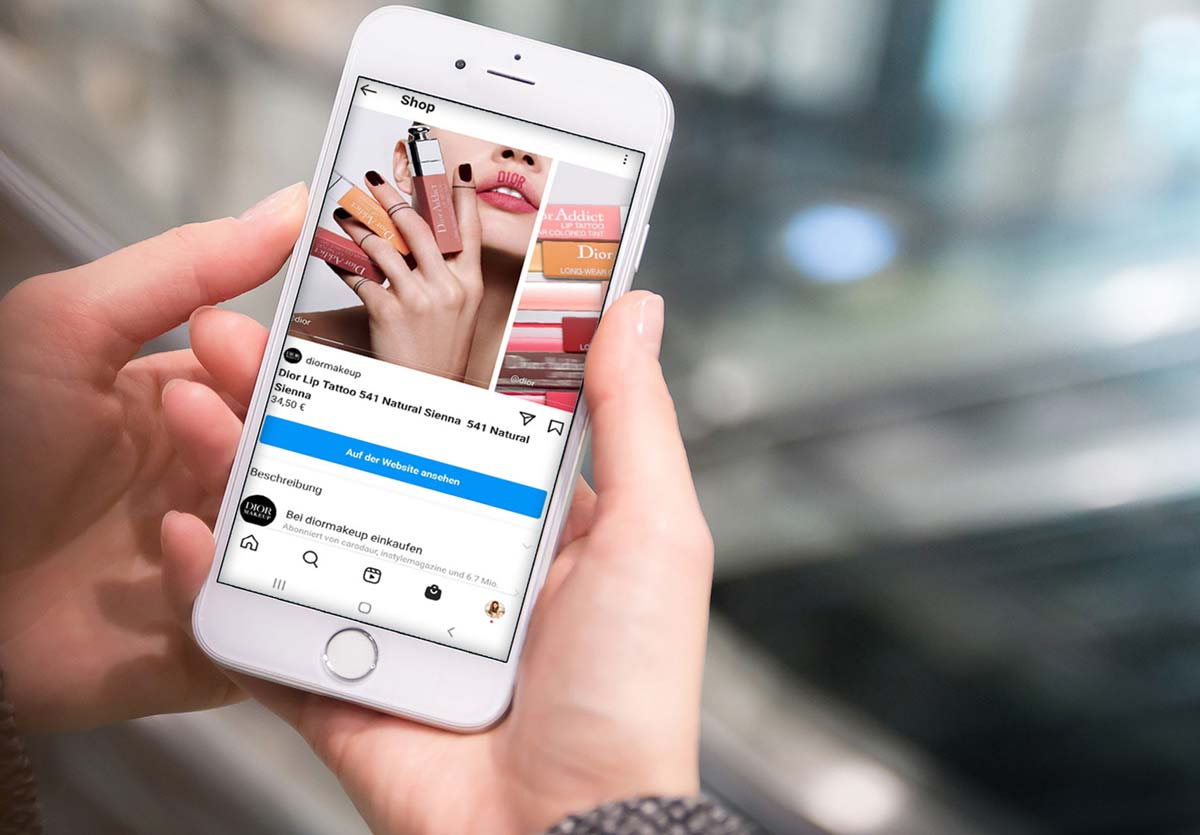
As a social network, Instagram has over 1 billion active users every month. This makes Instagram the network with the highest engagement, even ahead of Facebook itself. Around 70% of Instagram users are under 35 years old. An extremely strong target group, also with a view to the future and the strategic development of your own brand. It has been possible to link products on Instagram for around two years. This is why the function has been an insider tip from our e-commerce agency for some time.
Previously, you had to create a Facebook store for this. Accordingly, the effort was too high for many, as you had to connect your own store to Facebook in order to tag products on Instagram. Now everything is much simpler, much more present.
Do you already have experience with e-commerce / performance marketing? And are you looking for new challenges? Perfect! Then support us and our clients in performance marketing. You can find out more about us, vacancies and contact details for your application here:
Email marketing is part of the overall performance marketing strategy.
Performance marketing agency – Performance marketing includes a mix of online marketing tools. We will introduce you to all areas and advantages step by step. You will get to know: Social media, email marketing, affiliates, display and native advertising, but also content marketing, search engine ads and, last but not least, search engine optimization. It all starts with the right strategy and a good performance marketing agency that knows its trade.

Case studies say more than 1,000 words! Here you will find a few selected customer projects:
Do you have any questions? We will be happy to help you in a friendly and direct manner!
Your agency for e-commerce management and performance marketing 2026:
If you have any questions, please give us a call!

Have a project? Tell us about it in a few words.


Services
Integrated campaigns for strong brands.
From strategy and creation to performance – everything from one source.
All services