Skilled Labor Shortage in SMEs: Finding, Retaining, and Attracting Employees
The shortage of skilled workers is hitting small and medium-sized enterprises hard—and while large corporations operate with recruiting budgets in the millions, SMEs often struggle with overburdened HR teams, a lack of structure, and the feeling that they simply can’t keep up in the competition for talent. But it doesn’t have to stay that way: Companies that know the right levers to pull and consistently work on improving their employer brand can achieve real results even with limited resources. Learn here why the root causes run deeper than is often assumed—and which solutions actually work for medium-sized companies.
Skilled Labor Shortages in SMEs: The True Extent of the Problem
Many HR managers at small and medium-sized enterprises (SMEs) experience on a daily basis what studies have been showing for years: Open positions remain unfilled for months, internal teams are taking on more and more tasks, and employee satisfaction is declining as workloads increase. The problem is rarely a random bottleneck—it is structural in nature and affects nearly all industries equally.
Facts and Figures on the Skilled Labor Shortage in Small and Medium-Sized Businesses
According to the Institute for Employment Research (IAB), more than 700,000 jobs in Germany have recently been vacant for an extended period—with the skilled trades, the healthcare sector, IT, and engineering being particularly hard hit.
The German Chamber of Industry and Commerce (DIHK) reports that about 55 percent of all companies consider the shortage of skilled workers to be their greatest business risk—and among SMEs, this figure is even higher.
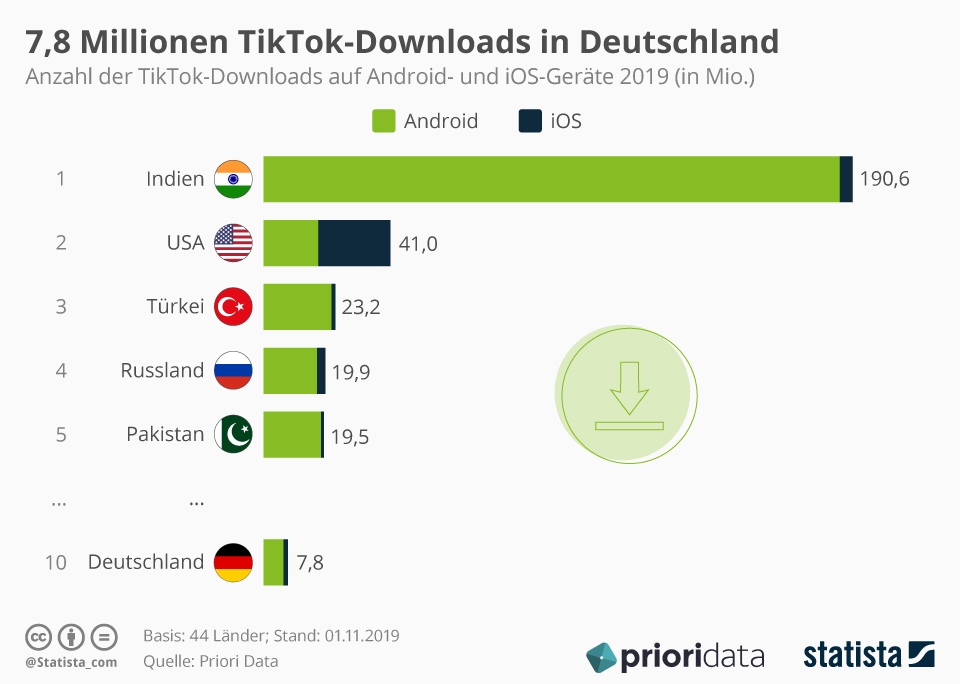
A strong employer brand attracts the best talent—this infographic shows, step by step, how to build an employer brand on social media.
According to the Federal Employment Agency, it takes an average of more than 130 days to fill a skilled-worker position in Germany—and significantly longer in occupations facing labor shortages.
Overworked employees cost
According to estimates, an unfilled position results in productivity losses of 30,000 to 50,000 euros per year—including both direct and indirect costs.
According to a study by Stepstone, 72 percent of candidates say they did not apply to a company because its employer brand was not compelling.
Small companies with fewer than 50 employees receive, on average, 40 percent fewer applications per job posting than large companies—despite often offering better working conditions.
That sums up the main point:
Anyone who remains invisible amid the skills shortage will lose the battle for talent—before it has even begun.
Solutions: How SMEs Can Actively Address the Skilled Labor Shortage
The good news is: There are effective strategies that small and medium-sized businesses can use today—without a six-figure recruiting budget. The key lies in a combination of a modern public image, smart channel selection, and structured processes that guide applicants through the selection process quickly and respectfully. HR managers don’t have to tackle everything at once—but they do need to get started.
Specific Measures for Small and Medium-Sized Enterprises
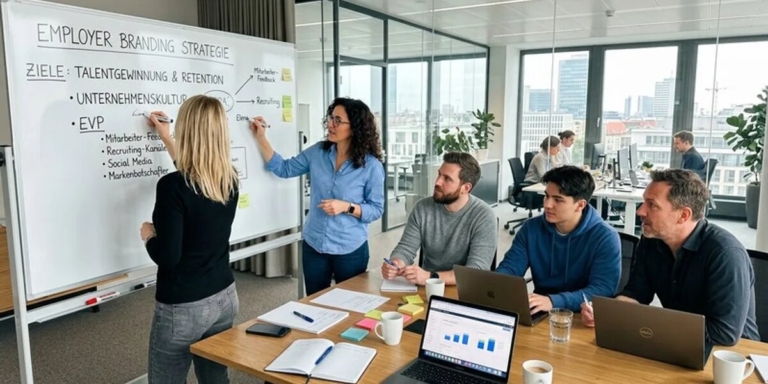
Building Employer Branding
Authentic insights into day-to-day work, genuine employee testimonials, and clear values are what make the difference between a job application and just scrolling past.
Using Social Media as a Recruitment Channel
Platforms such as Instagram, TikTok, and LinkedIn reach both active and passive candidates—especially younger target groups who rarely use traditional job portals anymore.
Radically Simplify Hiring Processes
Studies show that 60 percent of candidates abandon an application if it takes longer than 10 minutes—one-click applications and initial contact via WhatsApp are not a luxury, but a necessity.
Enable Employee Referral Programs
Your own employees are your most credible brand ambassadors —structured referral bonuses have been proven to improve the quality of job applications.
Develop a Message Tailored to the Target Audience
Instead of a generic job posting, small and medium-sized businesses need targeted messages tailored to specific job profiles, life stages, and levels of motivation.
| Action | Effort | Effect | Recommendation for SMEs |
|---|---|---|---|
| Employer Branding Campaign | Moderate to high | Very high in the long term | Be sure to prioritize this |
| Social Media Recruiting | Medium | Quickly scalable | Get Started Now |
| Streamlined Application Process | Low | High (conversion rate) | Implement this first |
| Employee Referral Program | Low | Moderate to high | Build in parallel |
| Paid Social Ads (Meta/LinkedIn) | Medium | Very fast range | Use Strategically |
SME Strategy: Why a Specialized Agency Makes All the Difference
For medium-sized companies, time is the scarcest resource—and this is precisely why many internal recruiting efforts fail. HR teams are stretched thin by day-to-day operations, executives lack marketing expertise, and the necessary know-how for data-driven campaigns is rarely available in-house. This is where a specialized recruiting agency comes in: It brings not only capacity but also proven methods, target-audience-specific creativity, and measurable results.
Those who rely on social media recruiting tap into candidate pools that simply cannot be reached through traditional job portals—especially on platforms like TikTok and Instagram, where skilled workers in trades, healthcare, and technology are active every day. At the same time, professional employer branding forms the foundation of every successful recruiting strategy: Without a clear, attractive employer profile, even the best job ads will fall flat. In addition, targeted Meta Ads allow you to precisely reach candidates based on their professional field, region, and life situation—with a controllable budget that’s realistic even for SMEs.
For those looking to fill positions for academic professionals or leadership roles, LinkedIn Marketing provides a direct line to the relevant networks. The key advantage of a specialized agency lies not only in execution but also in strategic guidance: from the initial briefing through the creative process to the continuous optimization of campaigns based on real application data.
- Mid-sized companies lack the time for in-house recruiting
- Specialized agencies provide capacity and methods
- Social media reaches skilled professionals through job portals
- Employer branding is the foundation of successful strategies
- Meta Ads enable precise, budget-friendly candidate targeting
- LinkedIn marketing is ideal for academic and leadership positions
- Agencies continuously optimize campaigns using application data
- Important: A specialized agency provides capacity, target-audience-specific creativity, and measurable results—resources that are almost always lacking in-house.
- Social media recruiting taps into candidate pools beyond traditional job portals—especially on TikTok and Instagram.
- Employer branding is the foundation: Without an attractive employer profile, even the best job ads will fall flat.
- Meta Ads and LinkedIn Marketing enable precise targeting by profession, region, and life stage—even on an SME budget.
Conclusion: Skills Shortage in SMEs—Act Now
For SMEs, the skills shortage is not a temporary phenomenon—it is a structural challenge that requires strategic action and cannot be solved simply by posting another job ad. HR managers and business owners at SMEs should invest now in visible employer brands, modern recruiting channels, and efficient application processes before the overload on existing teams leads to the next wave of resignations. Those who partner with experienced providers who take a holistic approach to recruitment marketing and employer branding will save time, money, and—above all—stress. The first step is the most important one: Get started—today.

AI Sales Software: Comparison of Features, Providers, and ROI

Retail in Marketing: Brick-and-Mortar Retail, Customer Experience, and Local Engagement
Franchise Marketing: Brand Management, Consistency, and Local Engagement

Optimize Your Job Posting: Attract More Applicants and Better Candidates
Meta Ads Recruiting: Job Postings, Targeting, and Social Recruiting
Job Portal Comparison: Indeed, StepStone, and LinkedIn for SMEs









 4.9 / 5.0