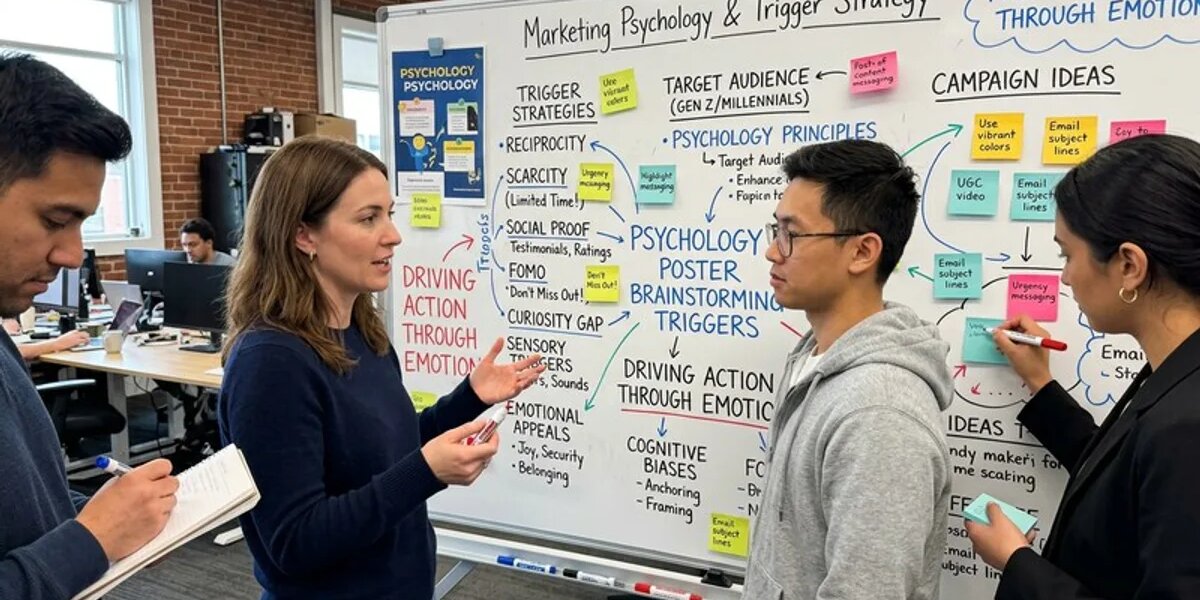
Behavioral Psychology in Marketing: Triggers, Biases, and Practical Tips
Behavioral psychology explains how people really make decisions—not rationally, but through emotions, heuristics, and social cues. For marketers, this knowledge is worth its weight in gold: Those who understand the psychological mechanisms behind purchasing decisions can design campaigns that are not only visible but also effective.
Behavioral Psychology in Marketing — Why Rational Arguments Alone Are Not Enough
The classic Homo economicus—the rational, utility-maximizing consumer—is a myth. Behavioral economists such as Daniel Kahneman have shown that people think in two modes. System 1 is fast, intuitive, and emotional. System 2 is slow, analytical, and taxing. Most purchasing decisions take place in System 1—impulsively, heuristically, and heavily influenced by context.
For marketing, this means that if you rely solely on prices, features, and rational arguments, you’re appealing to System 2—and losing out on the majority of decisions. Content marketing, brand awareness, and emotional imagery appeal to System 1—and therefore often have a greater impact.
People don’t buy products. They buy feelings, identities, and solutions to problems that they sometimes can’t even name yet.
Cognitive Biases in Marketing
Cognitive biases are systematic errors in thinking that influence our judgment. For marketers, they aren’t a form of manipulation—but rather an understanding of how decision-making really works. The question is whether you understand these mechanisms and use them ethically.
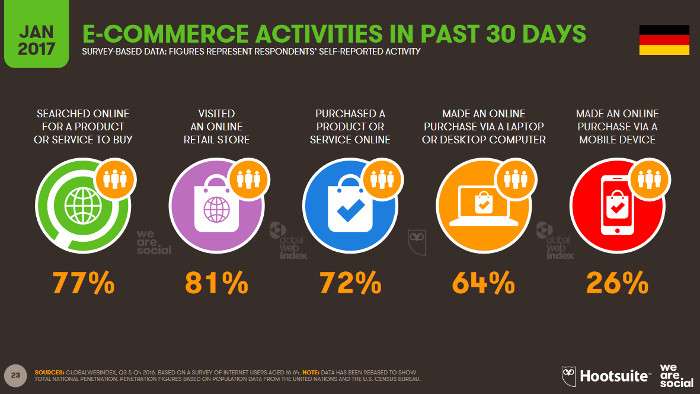
Businesses that truly understand their customers grow faster—this infographic shows how data analysis and customer segmentation lead to higher revenue.
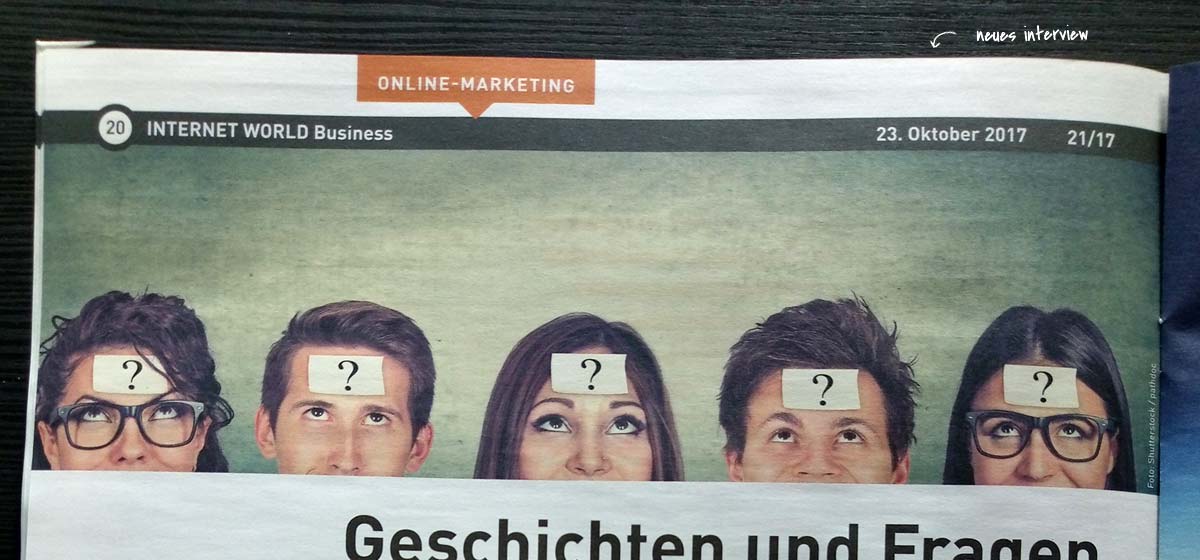
Context plays a role
Behavioral psychology shows that it’s not just the product that matters, but the context in which it’s presented. A product that is “90% fat-free” is perceived differently than the same product labeled “10% fat”—even though they are identical. Targeting uses contextual information to create exactly the right context to align with the buyer’s intent.
The 7 Most Important Psychological Triggers in Marketing
These principles have proven to be particularly effective in both research and practice—and can be incorporated into virtually any form of marketing communication:
| Trigger | Description | Marketing Application |
|---|---|---|
| Social Proof | People are influenced by the behavior of others | Reviews, testimonials, user numbers |
| Scarcity | Scarcity increases perceived value | “Only 3 left,” limited editions |
| Authority | Expertise and Authority Build Trust | Expert quotes, certifications, media appearances |
| Reciprocity | Reciprocity — Giving Begets Giving | Free content, samples, free consultation |
| Anchoring | The first price influences all subsequent evaluations | Strikethrough prices and premium packages as anchors |
| Loss Aversion | Losses hurt more than gains bring joy | “Don’t miss out”—subscriptions instead of purchases |
| Consistency | People behave in a way that is consistent with their previous statements | Micro-commitments, opt-ins, surveys |
Behavioral Psychology in Practice
Theory is good—practice is better. Here are the three principles that have the greatest impact on day-to-day marketing:
Social Proof as a Conversion Booster
Social proof is one of the most powerful tools in digital marketing. Customer reviews on product pages have been shown to increase conversion rates —by 10–30% according to studies. At its core, influencer marketing is social proof in action: the purchasing behavior of a trusted individual influences their followers. Brand ambassadors have an even deeper impact because they are perceived as more authentic than traditional advertising.
Using Scarcity and Urgency Effectively
Time- and quantity-based scarcity works—but only if it’s credible. Constant “Today Only” offers lose their impact immediately. Genuine time pressure (seasonal offers, limited production quantities) or accurate availability information are more effective than fabricated urgency, which users perceive as manipulative.
Anyone who fakes scarcity destroys trust—the most important factor in long-term customer loyalty. Use scarcity only when it’s real.
Behavioral Psychology in Funnel and Content Strategy
The most powerful application of behavioral psychology insights lies not in individual tactics, but in the design of the entire funnel. Each phase addresses different psychological needs:
Awareness: Emotional Activation
In the awareness phase, emotional resonance is key. Images, stories, and relatable characters activate System 1—they stick in the memory, even if the person isn’t ready to buy yet. Social selling leverages this very principle: building trust before it’s needed.
Consideration: Cognitive Relief
In the consideration phase, clarity is crucial. Too many options lead to “choice overload”—the user ends up not choosing anything. Clear recommendations, simple comparisons, and explicit calls to action reduce cognitive load and increase the likelihood of a decision. Performance marketing in this phase benefits greatly from psychologically optimized ad copy.
Ethics: Persuading vs. Manipulating
Behavioral psychology is a powerful tool—and therefore also an ethical responsibility. The difference between persuasion and manipulation lies in intent and transparency:
Ethical
Genuine reviews, clear communication of actual shortages, and easy-to-understand pricing structures
Gray Area
Very small font size for pricing, pre-selected expensive options, dark patterns at checkout
Problematic
Fake reviews, manipulative countdown timers with no actual deadline, misleading comparisons
In the long run, only ethical marketing pays off. Market research consistently shows that consumers who feel manipulated switch brands and spread negative word-of-mouth about them.
What is the difference between behavioral psychology and neuromarketing?
Behavioral psychology analyzes observable behavior and cognitive processes. Neuromarketing goes a step further and directly measures brain activity (for example, via fMRI or EEG) to capture unconscious reactions to marketing stimuli. Behavioral psychology has a broader range of applications; neuromarketing provides deeper, but more costly, insights.
Which principles of behavioral psychology have the greatest impact on social media marketing?
Social proof (likes, comments, follower counts), reciprocity (free added value before a purchase), social identity (belonging to a group), and FOMO (fear of missing out) are the strongest drivers in the context of social media.
Can behavioral psychology also be applied in B2B marketing?
Yes, B2B decision-makers are people, too. Authority (proof of expertise, case studies, certifications), social proof (client testimonials, reviews on G2 or Capterra), and loss aversion (what does inaction cost?) are particularly effective in B2B.

Social Proof: Definition, Types, and Impact in Marketing

AI Sales Software: Comparison of Features, Providers, and ROI

Retail in Marketing: Brick-and-Mortar Retail, Customer Experience, and Local Engagement
Attachment Theory in Marketing: Attachment Theory and Emotional Brand Loyalty

Brand Management: Definition, Responsibilities, and Tools in Marketing

Purchase Decision: Stages, Influencing Factors, and Marketing Levers













 4.9 / 5.0