Willingness to Buy: How Marketing Speeds Up the Purchase Decision
Purchase intent is the decisive moment in a consumer’s decision-making process—the point at which interest turns into a genuine intention to act. Brands that understand which psychological and contextual factors drive purchase intent can tailor their marketing efforts to this critical moment and significantly increase conversion rates.
What Is Willingness to Buy? Definition and Delimitation
Here’s what it’s all about:
- Willingness to Buy: A Brief and Clear Explanation
- Distinction from Related Concepts
- The foundation of every marketing strategy
Purchase intent refers to the psychological state of a consumer in which there is a willingness and desire to purchase a product or service. In technical jargon, this is referred to as “purchase intent” or “buying readiness.” Purchase intent marks the end of a lengthy decision-making process characterized by awareness, information seeking, evaluation of alternatives, and finally, the willingness to buy. In the modern marketing model, it corresponds to the final phase before the actual conversion. Purchase intent is not a binary state—it exists on a continuum ranging from initial openness to active interest to immediate purchase intent.
The Three Core Principles of Purchase Readiness
Purchase intent follows three fundamental principles that every successful marketing strategy must take into account. First, purchase intent is dynamic: it can rise or fall within minutes, depending on external factors such as a compelling offer or a negative customer review. Second, it depends on the channel: A consumer who was inspired on Instagram shows different signals of purchase intent than someone who is actively searching on Google. Third, purchase intent is measurable—click data, time spent on a page, and the depth of interaction reveal how close someone is to converting. Those who understand these three dimensions can steer marketing more precisely than ever before.
Distinction from Related Concepts
Purchase readiness is often confused with purchase interest or purchase motivation, but it refers to a more specific state. Purchase motivation is the fundamental drive—the need for a product. Purchase interest is the active exploration of options. Purchase readiness, on the other hand, means: The decision has been made; all that’s missing is the final push. In a B2B context, this is referred to as “sales readiness” or “deal readiness”—the point at which a lead becomes a Marketing Qualified Lead (MQL) and ultimately a Sales Qualified Lead (SQL). This distinction is crucial for the proper allocation of budget between awareness and conversion campaigns.
| Aspect | Description |
|---|---|
| Latent Purchase Intent | Vague interest without a specific purchase plan—can be stimulated through inspiration and content |
| Active Purchase Intent | Deliberate research and comparison—a decision is imminent |
| Immediate intent to purchase | The user is actively searching for the best deal and is ready to convert |
| High-Intent Signals | Product page visits, comparison requests, items added to the shopping cart—measurable purchase intent |
Why is willingness to buy so central to marketing?
Keep in mind:
- Willingness to buy creates a direct competitive advantage
- Measurable impact on revenue and reach
- Starting early pays off in the long run
Purchase intent is the lever that transforms marketing attention into revenue. Many campaigns generate reach and brand awareness but fail to engage consumers at the right time with the right nudge. Those who view purchase intent as a distinct phase in the customer journey and develop specialized strategies for it achieve significantly more efficient budget allocation and higher ROAS figures.
Facts and Figures on Strategic Relevance
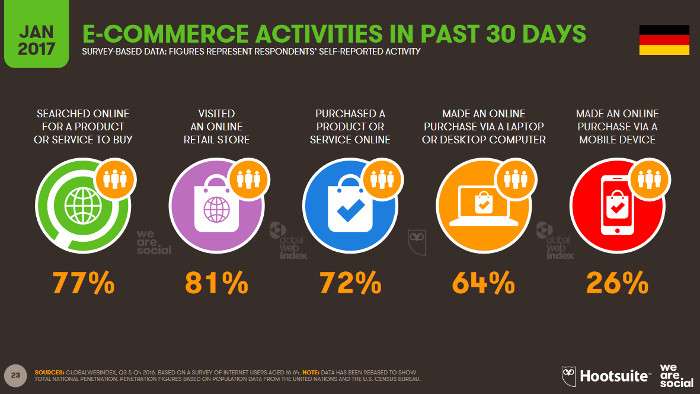
The numbers show why purchase intent has become the most important metric in performance marketing. According to a study by McKinsey & Company, 70% of consumers choose the first brand they encounter during a high-intent moment—so any brand that is invisible during the purchase intent phase is highly likely to lose that customer permanently. Forrester Research shows that companies that systematically measure purchase intent signals and respond to them in real time can increase their conversion rates by an average of 38%. In e-commerce, the average shopping cart abandonment rate is 70%—a direct indication that purchase intent was present but not sufficiently addressed. Every abandoned shopping cart represents a missed opportunity.
- 70% choose the first brand they recognize
- High-intent moments are crucial for success
- Real-time measurement increases conversions by 38%
- 70% shopping cart abandonment rate in e-commerce
- Purchase intent is a critical metric
- Invisibility leads to customer loss
Timing is everything
Google calls these pivotal moments “micro-moments”—instants when consumers search for products, compare prices, or read reviews. Those who are present during these moments reap disproportionately greater rewards. Signals of purchase intent—specific search queries, visits to product pages, abandoned shopping carts—must be recognized and addressed immediately so as not to lose momentum.
Emotional and Rational Factors
The willingness to buy arises at the intersection of emotion and rationality. Emotional factors such as trust, desire, and social proof lower the psychological barrier to purchase. Rational factors such as value for money, availability, and transparent product information make it possible to justify the decision. Effective marketing addresses both dimensions simultaneously.
Strategies for Increasing Willingness to Buy
Here’s how it works:
- Clearly define your goals before you start
- Integrate purchase intent into the marketing mix in a targeted way
- Test, measure, and continuously optimize
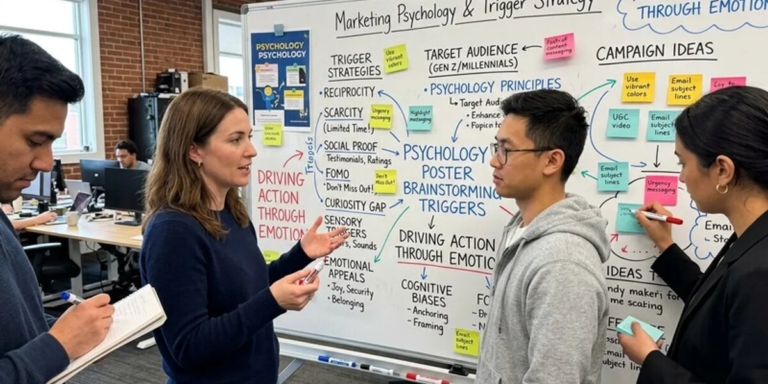
Willingness to buy can be systematically increased through targeted marketing measures. Social proof—customer reviews, quality seals, and user-generated content —reduces uncertainty and builds trust at critical decision-making moments. Scarcity and urgency—time-limited offers, limited quantities, or countdown timers—create psychological pressure that transforms the willingness to buy into immediate action. Personalized product recommendations based on past browsing behavior show consumers exactly what matches their current purchase intent. Remarketing campaigns reactivate latent purchase intent by specifically targeting consumers who have already shown interest. The goal: to design every touchpoint in a way that further increases the willingness to buy.
Step-by-Step: Systematically Building Purchase Readiness
A structured approach to increasing purchase intent begins with segmenting the target audience by intent level. In the first step, you use behavioral and search data to identify which users are already showing active purchase intent and which are still in the research phase. In the second step, you develop specific messages for each intent level: inspirational content for latent purchase intent, comparison and review content for the active phase, and clear conversion incentives for immediate purchase intent. In the third step, you implement technical triggers—dynamic ads, personalized email sequences, and retargeting pixels—that are automatically triggered as soon as defined intent signals are detected. This three-step model significantly increases the accuracy of every budget allocation.
- Segment Your Audience by Purchase Readiness
- Inspirational content for latent purchase intent
- Comparison content for the active purchase phase
- Conversion incentives for immediate purchase intent
- Automatically trigger dynamic ads
- Use personalized emails and retargeting
- This makes budget allocation more efficient
Practical Tips for Marketing Focused on Driving Purchases
The most effective practitioners rely on a few high-impact levers. First: Always place trust signals within view of the CTA—rating stars, seals of approval, and return guarantees placed right next to the buy button have been shown to cut the bounce rate in half. Second: Conduct A/B tests for urgency elements, as countdown timers can generate up to 27% more conversions for certain product categories, but are perceived as manipulative for others and actively reduce the likelihood of a purchase. Third: Radically simplify the checkout process—each additional input field costs an average of 10–15% of the remaining willingness to buy. Fourth: Use exit-intent overlays with genuine value-added offers (not a generic discount, but personalized recommendations) to convert users just before they leave the site.
Common Mistakes That Undermine the Willingness to Buy
Many brands invest heavily in building customer willingness to buy, but then undermine that effort at the crucial moment due to avoidable mistakes. The most common mistake is a checkout process that’s too complex or too slow: load times exceeding three seconds on the product page reduce the conversion rate by up to 53%. Another common mistake is a lack of mobile optimization—over 60% of purchase intent moments now occur on smartphones, but many online stores are still primarily optimized for desktop. The third mistake: generic messages in retargeting. If you show a user who has viewed a specific product a general brand message instead of the specific product itself, you completely squander the purchase intent you’ve built up.
- A complex checkout process undermines purchase intent
- Load times exceeding 3 seconds reduce conversions
- Mobile optimization is often neglected
- 60% of purchases are made on smartphones
- Generic retargeting messages are ineffective
- Product-specific messaging is key to success
Examples of Marketing That Boosts Purchase Intent
The most important thing:
- Leading brands prioritize consistency
- The courage to be different pays off
- Define measurable KPIs from the very beginning
Amazon masters purchase-readiness marketing like no other company: price comparisons, “Only 3 left in stock” notifications, one-click purchase options, and personalized recommendations are all designed to instantly turn every moment of latent purchase intent into a conversion. Booking.com masterfully uses scarcity tactics: “15 people are currently viewing this room” or “Only 1 room left” create a sense of urgency and speed up the decision-making process. In the automotive sector, BMW uses test drive requests as a signal to gauge purchase intent. In B2B marketing, companies like HubSpot rely on free trials that directly tap into the point of maximum purchase intent.
Amazon and Booking.com: A Master Class in Real-Time Purchase Readiness
With its recommendation algorithm, Amazon has built one of the most powerful tools for driving purchase intent in the world: 35% of Amazon’s total revenue is generated by personalized product recommendations—that amounts to billions of euros in revenue generated because the algorithm transforms latent purchasing intent into immediate purchase intent. The “Frequently Bought Together” feature increases the average cart value by displaying complementary products at the right time. Booking.com takes it a step further: The company has found in its own A/B tests that scarcity cues such as “Only 2 rooms left” increase the booking rate by up to 13%—without changing the offer itself. The only difference is the context in which purchase intent is triggered.
- Amazon: 35% of Revenue from Recommendations
- Algorithm Converts Purchase Intent into Purchases
- Complementary products specifically increase cart value
- Booking.com: Scarcity boosts bookings by 13%
- Context has a decisive influence on purchasing decisions
- Psychological triggers are effective without changing the offer
B2B Example: HubSpot and the Freemium Approach as an Intent Trigger
In the B2B sector, marketing focused on driving purchase intent is particularly challenging because decision-making cycles are longer and multiple stakeholders are involved. HubSpot solves this problem with the freemium model: The free version of the CRM system is designed to actively generate a willingness to purchase premium features among users. As soon as a user reaches a certain feature limit, a contextual upgrade prompt appears—exactly at the moment when the pain point is at its peak. This method has helped HubSpot acquire over 177,000 paying customers because the willingness to buy is generated not by advertising pressure, but by the product experience. Slack, Canva, and Dropbox operate similarly—all rely on product-driven willingness to buy as a key growth lever.
“53% of consumers are more likely to buy from the brand that provides relevant information first when they’re actively researching—willingness to buy determines who converts.” (Google/Ipsos, Micro-Moments Study)
Conclusion: Willingness to Buy as a Key Marketing Factor
Conclusion:
- Willingness to buy is indispensable in modern marketing
- Think strategically, implement consistently
Increasing purchase intent is one of the most direct ways to turn marketing budgets into revenue. Those who understand which stage of the decision-making process a consumer is in—and are able to provide the right content and offer at exactly that moment—achieve above-average conversion rates. The combination of building trust, creating a sense of urgency, and providing a seamless user experience forms the foundation of any marketing strategy focused on driving purchase intent.

Purchase Decision: Stages, Influencing Factors, and Marketing Levers

Online store: More sales through social media, TikTok and Instagram
Generating Leads Through Social Media: A Strategy for Getting More Inquiries
Generating Leads Through Social Media: A Strategy for Getting More Inquiries
Lead Generation Through Social Media: Strategies for Increasing Inquiries
Generating Leads Through Social Media: A Strategy for Getting More Inquiries












 4.9 / 5.0