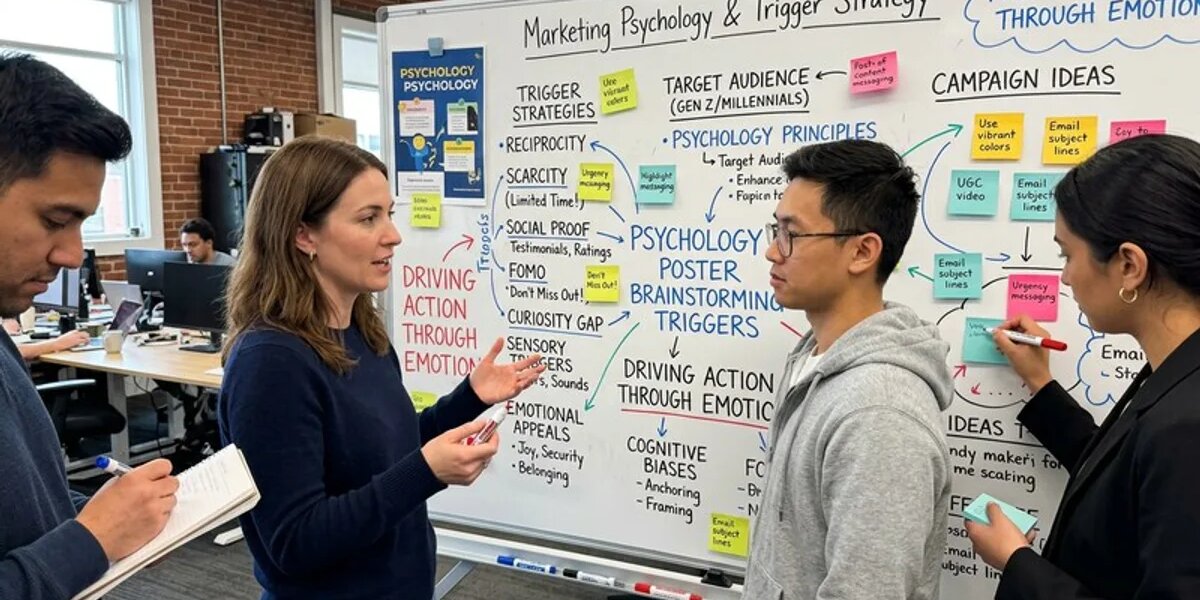
Reciprocity in Marketing: How the Principle of Giving Influences Purchasing Decisions
The principle of reciprocity is one of the most powerful psychological tools in marketing—and at the same time one of the most frequently underestimated. Give first, and you’ll receive in return: This simple formula explains why free samples, helpful content, and unsolicited favors have a massive influence on purchasing decisions. Those who use reciprocity strategically not only generate more conversions but also build genuine customer relationships.
What Is Reciprocity? Definition and Psychological Basis
Here’s what it’s all about:
- Reciprocity in Marketing: A Brief and Clear Explanation
- Distinction from Related Concepts
- The foundation of every marketing strategy
Reciprocity refers to the fundamental human principle of returning gifts, favors, and services. Social psychologist Robert Cialdini identified reciprocity as one of the six key principles of persuasion in his seminal work *Influence*. The principle is deeply rooted in the human psyche: We feel obligated to give back what we have received. In marketing, this means that brands that give something first—whether it’s knowledge, a product, or a service—trigger the recipient’s need for reciprocity. This need can manifest itself in a purchase, a recommendation, or long-term brand loyalty.
| Aspect | Description |
|---|---|
| Psychological Basis | Social Obligation Impulse in Response to Received Benefits |
| Marketing Application | Free content, samples, value-added services |
| Impact | Increased willingness to buy, loyalty, and word-of-mouth recommendations |
| Risk | Perception of Manipulation in Cases of Insincere or Coerced Giving |
Core Principles of Reciprocity
The principle of reciprocity is based on three key mechanisms: First, the social norm of reciprocity, which is embedded in every human society and governs social interaction. Second, the psychological discomfort—experts refer to this as cognitive dissonance—that arises when we receive something without being able to reciprocate. Third, the emotional bond that forms when someone does something kind for us without expecting anything in return. In marketing, this means specifically: Even a small, sincere gift can trigger a strong sense of obligation. Experiments by Cialdini show that even an unsolicited gift—such as a flower or a piece of candy—increased the willingness to donate by up to 100% in follow-up studies.
- Reciprocity governs human interaction everywhere.
- Cognitive dissonance arises when favors go unreciprocated.
- Emotional bonds are formed through selfless gestures.
- Small gifts create strong feelings of obligation.
- Unsolicited gifts increase the willingness to donate by 100%.
- Reciprocity functions as a psychological mechanism in marketing.
Distinction: Reciprocity vs. Manipulation
Not every act of “giving” in marketing triggers reciprocity. The key difference lies in perceived sincerity. If customers feel that a gift or a free service is being used merely as a lever to pressure them into a purchase, the effect is reversed: Instead of a sense of obligation, mistrust sets in. Reciprocity differs from pure incentivization in that the act of giving is decoupled from the sale in terms of both timing and content. A company that publishes a useful guide without a lead gate is practicing genuine reciprocity. A pop-up that says, “Get your free coupon now—only 5 minutes left!” is the exact opposite of that.
Why is reciprocity so effective in marketing?
Remember:
- Reciprocity in marketing creates a direct competitive advantage
- Measurable impact on revenue and reach
- Starting early pays off in the long run
Reciprocity works because it appeals to fundamental social norms that are embedded in nearly all cultures. People who have received something without being asked often feel uncomfortable if they cannot give something back. In marketing, this principle creates an emotional connection that goes beyond purely rational sales arguments. Especially in digital markets, where personal relationships are lacking, strategic giving can build the trust necessary for a purchase decision.
Facts & Figures: Proven Effectiveness
The research on reciprocity is clear. A study by Cornell University showed that restaurant guests who received an unsolicited piece of candy with their check tipped 3% more on average—and when they received two pieces of candy, they tipped as much as 14% more. In digital marketing, data from HubSpot shows that companies that regularly publish free, high-quality content achieve an inbound lead rate up to three times higher than companies that rely exclusively on paid advertising. For SaaS products, free trial periods convert an average of 15 to 25% of users into paying customers—far higher than cold-outreach methods.
Unsolicited Giving as a Conversion Driver
The strongest form of reciprocity arises when brands give something without explicitly asking for anything in return. A company that provides valuable blog posts, free tools, or useful e-books without immediately asking for an email address builds a relationship of trust. When that user is then ready to make a decision, they’ll remember the brand that has already helped them—and come back.
Mutuality in Customer Relationships
Reciprocity works not only before a purchase, but also afterward. Companies that surprise existing customers with a kind gesture—a personal message, an unexpected upgrade, or a small gift—significantly strengthen customer loyalty. Customers who feel valued spend more, recommend the brand more often, and are less likely to switch to another brand. Loyalty programs that go beyond mere points take advantage of precisely this principle.
How do brands use reciprocity strategically?
Here’s how it works:
- Clearly define your goals before you start
- Integrate reciprocity into the marketing mix in a targeted way
- Test, measure, and continuously optimize
In content marketing, reciprocity is the foundation of the inbound approach: By providing useful content for free, you attract prospects and build trust before any sales conversation even takes place. In e-commerce, free product samples, no-obligation trial periods, and free shipping serve as entry points into the reciprocity cycle. In the B2B sector, free audits, consulting sessions, or industry reports are effective levers of reciprocity. Sincerity is key here: Giving that is obviously aimed solely at eliciting something in return triggers the opposite—mistrust and rejection. Reciprocity is most effective when the act of giving is unexpected, personalized, and relevant. Brands should therefore carefully consider what is truly valuable to their target audience and incorporate this insight into their content and service strategies.
- Provide Free Content, Build Trust
- Offer free samples, trials, and audits
- Authenticity is absolutely essential
- Surprise, personalization, and relevance are most effective
- Understand the target audience, deliver genuine added value
- Reciprocity successfully attracts prospects
Step-by-Step: Integrating Reciprocity into Your Marketing Strategy
Developing a reciprocity strategy follows a clear process. In the first step, brands analyze what their target audience truly needs—not what sells well, but what creates real added value. In the second step, this offering is provided without any direct pressure to buy: as a blog post, a free tool, a webinar, or a sample product. In the third step, this giving is consistently repeated to establish a habit and set expectations. Only in the fourth step—once trust has been built—does the commercial offer follow, which feels much more natural and convincing in this context. Brands like Buffer and Moz have perfected this process: They publish free content for years and then convert a small but highly motivated portion of their readership into paying customers.
- Analysis: What the Target Audience Really Needs
- Provide a free offer without pressure to buy
- Consistent giving creates a habit
- Build trust before making a commercial offer
- Buffer and Moz: Successful Reciprocity Models
- Years of giving converts highly motivated customers
Practical Tips: What Really Works
Three strategies have proven particularly effective in practice. First, personalization: A tailored offering—such as a personalized analysis or a resource customized for the user—triggers stronger reciprocity effects than generic content. Second, surprise: Unexpected gifts or services generate a stronger emotional response than announced bonuses. Sending a new customer a spontaneous upgrade or a handwritten thank-you note leaves an unforgettable impression. Third, relevance: The gift must fit the recipient’s current situation. A free audit just before budget planning or a helpful guide right when someone is looking for a solution—that’s reciprocity with maximum impact.
- Personalization triggers stronger reciprocity effects
- Surprises generate more emotional reactions than those that are announced
- Handwritten cards leave a lasting impression
- Relevance at the right time increases effectiveness
- A free audit is particularly effective during budget planning
- Offer helpful resources for current problems
Common Mistakes in Implementation
The biggest mistake is the so-called “Trojan horse” principle: presenting something as a gift when it’s actually an aggressive sales strategy. Customers today are well aware of such tactics and react with rejection. Another common mistake is the imbalance between giving and expecting: Anyone who immediately bombards customers with follow-up emails, retargeting ads, and sales calls after offering a free e-book destroys the goodwill they’ve built up. Equally problematic is poor quality: A bad free product signals that the paid offerings are even worse. Reciprocity only works if the gift actually makes an impression.

Examples of Successful Reciprocity Strategies in Marketing
Here’s how it works:
- Clearly define your goals before you start
- Integrate reciprocity into the marketing mix in a targeted way
- Test, measure, and continuously optimize
With its free CRM and extensive educational resources, HubSpot has built a reciprocity machine: Companies use the tools, learn along the way, and many eventually switch to paid products. Dropbox gave away storage space in exchange for referrals—a clever reciprocity program that catapulted the company from a handful of users to millions. In retail, brands like Costco rely on generous product samples: Studies show that customers are significantly more likely to buy after trying a sample. In the SaaS sector, free trials are standard—anyone who benefits from a tool for 30 days is much less likely to give it up. Reciprocity also builds bridges in B2B: Salesforce offers free certifications and learning platforms that bind users to its ecosystem.
- HubSpot: Free CRM Leads to Paying Customers
- Dropbox: Storage space recommendations increase user numbers
- Costco: Product samples significantly increase willingness to buy
- SaaS: Free trials build long-term customer loyalty
- Salesforce: Free certifications foster ecosystem loyalty
- Reciprocity: Free offers create a sense of obligation to buy
Case Study: HubSpot and Freemium Reciprocity
HubSpot’s strategy is one of the best-documented examples of reciprocity in modern corporate history. Since its founding in 2006, HubSpot has published millions of free resources: blog posts, templates, certification courses, and its free CRM. The result: HubSpot has built a community of over 7 million active users, a significant portion of whom eventually upgrade to paid plans. What makes this unique is that HubSpot doesn’t require anything in return for its educational resources. The Academy courses are completely free. This radical approach to giving has made the company the most-cited inbound marketing platform worldwide—and a billion-dollar business.
Case Study: Costco Product Samples and the Psychology of Tasting
Costco is considered a master of the in-store reciprocity strategy. On weekends, dozens of product samples are offered in its stores—free of charge and with no obligation to buy. A study by the Harvard Business Review shows that these samples can increase sales of the corresponding products by up to 2,000%. The mechanism is clear: Anyone who accepts a sample feels slightly obligated to buy the product—especially if it tastes good. Costco also leverages the social aspect: tasting together creates positive associations with the brand. The model is so successful that many customers view their shopping trips as an experience—not just a necessity.
“The key to using reciprocity effectively in marketing is to give something of genuine value first, without any strings attached.” – Robert Cialdini, *Influence: The Psychology of Persuasion*
Conclusion: Reciprocity as a Sustainable Conversion Lever
Conclusion:
- Reciprocity is indispensable in modern marketing
- Think strategically, implement consistently
Reciprocity isn’t a trick; it’s a profound psychological truth about human relationships—including in the business world. Brands that consistently give first build trust, which pays off in the long run in the form of revenue, loyalty, and referrals. The key: Giving must be authentic, relevant, and unsolicited. Those who integrate reciprocity as a strategic principle into their marketing architecture—from content to products to customer service—create a foundation for sustainable customer relationships that extend far beyond the initial transaction.
What does reciprocity mean in marketing?
Reciprocity in marketing refers to the application of the psychological principle of give-and-take. Brands give customers something of value—free content, samples, or services—which triggers an impulse in the recipient to give something back, such as through a purchase or a recommendation.
How can you leverage reciprocity in online marketing?
In online marketing, reciprocity can be implemented through free, high-quality content, free tools, e-books, webinars, or trial versions. It’s important that the added value is genuine and offered without any immediate pressure to buy.
What are the risks of reciprocity in marketing?
If reciprocity is used as a manipulative technique, or if the act of giving seems insincere, the opposite effect can occur: mistrust and rejection. Customers can tell when favors are used merely as bait, and they react negatively to it.
Who popularized the principle of reciprocity in marketing?
Robert Cialdini described reciprocity in his 1984 book *Influence: The Psychology of Persuasion* as one of six key principles of persuasion. Since then, it has become standard knowledge in marketing and sales psychology.
How does reciprocity differ from other principles of persuasion?
While principles such as social proof or scarcity are based on external factors, reciprocity appeals to a personal sense of obligation. It arises from direct interaction between the brand and the customer and therefore often has a deeper and more lasting effect.
- Reciprocity builds long-term trust and customer loyalty.
- Giving must be authentic, relevant, and unsolicited.
- Free content and tools trigger the impulse to reciprocate.
- Insincere reciprocity leads to mistrust and rejection.
- Robert Cialdini popularized the principle in 1984.
- Reciprocity has a deeper impact than other principles of persuasion.

Sales Message: Structure, Examples, and the Impact of Strong Copy

Manipulation in Marketing: Psychological Influence Tactics, Boundaries, and Ethics

The Halo Effect in Marketing: How a Positive Trait Shapes Brand Perception
B2B Marketing: Definition, Channels, and the Difference from B2C

Organic Rankings: Ranking Factors, Backlinks, and Content Quality

Webinars: B2B Leads, Live Formats, and the Perfect Structure










 4.9 / 5.0