
Social Proof: Definition, Types, and Impact in Marketing
Why do we prefer to buy the product with a thousand reviews over the identical one with no feedback at all? Social proof has the answer: people look at the behavior of others to validate their own decisions. Here you’ll learn exactly what social proof means, what types exist, and why the concept plays a role in almost every marketing strategy. Want to build more social proof for your brand? Our best-practice references show you how: get in touch.
What is social proof? Definition
Social proof describes the psychological phenomenon where people use the behavior or opinion of others as guidance for their own decisions. If many other people buy, praise, or recommend a product, it’s automatically perceived as more credible and less risky.
In marketing, this principle is used deliberately to build trust before a prospect has even had their own experience with a product. Social proof works across the entire buyer’s journey: from the first spark of attention all the way to the final purchase decision.
The main types of social proof
Social proof can be broken down into several categories, which are used differently in marketing and carry different weight depending on the target audience.
Customer reviews and testimonials
Star ratings, comments, and detailed reviews show potential customers directly how others have experienced a product or service. Testimonials go a step further and let specific, often named, customers speak for themselves.
User numbers, followers, and trust badges
Plain numbers act as social proof too: follower counts, customer numbers, or awards signal popularity and credibility without saying a single word. Trust badges like seals of approval or certifications serve a similar function and build additional trust on a website.
Influencer endorsements and user-generated content
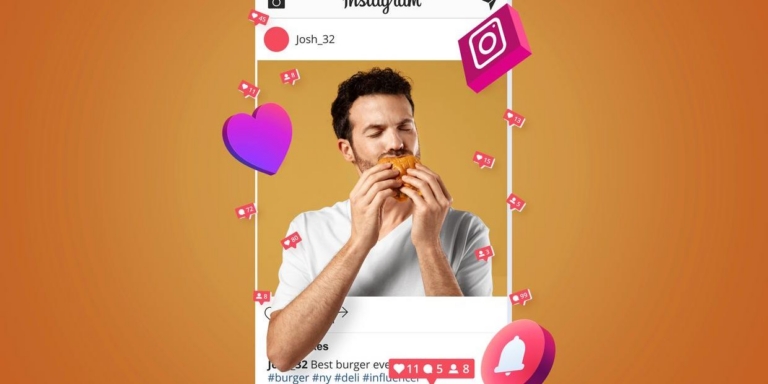
Influencer endorsements transfer their credibility onto a product, while content created by real users, such as photos or videos on social networks, feels especially authentic because it doesn’t come from the brand itself.
| Type of social proof | Example | Effect |
|---|---|---|
| Customer reviews | Star ratings, reviews | Direct experiential trust |
| Testimonials | Customer quotes with name and photo | Personal credibility |
| User numbers | Followers, customer counts | Signal of popularity |
| Trust badges | Seals of approval, certificates | Formal credibility |
| User-generated content | Customer photos, videos | Authenticity |
- Reviews and testimonials provide concrete experiential evidence
- Numbers and trust badges signal scale and credibility
- Influencers and user-generated content feel especially authentic
Why social proof lowers the perceived risk of buying
Every purchase decision comes with a perceived risk: does the product really work? Is it worth the price? Social proof directly reduces this risk by showing that other people have already made this decision successfully. Psychologically speaking, people rely especially heavily on the so-called wisdom of the crowd in uncertain situations.
People rarely buy first – they buy once enough others already have.
In practice, this means social proof should be placed deliberately at the points where doubt is most likely to arise, such as directly before the buy button or right next to the price. If you want to measure the effect, conversion tracking can show whether additional reviews or testimonials actually increase the close rate.

Conclusion: social proof as a bridge of trust in the buying process
Social proof is one of the most powerful psychological principles in marketing, because it targets exactly the point where purchase decisions often stall: uncertainty. Whether through customer reviews, testimonials, user numbers, trust badges, or user-generated content – making credible signals from other people visible lowers the perceived risk and makes it easier for prospects to decide on a product.
Frequently Asked Questions about Social Proof
What does social proof mean in marketing?
Social proof describes the psychological effect where people look at others’ behavior to validate their own purchase decisions. In marketing, this is deliberately leveraged through reviews, testimonials, and user numbers.
- Guided by the behavior of others
- Lowers perceived purchase risk
- Works across the entire buyer’s journey
What types of social proof exist?
The most important types include customer reviews, testimonials, user numbers, trust badges, influencer endorsements, and user-generated content. Each type works through a slightly different trust mechanism.
- Reviews and testimonials
- Numbers and trust badges
- Influencers and user content
Why do customer reviews have such a strong effect on purchase decisions?
Customer reviews are seen as especially credible because they come from real users rather than the brand itself. Many consumers now trust them almost as much as personal recommendations from friends.
- Come from real users
- High level of trust
- Comparable to a personal recommendation
Where should social proof be placed on a website?
Social proof has the biggest impact where doubt is most likely to arise, such as near pricing information or directly before the buy button. It’s also worth placing it visibly on the homepage or landing page.
- Near the buy button
- Close to the price
- Visible on landing pages

Case Studies: Structure, Social Proof, and Use in Marketing

Behavioral Psychology in Marketing: Triggers, Biases, and Practical Tips
Customer Purchasing Behavior: Stages, Influencing Factors, and Marketing Strategy

B2B Marketing: Definition, Channels, and the Difference from B2C

CPA (Cost per Action): Definition, Formula, and Difference from Cost per Acquisition

Organic Rankings: Ranking Factors, Backlinks, and Content Quality
















 4.9 / 5.0