Employee Retention: SME Initiatives and Skilled Workers
For many small and medium-sized businesses, employee retention is no longer just a “nice-to-have”—it’s essential for survival. Companies that lose qualified professionals today will face productivity losses, rising recruitment costs, and a growing image problem in the job market tomorrow. HR managers at SMEs are under particular pressure: they’re expected to achieve the same results with limited budgets as large corporations with entire People & Culture departments.
Why Employee Retention Is Vital for SMEs
The shortage of skilled workers is hitting small and medium-sized enterprises harder than any other type of business. While large companies can attract talent with strong employer brands, competitive salary packages, and benefits, SMEs must take a more creative and strategic approach. The key is to understand why employees leave in the first place—and to address the issue precisely there.
Facts and Figures on Employee Turnover
According to the Gallup Engagement Index, only about 15–16% of employees in Germany feel a strong emotional connection to their employer—the majority simply “do the bare minimum.”
Depending on the position, the cost of a termination amounts to 50–200% of the annual salary for that position, when factoring in recruitment, onboarding, and lost productivity.
Studies by the Institute for Employment and Employability (IBE) show that a lack of career prospects and poor leadership are among the most common reasons for resigning—not salary.
According to Gallup, companies with high employee engagement achieve 23% higher profitability and 18% higher productivity than comparable companies with low engagement.
In small and medium-sized enterprises (SMEs), the average employee turnover rate in many industries is 15–25% per year—and in the restaurant, healthcare, and logistics sectors, it is even significantly higher.
Even a 10-percentage-point reduction in employee turnover can save a medium-sized company with 50 employees a six-figure sum each year.
That sums up the key point:
- Only 15–16% of German employees are emotionally committed
- Termination costs: 50–200% of annual salary
- Lack of career development and poor leadership lead to resignations
- High employee retention: 23% higher profitability
- Turnover rate in SMEs: 15–25% annually
- A 10% reduction in turnover saves six-figure sums
- Employee retention is economically crucial for success
Employee retention is not an HR discipline—it is a corporate strategy that directly contributes to profitability and competitiveness.
How SMEs Implement Effective Customer Retention Strategies
Effective employee retention doesn’t require a budget in the millions—it requires a systematic approach, authenticity, and a willingness to truly understand employees. The best strategies are often those that are based on the specific needs of a company’s own workforce and are consistently applied across all touchpoints of the employee experience.
Practical measures with immediate effect
Regular feedback meetings
Structured one-on-one meetings between managers and employees—held at least once a quarter—have been shown to reduce the intention to leave and strengthen the sense of belonging.
Create Internal Career Paths
Those who feel stuck will leave. Even a transparent competency model with clearly defined next career steps significantly increases employee retention.
Flexible Work Schedules
Working from home, flexible work arrangements, and part-time options are now among the top three factors in job decisions—and cost small and medium-sized businesses significantly less than hiring a new employee.
Onboarding as a Tool for Retention
The first 90 days determine whether a new employee stays or leaves during the probationary period. A structured onboarding program reduces early turnover by up to 50%.
Recognition and Appreciation
Monetary and non-monetary recognition—from team events to public praise to small bonuses—have a disproportionately large effect on emotional commitment.
| Action | Costs for SMEs | Binding Effect | Time Frame Until Effect |
|---|---|---|---|
| Structured one-on-one conversations | Low | High | 1–3 months |
| Career Paths / Career Model | Medium | Very high | 3–6 months |
| Flexible Work | Low–Medium | High | Immediately |
| Professional Onboarding | Medium | Very high | Starting the first week |
| Employer Branding Campaign | Medium–High | Very high in the long term | 6–12 months |
The SME Strategy: Integrating Employee Retention and Employer Branding
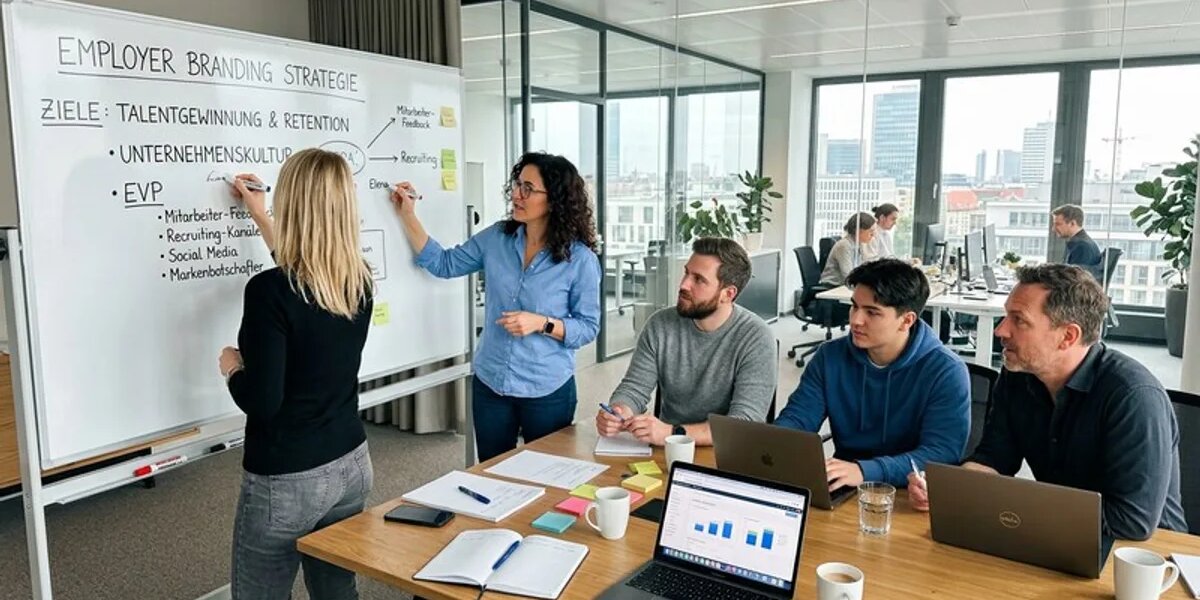
For medium-sized companies, the greatest leverage comes from consistently aligning employee retention with employer branding. Companies that build a strong internal corporate culture automatically create authentic content for external communication—and thereby attract exactly the candidates who are a good long-term fit. An experienced employer branding agency can help strategically develop this positioning and communicate it credibly to the outside world. In addition, targeted social media recruiting ensures that the message reaches the right target audiences on the platforms they use every day. Those looking to professionalize their talent marketing activities will also benefit from aligning employee retention initiatives with recruiting channels: Employees who are enthusiastic about their employer become brand ambassadors—and the most credible recruiters an SME can have.
Platforms like LinkedIn offer enormous potential here: With a well-thought-out LinkedIn marketing strategy, you can reach both potential applicants and existing employees and retain them over the long term. Those looking to further scale their reach can leverage paid formats like Meta Ads to target job postings and employer branding content, thereby measurably increasing visibility as an attractive employer.
- Think of employee retention and employer brand as one.
- A strong corporate culture creates authentic content.
- An employer branding agency provides strategic support.
- Social media recruiting reaches target audiences in a targeted way.
- Engaged employees are the best brand ambassadors.
- A LinkedIn strategy engages candidates and employees.
- Meta Ads increase visibility as an employer.
Conclusion
Employee retention is not a luxury that only large companies can afford—it is a strategic necessity for every SME owner and HR manager who wants to remain competitive in the long term. The good news: The most effective measures are often not a matter of budget, but of mindset, structure, and consistent implementation. Those who view employee experience, employer branding, and recruiting as an integrated system reduce turnover, lower recruiting costs, and build a corporate culture that attracts and retains true talent. Get started now—by taking an honest look at your current employee journey and having the courage to systematically do things differently.

Skilled Labor Shortage in SMEs: Finding, Retaining, and Attracting Employees
Employer Branding for SMEs: Employer Brand, Attracting and Retaining Employees

Candidate Experience: Optimizing the Application Process, Recruiting & Talent

LinkedIn Recruiting: Attracting Talent, Generating B2B Leads, and Driving Growth
Active Sourcing: SME Strategy, Direct Outreach, and Talent Acquisition

Recruiting marketing: Attracting talent via social media
















 4.9 / 5.0