
Retail in Marketing: Brick-and-Mortar Retail, Customer Experience, and Local Engagement
A store is not just a sales floor—it’s a three-dimensional brand experiencethat builds trust, influences purchasing decisions, and connects local communities. While e-commerce is transforming the retail landscape, brands like Apple, Nike, and IKEA are proving that brick-and-mortar retail isn’t dying—it just needs to reinvent itself. Store marketing is the art of combining global brand identity with local relevance.
What is a “branch” in a marketing context?

Here’s what it’s all about:
- Branch in Marketing: A Short and Clear Explanation
- Distinction from Related Concepts
- The foundation of every marketing strategy
In marketing terms, a retail store is far more than just a sales channel—it is a physical brand touchpoint where customer experiences become real and multisensory. The store enables things that no online channel can replicate: touching, smelling, getting advice, and making impulse purchases inspired by the atmosphere. At the same time, it helps anchor a brand locally. For retail companies with multiple locations, this presents a twofold challenge: How can the brand identity be consistently experienced in every store, and how can companies respond to the specific needs of the local customer base? Store network marketing is the systematic solution to this challenge.
Core Principles of Store Marketing
Store marketing follows three overarching principles that differ from traditional brand marketing. First, there is the principle of spatial experience: The physical space communicates brand values even before a salesperson speaks—lighting, flooring, scent, and music send signals that the subconscious processes. Second, the principle of frequency optimization shapes decision-making: Every measure is evaluated based on whether it makes visits more frequent, longer, and more valuable. Third, the principle of scalability determines which concepts are suitable for a chain of stores—what works in a flagship store must also be reproducible across 200 locations without compromising the quality of the experience.
Distinctions: Flagship Store, Convenience Store, and Pop-Up Store
Not every store has the same marketing objective. The flagship store—such as the Nike House of Innovation in Manhattan—serves primarily to showcase the brand and attract media attention, not to maximize sales volume. The classic convenience store (gas station, kiosk, small-format supermarket) prioritizes accessibility and speed over the brand experience. Pop-up stores, on the other hand, generate temporary buzz, test new markets without long-term lease commitments, and are well-suited for product launches or seasonal promotions. Anyone engaged in store marketing must first clarify which store type fulfills which marketing function—because the KPIs, budgets, and design guidelines differ fundamentally.
| Lever | Description | Example | Effect |
|---|---|---|---|
| Local SEO | Google My Business, NAP Consistency | REWE Store Pages | Local Visibility |
| POS Design | Interior Design, Lighting, Merchandising | Apple Store Layout | Time Spent in Store, Receipt |
| Store-Specific Advertising | Geotargeted Ads, Flyers, Local Radio | Lidl Digital Flyer | Traffic, foot traffic |
| Click & Collect | Order online, pick up at a store | Zalando, MediaMarkt | Omnichannel usage |
The Importance of the Store as a Brand Strategy
Keep in mind:
- Store-level marketing strengthens the brand and customer loyalty
- Direct impact on brand awareness and conversion
- Long-term development is always worthwhile
A physical presence conveys trust and permanence—qualities that digital channels struggle to convey. Statistically, customers who visit a store have higher brand loyalty than those who shop exclusively online. This is especially true for products that require explanation, luxury goods, and categories where expert advice makes all the difference. For brands with a retail network, it is therefore crucial to view stores not as a cost center but as a marketing asset. Two dimensions are particularly strategically relevant in this regard.
Facts and Figures: What Brick-and-Mortar Retail Achieves Today
Despite the e-commerce boom, according to Statista, about 75% of total retail sales in Germany still take place in brick-and-mortar stores. A 2024 McKinsey analysis shows that consumers continue to prefer brick-and-mortar stores for categories such as groceries, drugstore items, and clothing—not because of a lack of online alternatives, but because of the sensory and social dimensions of the shopping experience. Particularly revealing: Customers who first encounter a brand in a brick-and-mortar store are up to 40% more likely to make a purchase in that brand’s online store than users who did not have that initial in-person contact. The brick-and-mortar store is thus not competition for the online channel, but rather its “warm-up phase.”
Strategic Importance: The Store as a Source of Trust
In a world of increasingly anonymous digital transactions, the branch plays a psychologically critical role: it makes the brand tangible and verifiable. For new customers, the physical address lowers the barrier to making a purchase in the first place—especially for high-priced or consultation-intensive products. Direct banks such as ING and N26 have, despite their fully digital business models, opened advisory centers at times because they found that the physical touchpoint significantly increases conversion rates for complex products. The brick-and-mortar store is the slowest but most sustainable channel for building trust in the marketing mix.
Branch Consistency vs. Local Adaptation
Large retail chains are constantly faced with a trade-off: How much central control safeguards the brand—and how much local freedom creates relevance? McDonald’s addresses this through strict standards for store design and the menu, while allowing regional products (McRib in Germany, McSpicy Regional). Nike allows stores in major cities to have their own curation programs. The rule is: centralized core identity, decentralized local activation.
Local SEO and Google My Business as Essential Channels
For chain store operators, local search engine optimization isn’t just a nice-to-have—it’s their digital storefront. If you don’t show up in search results for “supermarket nearby” or “shoe store in Hamburg-Mitte,” you’ll lose walk-in customers to the competition. NAP consistency (name, address, phone number), up-to-date hours of operation, photo updates, and Google review management are essential tasks for any chain of stores. Tools like Uberall or Yext automate these maintenance tasks for large chains.
Strategic Implementation: Experience Design and Omnichannel
Here’s how it works:
- Clearly define your goals before you start
- Integrate the store strategically into the marketing mix
- Test, measure, and continuously optimize
The future of the retail store lies in experience design (Experience Retail). Nike’s “House of Innovation” in New York and Shanghai isn’t a store—it’s an immersive brand experience featuring customization stations, community events, and exclusive products available only on-site. Apple Stores have redefined the retail standard: no cash registers along the walls, tables instead of shelves, and a Genius Bar instead of a customer service counter. The result: customers come in with no intention of buying and leave the store with a product—or at least with stronger brand loyalty. Omnichannel isn’t just a buzzword here—it’s a necessity. Click & Collect combines online selection with in-store foot traffic and creates upselling opportunities at pickup. BOPIS (Buy Online, Pick Up In Store) increases store traffic without requiring additional advertising spend. Sales promotions at the POS—displays, tastings, personalized recommendations via tablets—extend the customer journey into the physical space and measurably increase the average receipt value.
Step-by-Step: Implementing Experience Design in the Store
Experience design doesn’t start with architecture, but with understanding the customer. Step 1 is the journey analysis: What stages does a customer go through from the moment they enter until they make a purchase, and where do friction points or boredom arise? Step 2 is sensory programming—what music, scent, and lighting reinforce the desired brand emotion? Step 3 involves spatial layout: experience zones (for trying things out) must be visually separated from transaction zones (for purchasing) so that customers can experience both without feeling pressured. Step 4 is staff training: Employees are the human element of experience design—their behavior trumps any interior design. Finally, Step 5 is measurement: dwell time, conversion rates per zone, and Net Promoter Scores following store visits provide reliable data for iterative improvements.
Omnichannel Integration: Common Mistakes and How to Avoid Them
Many retail store operators fail at omnichannel implementation because they treat online and offline as separate silos. Mistake No. 1: Inventory levels aren’t visible online in real time, so customers come to the store only to find what they’re looking for isn’t there—which creates frustration instead of customer loyalty. Mistake No. 2: Click-and-collect pickup stations are poorly signposted or understaffed, which ruins the final impression. Mistake No. 3: Customer data from the store isn’t linked to the online CRM, so personalization stops at the store’s doors. Those who avoid these mistakes can strategically cultivate omnichannel customers—and, as EHI data shows, this group spends measurably more than single-channel users.

Best Practice Examples
The most important thing:
- Leading brands prioritize consistency
- The courage to be different pays off
- Define measurable KPIs from the very beginning
With its “Plan and Order Point” concept, IKEA has created small city-center stores that give urban customers without cars easy access to planning advice. This shows that store size is no longer a measure of quality. Lush operates entirely without packaging in its stores—the store layout itself conveys the brand message. Aldi Nord has proven that consistency alone is enough when price positioning and product assortment are right. Sephora combines beauty consulting with digital tools: iPads for shade finders, app integration at the point of sale, and beauty workshops as community events. This turns the Sephora store into a hub for experiences and loyalty, not just a place to shop.
Sephora and IKEA: A Comparison of Retail Experiences
Sephora and IKEA pursue fundamentally different experience strategies, both of which are extraordinarily successful. Sephora focuses on digitally augmenting the physical experience: The Virtual Artist allows customers to virtually try on makeup via a camera, and beauty consultants use tablets to provide personalized product recommendations based on the skin analysis app. The store thus becomes a data touchpoint—every interaction enriches the CRM profile and enables personalized follow-up communication. IKEA, on the other hand, focuses on staging everyday life: model rooms that simulate real living situations stimulate purchasing desires that customers didn’t have when they first entered the store. The famous “IKEA effect”—where customers value furniture they’ve assembled themselves more—begins right in the store when they imagine how the shelf will fit into their home.
Local Engagement: What Smaller Retail Chains Can Learn from the Big Players
Not every retailer has the budget of Sephora or IKEA—but the principles behind their successful business models are scalable. A local bookstore can create community experiences through monthly author readings that Amazon cannot replicate. A regional bakery chain can tell local stories via Instagram and thus increase foot traffic without spending an advertising budget on TV or print. The pattern of successful local engagement is the same everywhere: the store becomes a gathering place for a shared interest or identity—not just a place to buy products. Making customers feel like they’re part of a local community builds stronger loyalty than any rewards program.
According to a study by the EHI Retail Institute, omnichannel customers who shop both online and in-store spend, on average, 30% more than customers who shop exclusively online or in-store.
Conclusion: The Store as a Strategic Marketing Asset
Conclusion:
- Branch-level marketing is indispensable in modern marketing
- Think strategically, implement consistently
The brick-and-mortar store is not a relic of the retail industry—it is its emotional core. What digital channels cannot provide—the ability to experience products firsthand, spontaneity, personalized advice, and a local presence—is exactly what makes brick-and-mortar stores unique. Successful brick-and-mortar brands therefore invest in experience design, local SEO, omnichannel integration, and employees as brand ambassadors. The store of the future is not a warehouse, but a stage. Those who understand this will not only gain revenue—but also genuine customer loyalty.
What does local SEO mean for chain store operators?
Local SEO encompasses all measures that make a branch visible in location-based search queries—primarily Google My Business management, NAP consistency, and review management.
How does Click & Collect work as an omnichannel tool?
Click & Collect allows customers to order online and pick up their purchases at a store—this increases store traffic, creates opportunities for upselling, and combines digital selection with a physical brand experience.
What is experience design in brick-and-mortar retail?
Experience design (Experience Retail) refers to the deliberate design of the store environment, sales processes, and events to create emotional brand loyalty that goes beyond the mere sale of products.
How do retail chains balance brand consistency with local adaptation?
Successful retail chains centralize their core identity (design, standards, core products) while allowing local flexibility in product assortment, events, and community engagement—this ensures the brand remains recognizable and relevant at the local level.
What role does the POS (Point of Sale) play in retail marketing?
The point of sale (POS) is the final decision-making moment before a purchase—targeted displays, product placement, tastings, and digital recommendation tools at the POS increase the average receipt value and encourage impulse purchases.

Retail: Definition, Trends, and Strategies in Modern Retail

AI Sales Software: Comparison of Features, Providers, and ROI

Retail Brands in Marketing: Strategy, Channels, and Customer Loyalty

FMCG Marketing: Strategy and Channels for Fast-Moving Consumer Goods
Franchise Marketing: Brand Management, Consistency, and Local Engagement
Skilled Labor Shortage in SMEs: Finding, Retaining, and Attracting Employees






McDonald's Soccer Cups: Collectible Campaign, Schweinsteiger, and Samuel Jackson Under the Marketing Microscope
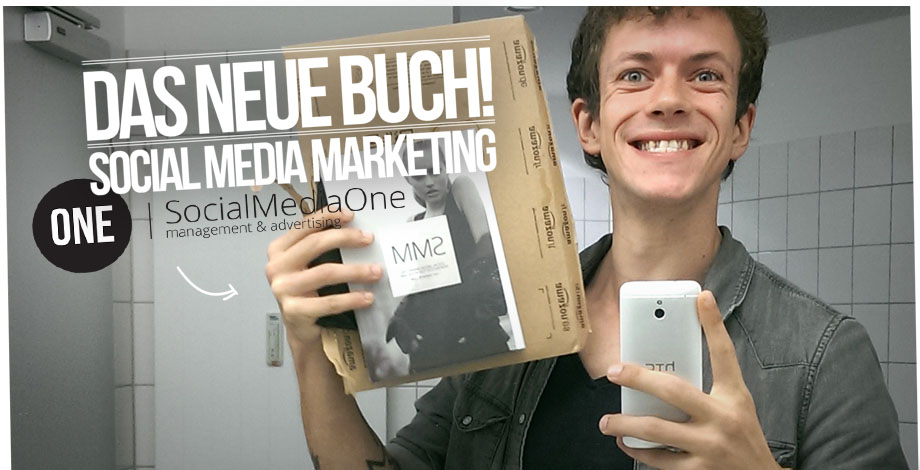
Now on sale - SMO Book: Social Media Marketing

Private Label: Development, Benefits, and Strategies in E-Commerce

Manufacturer Brand: Definition, Structure, and Strategy for Successful Product Brands



 4.9 / 5.0