
Brand Experience: How Brands Appeal to All the Senses Through Experience Marketing
A brand has long been more than what it represents—it is what it makes people feel. Brand experiences have fundamentally changed the way we communicate: It is not the message, but the lived experience that determines whether a brand is remembered, recommended, and loved. Those who appeal to all five senses create an emotional depth that no media budget can replicate.
Definition and Classification
Here’s what it’s all about:
- Understanding the brand experience in a marketing context
- Understanding the term, its origins, and its meaning
- A foundation for strategic decisions
The brand experience refers to the totality of all sensory, emotional, cognitive, and behavioral reactions that a consumer experiences as a result of interactions with a brand. The term goes beyond the traditional concept of brand image: While brand image is the sum of stored perceptions, brand experience is the active process of experiencing the brand at the moment of interaction. Experiential marketing—synonymous with brand experience marketing—was significantly shaped by Bernd Schmitt (Columbia Business School), who defined five strategic experience modules: Sense (sensory), Feel (emotional), Think (cognitive), Act (behavioral), and Relate (social). The goal is to integrate as many of these modules as possible into every brand encounter.
The Five Experience Modules According to Bernd Schmitt
Schmitt’s SEMs model (Strategic Experiential Modules) remains the most scientifically sound foundation for brand experience design to this day. The Sense module encompasses all sensory stimuli that a brand consciously employs—color, shape, sound, scent, and touch. The Feel module targets moods and emotions, ranging from a light, positive underlying mood to a deep emotional connection. Think experiences challenge consumers cognitively and generate curiosity and intellectual engagement. Act modules alter physical experiences and behavioral patterns, while Relate modules define a brand’s social framework—a sense of belonging to a community of like-minded people. Brands like Apple consistently combine all five modules: The store looks like a temple (Sense), sparks enthusiasm (Feel), demonstrates innovation (Think), enables active hands-on exploration (Act), and connects a global community (Relate).
Distinction from Related Concepts
Brand experience is often confused with customer experience (CX) and user experience (UX), but it is conceptually broader. Customer experience encompasses all service-oriented interactions along the customer journey—purchase, delivery, and support. User experience focuses on the usability of digital products and interfaces. Brand experience, on the other hand, is the umbrella term: it encompasses CX and UX but goes beyond them by also viewing passive encounters—such as an advertising poster, a brand sound on the radio, or the scent of a store—as experiential moments that can be shaped. This broader perspective makes brand experience the strategic framework that connects all individual disciplines and aligns them toward a coherent overall experience.
| Meaning | Instrument | Brand example |
|---|---|---|
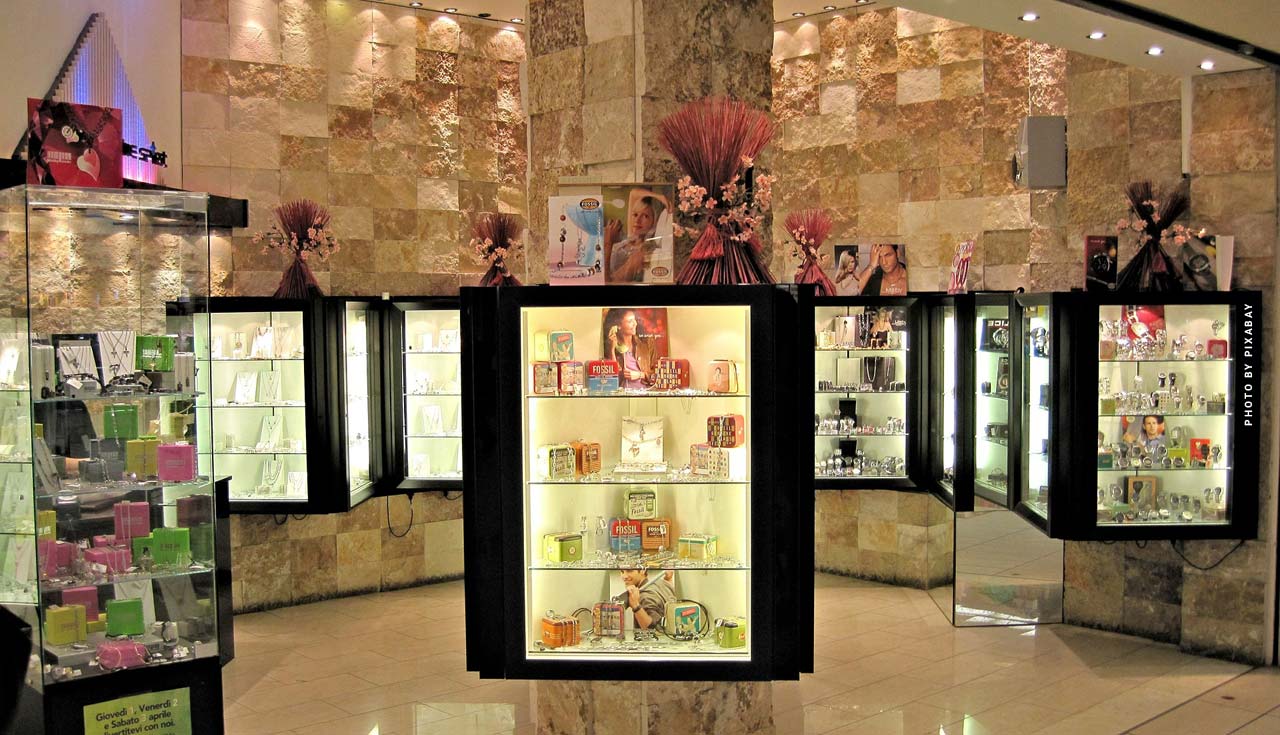
| Sight (Seeing) | Architecture, Packaging Design, Lighting | Apple Store, Hermès Boutique |
| Sound (Hearing) | Brand Sound, Sonic Logo, In-Store Music | Intel, McDonald’s |
| Smell (Olfaction) | Signature Scent, Scent Marketing | Abercrombie, Singapore Airlines |
| Touch (Feel) | Material selection, tactile feel, product weight | Apple MacBook, Montblanc |

Implications for Brands
Remember:
- Brand experience strengthens the brand and customer loyalty
- Direct impact on brand awareness and conversion
- Long-term development is always worthwhile
Brand experiences are the most powerful tool for building emotional loyalty. Studies by Harvard Business School show that customers who have had an outstanding brand experience are seven times more likely to make another purchase and five times more likely to recommend the brand than customers who were merely satisfied. In many categories, Return on Experience (ROX) outperforms traditional Return on Investment because experience-based loyalty is more resistant to price comparisons and competitive offers.
Facts and Figures on the Economic Impact
The economic significance of brand experiences is supported by reliable data. According to a PwC study, 73 percent of consumers are willing to pay more for an exceptional experience—the price premium ranges from 16 to 45 percent, depending on the category. Freeman Research found that 65 percent of all B2B decision-makers base their purchasing decisions largely on events and live formats they have experienced. Forrester’s Experience Index also shows that companies in the top experience quartile outperform their competitors in revenue growth by an average of 17 percentage points per year. These figures make it clear: brand experience is not a cost factor, but a measurable driver of growth.
Sensory Marketing as a Differentiation Strategy
Scent is the most powerful memory trigger of all the senses—the so-called Proustian effect. For decades, Singapore Airlines has been using a proprietary scent called “Stefan Floridian Waters” in its cabins and on its towels, which subconsciously conditions travelers to associate comfort and premium quality with the brand. This sensory anchor cannot be replicated and creates true uniqueness.
Pop-up Stores as Catalysts for Experiences
Temporary pop-up formats condense brand experiences into a small space and a short period of time. Artificial scarcity (limited opening hours, exclusive products) creates a sense of urgency that exponentially increases visitor numbers and social media shares. At the same time, pop-ups serve as low-risk testing grounds for new experience concepts.
Strategic Deployment
Here’s how it works:
- Clearly define your goals before you start
- Integrate the brand experience strategically into the marketing mix
- Test, measure, and continuously optimize
Developing a brand experience strategy begins with an experience audit: At which touchpoints does the brand interact with consumers? Which senses are engaged, and which are neglected? What gaps exist between the intended experience and the actual one? The audit is followed by experience architecture: Which two to three core experiences should be permanently embedded in the customer journey? Each of these core experiences must be designed to engage the senses, evoke emotions, and foster social connections. Performance is measured using experience KPIs: Net Promoter Score (NPS), Customer Effort Score (CES), in-store dwell time, user-generated content rate, and social sharing frequency. Consistency is key: An outstanding in-store experience that isn’t mirrored online creates cognitive dissonance and weakens the overall perception of the brand.
Step-by-Step: Developing the Experience Architecture
Effective experience architecture is developed in four phases. First: Touchpoint mapping—all touchpoints between the brand and the consumer are fully documented, from the initial search query to after-sales support. Second: Sensory Gap Analysis – for each touchpoint, we examine which of the five senses are already being engaged and which remain untapped. Third: Prioritization of Core Experiences – based on emotional data and purchasing behavior data, we define two to three “Signature Moments” that are intended to be unforgettable. Fourth: Consistency check—all experiences are reviewed for consistency with the brand personality and brand promise before they are rolled out. This structured process prevents the most common mistake in experience design: isolated highlights without a coherent overall framework.
Common Mistakes in Implementation
The most common mistake is what’s known as the “experience gap”: The brand invests in spectacular one-off moments—a lavish event, an Instagram-worthy pop-up—but neglects everyday touchpoints such as packaging, email communication, or phone support. Consumers perceive brands as a holistic system; a disappointing touchpoint can undo outstanding experiences elsewhere. Another common mistake is copying competitors without adapting the approach to the brand’s own identity. Scent marketing that doesn’t align with the brand’s personality comes across as contrived and breeds mistrust instead of trust. Equally problematic is the lack of measurement: If you don’t link experiences to clear KPIs, you can neither learn nor optimize—and you risk investing your budget in formats that have no emotional impact.

Best Practice Examples
The most important thing:
- Leading brands prioritize consistency
- The courage to be different pays off
- Define measurable KPIs from the very beginning
The Nike House of Innovation in New York and Shanghai is the most comprehensive example of holistic brand experience design: Customers can customize shoes in real time, test products under simulated sports conditions, and receive personalized coaching sessions—the line between store and experience space has been completely blurred. IKEA showrooms have been pioneers of experience-oriented retail for decades: The entire room setup invites visitors to experience living rather than just buying furniture—including the scent of cinnamon rolls, which is specifically designed to evoke emotional responses. Sephora combines digital personalization (beauty scanners, AR try-on) with in-depth in-person consultation, creating an experience that would be impossible in either a purely digital or purely physical setting. The Guinness Storehouse in Dublin is not a restaurant, not a museum, and not a marketing tool—it is a holistic experience that brings the brand’s history to life and attracts more than 1.7 million visitors annually.
Nike House of Innovation: Personalization at the Heart of the Experience
What Nike consistently implements in its House of Innovation flagship stores is the fusion of product and personal story. In the Nike by You Studio, customers can create custom designs in real time—color combinations, materials, embroidery—and take the finished product home the very same day. Digital try-on stations simulate running movements on various surfaces, making performance differences between shoe models tangible rather than just something you read about. The result: The average time spent in the House of Innovation is over 90 minutes—a figure no conventional athletic shoe store can match. Nike has realized that personalization doesn’t need to be marketed as a feature when it’s experienced as an experience.
Guinness Storehouse: The Brand’s History as a Physical Journey
The Guinness Storehouse in Dublin demonstrates how a company with a history spanning more than 250 years can redefine the brand experience. The former brewery building has been transformed into a seven-story experience center that takes visitors on a journey through the brand’s entire history, brewing technology, and advertising heritage—culminating at the Gravity Bar with a 360-degree view of Dublin and a freshly poured pint. What makes it special: Each floor engages different senses—the smell of roasted malt on the brewing level, sound installations of historic commercials, and tactile material samples. The Storehouse generates more revenue than all Irish Guinness pubs combined and, with 1.7 million visitors annually, is Ireland’s most-visited paid attraction. It proves that brand history, when consistently told through the senses, can become a business model in its own right.
“People will forget what you said, people will forget what you did, but people will never forget how you made them feel.” – Maya Angelou
Conclusion
- Brand experience is essential in modern marketing
- Think strategically, implement consistently
Brand experiences are not just a supplement to traditional communication—they are the new core of every compelling brand strategy. In a world where consumers are inundated with messages, the lived experience is the only form of communication that creates genuine emotional depth. Brands that invest in experiences build loyalty that isn’t eroded by price comparisons. The future belongs to brands that don’t just talk about themselves, but create spaces where consumers themselves become part of the story.
What is a brand experience?
A brand experience is the sum of all sensory, emotional, cognitive, and behavioral responses a consumer experiences when interacting with a brand—from in-store visits to digital interactions and product use.
What is the difference between brand experience and brand image?
Brand image is the accumulated sum of past perceptions. Brand experience is the active process of experiencing the brand in the moment of encounter—dynamic, sensory, and emotional.
What role does sensory marketing play in the brand experience?
Sensory marketing specifically engages all five senses, thereby creating multi-layered memory anchors. Scent is the strongest anchor (the Proust effect), followed by sound (sonic branding) and the tactile properties of a product.
How is a brand experience measured?
Through experience KPIs such as Net Promoter Score (NPS), Customer Effort Score (CES), dwell time in store, user-generated content rate, and social sharing frequency, which together reflect the emotional engagement of a brand interaction.
B2B Lead Generation: More Qualified Leads

Create a Lead Magnet: E-books, White Papers, and Checklists as Freebies

Shared Media: Definition, Meaning and Strategy in the PESO Model

PR Tools: Software for Monitoring, Analysis, and Public Relations
Sentiment Analysis: Definition, Methods, and Applications in Marketing

AVE: Advertising Value Equivalent Explained Simply











 4.9 / 5.0