
Developing a Social Media Strategy: Case Study on Product Reviews and ABC Analysis
Who are you? That’s the big question. Do people love the brand, or do they just use it? This is our starting point. The key principle—before a company even begins to think about marketing strategy—is to first clearly identify what sets us apart as a company, agency, product, service provider, or even an organization. To do this, it’s important to first highlight our core area—that is, the products that work well or those that might be of interest to our customers or potential customers. It’s worth taking a comprehensive look at the various product groups, as well as the individual products offered by our company.
In-Store Sales vs. Online Store: Separation
In general, do the marketing strategies for products sold in stores differ from those for products sold online? Yes! Definitely. Our “Geißlein” concept is designed to be so broad that you can adapt it to your brand—whether for direct sales, in-store retail, or even for your digital products.
It’s very difficult to get viewers of an online video to visit downtown or a supermarket. The barriers are simply too high. For one thing, people’s own information streams are very crowded, which means that even if we capture their attention for a brief moment, that attention is gone the very next moment. That’s why, as a social media agency, we try to engage the viewer right from the first view—for example, by having them sign up for a newsletter or click directly on a link that takes them straight to the online store to order the product themselves. The more directly your sales process is organized, the higher the conversion rate will be at the end of the day. For companies, a 2.5% jump in conversion makes a big difference. If we’ve been selling 1,000 products per month so far, we can increase sales to 1,025. A 2.5% increase can often be achieved through small changes to the ads or the posting strategy. Now let’s move on to categorizing products and product groups.
- Short attention span among buyers
- A social media agency wants to engage buyers from the very first interaction, for example by having them sign up for a newsletter.
Why is it worth clustering your own products?
Whether on YouTube, Facebook, or Instagram, you only have one post or 3 to 4 Stories available each day, so it’s naturally difficult to cover a product range of over 1,000 items. However, since social media is used not only as a sales channel but also as a marketing channel, we should focus on the products that have been well-received by our customers so far and that are performing well. This way, we not only ensure that engagement remains relatively high thanks to content that’s already popular—never change a winning team!
Task: Consolidate into “Running products” / Prepare for uniqueness
Identifying Product Groups: A-B-C Analysis
Before we dive into individual products, let’s take a look at our product groups. Are there perhaps already striking differences within the larger categories? If so, you can already narrow things down here—for example, if you’re a major online bicycle retailer, bicycles might be your best-selling items. So it also makes sense to talk less about mechanical parts on Instagram or to promote a screwdriver. Of course, this is possible in individual posts if necessary, but you should then focus on bicycles. That way, our followers know right away what we’re all about. If the products we frequently market stray too far from our actual focus, many people won’t understand our concept at first glance. But since social media relies on rapid information exchange—and the parameters for engagement are different there—we’re happy to spend 20 seconds on a movie theater commercial, but for an Instagram feed, we might only have one second. This is our scope for action: the more precisely we know which product group represents our company and our brand, the easier it is to convey that information to the customer. The simpler the information is conveyed, the greater the success.
A-B-C Analysis to Identify A-Products (Integration)
Depending on the size of the company, product groups can also be defined using an ABC analysis. As a general rule, you should aim for your A products to account for no more than 5% of the product range. B products—which also sell well but aren’t quite as perfect—should account for 20% of the volume. We then categorize the remaining 75% of our product range as C. Looking back at our online business, we could say that our products are bicycles in a higher price segment. Our customers value quality and therefore tend to buy higher-end bicycles. Customers who prefer inexpensive bicycles will shop at the discount store around the corner anyway. We classify products like helmets under Category B; they’re important, sell well, and generate a relatively good margin. Category C includes products such as bicycle inner tubes—since the profit margin is relatively low—as well as screws, nuts, and screwdriver sets.
- Focus on the Product
- The rapid exchange of information on social media means that the criteria for a screening are different
- Categorization of the Product Family
Products: Focus on our top products for promotions on Facebook, Instagram, and other platforms.
Now that we’ve distinguished our product groups for sale on social media and divided them into categories, we can focus on individual products. Whereas we previously had a relatively large group of products, we’re now looking at individual items. This can be important not only for ads but also for overall organic traffic. If we have potential on Instagram among people aged 18 to 32—primarily, meaning 60%, female—we should market our products accordingly. Women’s bicycles should take center stage, while men’s bicycles should take a back seat. At the same time, we can use this for promotions and, for example, specifically target women with an offer for couples: Buy 2 bicycles and save 20%!
We’re now choosing the products that we want our fans and followers to officially see. Since our timeline—unlike a Story—is constantly visible to everyone, we naturally need to focus on a few products that, as described earlier, best represent our company.
Tip! If you want to create a guideline for social media marketing campaigns or posts within your own company, you should include all products in it. These examples can later be easily expanded with key points, such as product variations or new products coming soon for this specific category. In the event of illness or vacation, every employee will have all the important information readily available and can follow it accordingly.
Offline Bestsellers: Attracting Customers to the Store—But When?
Businesses that operate not only online but also in brick-and-mortar stores should compile a list of their best-selling items in-store as well as a separate list of their best-selling items online. For many companies, sales figures differ between the two channels. A very simple example is TV sets. They’re large, bulky, and many people want to compare high-end TV models before making a purchase. For this reason, many still head to traditional electronics stores before buying. There, they can view different TV manufacturers in person and compare the sets—screen resolution, color spectrum, and so on. High-end TVs, in particular, remain a product primarily sold in brick-and-mortar stores. At the same time, electronics manufacturers themselves may offer you a smart home system. This system controls, for example, the lights, the light intensity, and even the colors. Many people buy this product online because they can research it there, and direct comparisons with other manufacturers eliminate the need to visit a store in person. Thus, the same company has a different focus in brick-and-mortar retail; this means that marketing campaigns targeting these brick-and-mortar stores must feature corresponding products. The same applies to the digital sale of products.
New Products: Announcement, Presentation, and Addition to the Portfolio
New products vary greatly. While automotive companies market new products on a large scale and announce them months in advance, new offerings—for example, in online retail or from Amazon sellers—are relatively short-lived and don’t have a large marketing budget. Whether long-term or short-term, new products should always have their own dedicated slot in social media planning. After all, what are social media all about? Distraction, entertainment, news, trends! With a little planning, we can deliver all of that. A new product can be promoted in advance—for example, quite simply via an Instagram Story. Here, we can already hint that a fantastic new product from our company is coming soon! You’ll find out more in 3 days. With simple posts like this—as well as more complex ones, such as Stories (here’s a comparison to the automotive industry)—it’s possible to make new product launches an integral part of your social media strategy. By posting news frequently, we can also clearly set ourselves apart from other companies. In particular, few companies consistently provide news and information. Producing this content is relatively time-consuming, and creating it—for example, in Photoshop—requires a great deal of technical knowledge and expertise. This applies not only to the simple creation of graphics but also when things get more complex, such as with animated images or videos.
- A separate line item for new features in social media planning
- Promote new products, for example, via Instagram Stories
- Frequent posting of news—standing out from other companies
Conclusion: Product Review for Social Media Planning
When planning your social media strategies, you should start by considering which products are of interest to you!
- Which products work well?
- Which products attract attention?
- Which products have high profit margins?
- Which products can be shipped worldwide?
- Which products have shipping charges?
After internally evaluating all these questions and breaking them down—for example, using an ABC analysis—you’ll be able to identify your best products. The better you focus your product portfolio and find a common thread, the easier it will be for your fans and followers to understand your content and messages.
Did you know that every time we log in to Facebook, we have an average of 1,500 posts? It’s no different on Instagram—if you don’t log in every 30 minutes, you’re likely logging in just once or twice a day. And that’s the norm! So Facebook, Instagram, and YouTube carefully sort out which content is currently relevant to us and which isn’t. If, right from the start of your social media strategy, you make sure to use only products that are guaranteed to resonate with your fans, you can already make a big contribution to engagement and relevance.
- Social media filters out relevant content
Corporate Philosophy and Values in Social Media Strategy
The next article on our social media blog will focus on companies and their philosophies. What do I need to consider for my social media strategy and planning in terms of values, history, and competition within my company’s industry?

Increasing Reach: The Most Important Leverage Points for Each Channel

Influencers in Marketing: How Brands Use Influencers to Expand Their Reach

More Likes on Social Media: What Really Leads to More Engagement
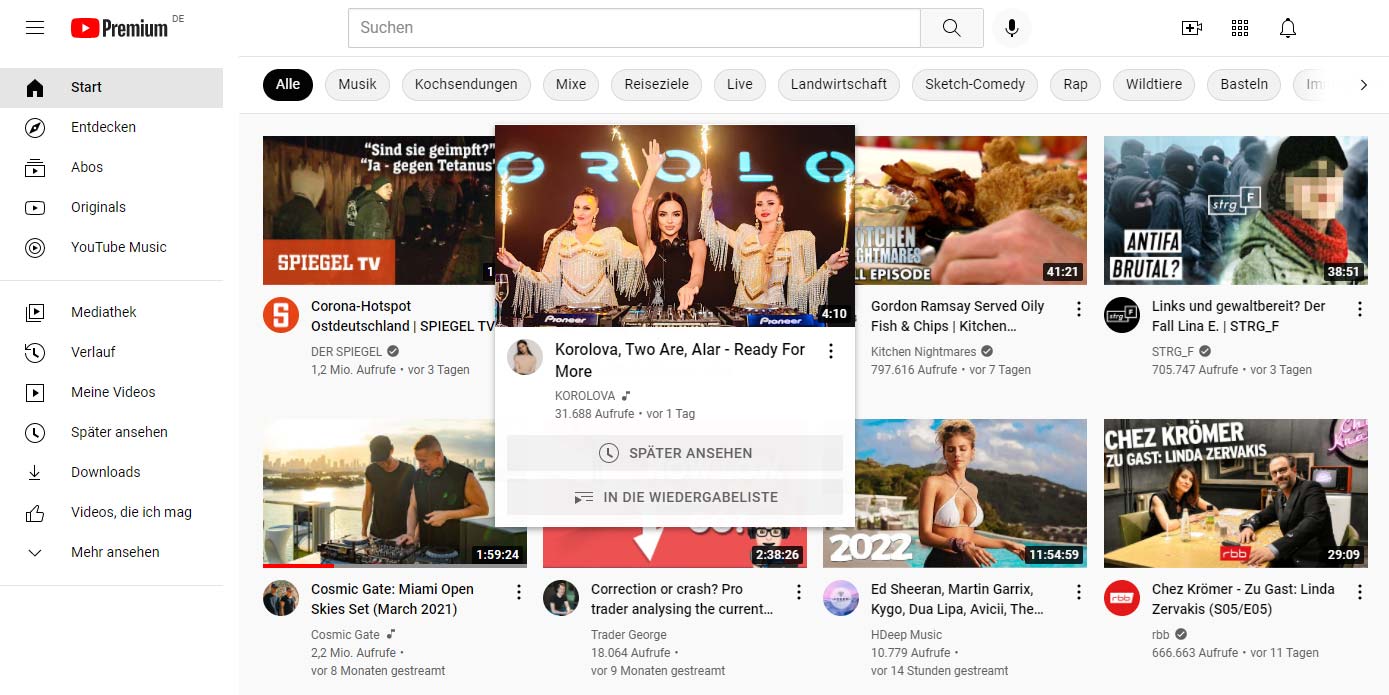
YouTube Streaming in Marketing: Live Events, Product Launches, and Community Building

Live Commentary in Marketing: Real-Time Community Engagement
LinkedIn Lead Generation: Attracting New Customers on LinkedIn








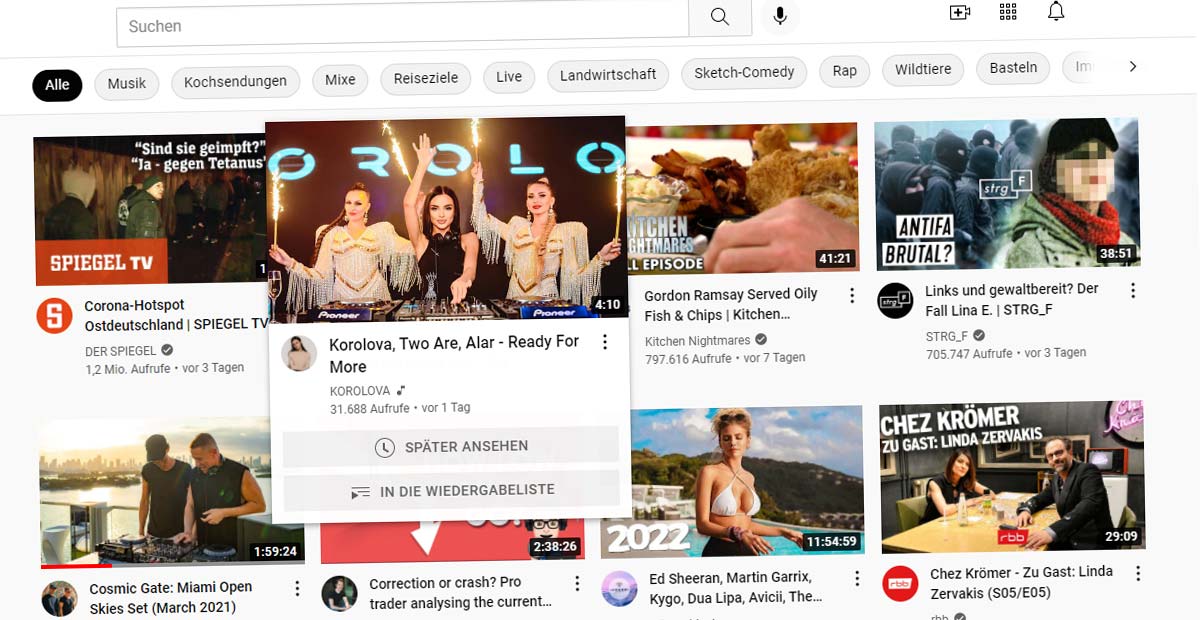

Content Production for Fitness Studios: TikTok, Instagram and the Journey from Concept to Finished Video
Social Media Platform: Definition, Features, and the Main Categories
How to Attract Customers for Free: 10 Methods That Really Work
Attracting Customers as a Service Provider: Channels, Mistakes, and a Step-by-Step System



 4.9 / 5.0