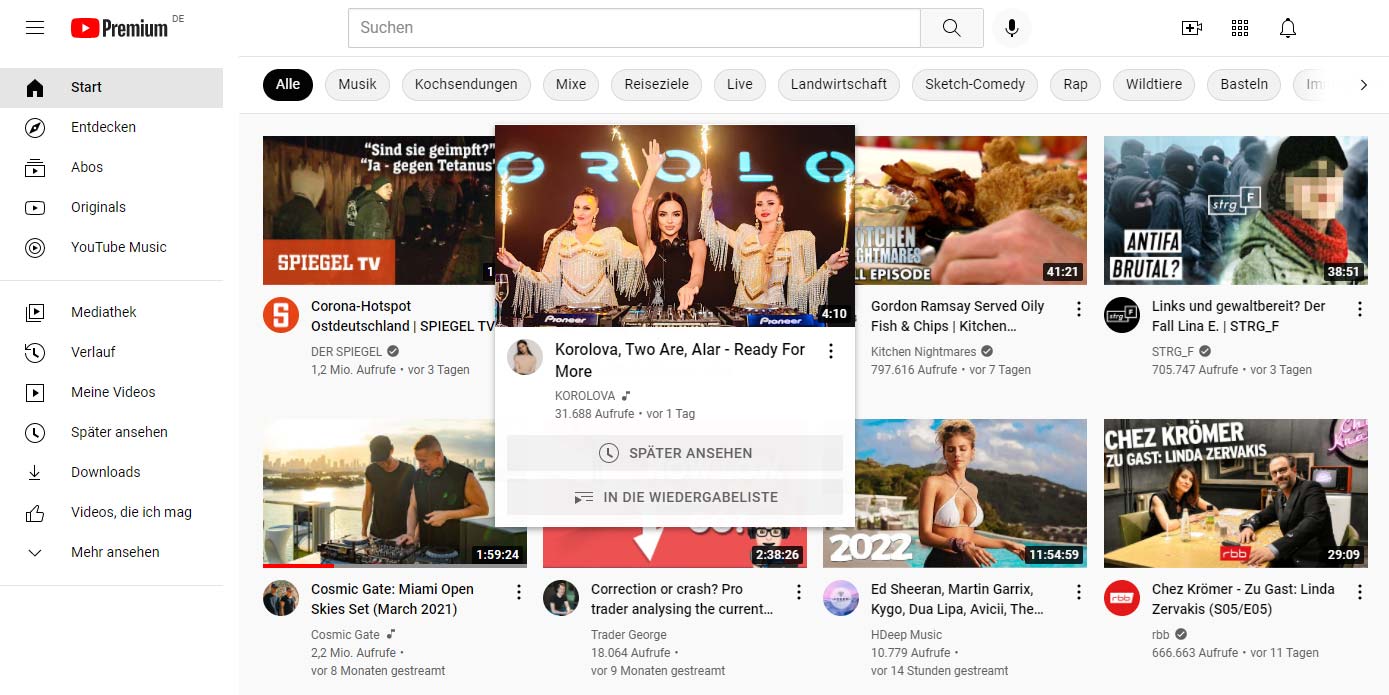
YouTube Streaming in Marketing: Live Events, Product Launches, and Community Building
Millions of viewers, zero broadcasting costs, maximum authenticity — YouTube Live has rewritten the rules of video marketing. What was once reserved for professional media companies is now available to every brand: its own live channel with global reach and a direct line to the community.
What Is YouTube Live in Marketing?
Here’s what it’s all about:
- YouTube Streaming in Marketing: A Brief and Clear Explanation
- Distinction from Related Concepts
- The foundation of every marketing strategy
YouTube Live is the live-streaming feature of the world’s largest video platform, which enables brands, creators, and businesses to communicate with their audience in real time. In a marketing context, YouTube Live is used for product launches, Q&A sessions, behind-the-scenes content, conference broadcasts, and community events. The key advantage over other streaming platforms: YouTube live streams are automatically archived as VOD (Video on Demand) and can continue to generate millions of views after the event—a unique evergreen effect that turns every live stream into a two-for-one content investment.
Core Principles of Live Marketing on YouTube
Live marketing on YouTube is based on three fundamental principles: real-time interaction, algorithmic visibility, and lasting content value. Unlike pre-produced videos, livestreams create a sense of immediacy and exclusivity—viewers are there in real time and experience brand moments that cannot be replicated. This principle of “controlled spontaneity” is at the heart of successful live marketing strategies. Those who manage to combine professional production with authentic, real-time communication earn the trust of their community in a way that no edited video can. Added to this is the discovery advantage: YouTube actively notifies subscribers about ongoing livestreams, which generates organic reach without an additional advertising budget.
Scope: An Overview of Formats and Applications
YouTube Live encompasses a wide range of formats that vary greatly in tone, length, and production effort. Product launches require the highest production quality and a clear narrative structure—every second counts here. Q&A sessions and AMAs (Ask Me Anything), on the other hand, thrive on spontaneity and direct interaction; excessive production is counterproductive here. Behind-the-scenes streams intentionally allow for a rougher aesthetic because they’re meant to convey authenticity. Conference streams, on the other hand, must be technically flawless, as outages during major events can cause significant reputational damage. Choosing the right format depends not only on the objective but also on the channel’s context and the expectations of the existing community.
| Format | Suitable for | Optimal length | VOD potential |
|---|---|---|---|
| Product Launch | New Products and Features | 30 to 90 minutes | Very high |
| Q&A and AMA | Community Engagement and Transparency | 45 to 60 minutes | High |
| Behind the Scenes | ShowcasingBrand Personality | 20 to 45 minutes | Medium |
| Live Events and Conferences | Awareness and Prestige | 2 to 8 hours | Very high |
Implications for Brands
Keep in mind:
- YouTube streaming in marketing strengthens your brand and customer loyalty
- Direct impact on brand awareness and conversion
- Long-term growth always pays off
YouTube Live offers brands a combination of reach, authority, and archiving capabilities that no other streaming platform provides in this form. With over 2.5 billion monthly users, YouTube is the most widely used video platform worldwide—and live content receives preferential treatment from the algorithm. Streams appear prominently in subscribers’ feeds, on the YouTube homepage, and in search results for relevant topics. A professionally produced YouTube livestream can become the most valuable content investment of the year if the preparation and follow-up are done right.
Facts & Figures: What YouTube Live Really Delivers
The numbers behind YouTube Live are impressive: According to a study by Conviva, live streams on YouTube achieve an average engagement rate of 13 percent—compared to one to three percent for pre-produced videos. At the same time, viewers stay with live streams on average 10 to 20 times longer than with regular videos. For brands, this means that going live once a month can significantly increase their average watch time metric—a factor that has a lasting positive impact on the algorithm. The economic aspect is also relevant: Super Chats and memberships enable direct monetization during the stream, while the subsequent VOD generates long-term revenue through ad revenue.
Strategic Importance: Trust, Authority, and Community Engagement
Brands that go live regularly build a qualitatively different relationship with their community than those that rely exclusively on pre-produced content. Livestreams are the digital equivalent of a public appearance: they signal openness, transparency, and self-confidence. These attributes are particularly valuable in industries where trust is a key factor in purchasing decisions—such as financial services, healthcare, technology, or premium consumer goods. A brand that discusses its product development live or has its CEO regularly answer questions in a livestream is investing in credibility that no advertising campaign can buy. In the long term, this fosters a loyal community that not only buys the brand’s products but also actively promotes it.
YouTube Live vs. the Competition: Twitch, TikTok, and Instagram
Twitch dominates gaming and esports, but has a narrowly defined demographic. TikTok Live reaches Gen Z with tremendous spontaneity, but lacks a VOD archive with a search function. Instagram Live is well-suited for short, informal sessions, but has significantly weaker discovery mechanisms. YouTube Live combines the best of both worlds: a broad demographic, robust search capabilities, lasting VOD value, and professional production capabilities that build a genuine brand presence.
Technical Requirements for Professional Streams
A professional YouTube livestream requires a stable internet connection (at least 10 Mbit/s upload for 1080p), a reliable encoding system such as OBS Studio, Streamlabs, or dedicated hardware encoders, professional lighting and audio equipment, and a polished production setup with camera cuts, transitions, and graphics. Brands that invest in production quality signal professionalism to their community—and clearly stand out from amateurish streams.
Strategic Deployment: Before, During, and After the Stream
Here’s how it works:
- Clearly define your goals before you start
- Strategically integrate YouTube streaming into your marketing mix
- Test, measure, and continuously optimize
Preparation for a YouTube livestream should ideally begin two to four weeks before the event. Promotional strategies include trailer videos with preview clips, community posts with countdowns, email campaigns to the newsletter list, and collaborations with creators who announce the stream on their channels. During the stream, interaction is key: Super Chats (paid comment highlights) should be read aloud, community questions should be answered directly, and surveys and polls should be used to drive engagement. After the stream, the post-stream phase begins: The full VOD remains permanently on YouTube but should be editorially enhanced—add chapter markers, optimize the thumbnail, and enrich the description with keywords. Highlights can be edited into separate short videos or YouTube Shorts, generating additional views and new subscribers. A single good livestream can thus yield four to six standalone pieces of content that drive traffic for months.
Step-by-Step: The Optimal Pre-Stream Strategy
Four weeks before the event: Determine the topic, format, and main message; write the stream title and description using relevant keywords; set up a Premiere or scheduled stream on YouTube—this way, interested viewers can click “Remind Me” in advance and receive a push notification. Three weeks before: Produce and publish a trailer video (60 to 90 seconds) that hints at the key content without giving too much away. Two weeks before: Launch an email campaign to newsletter subscribers and send collaboration requests to relevant creators. One week before: Post daily community updates with a countdown and conduct a final technical rehearsal. On the day of the event: Hold a dress rehearsal two hours beforehand; start the stream 15 to 20 minutes early (preview mode already triggers notifications). This structure ensures that a critical mass of viewers is already waiting when the stream starts—and that the algorithm classifies the stream as relevant.
Practical Tips: Maximizing Interaction During the Stream
The most common mistake in live marketing: Brands stream without actively interacting—they’re essentially just playing a pre-recorded video, only live. This wastes the format’s core potential. Instead, every stream should have a dedicated chat moderator who filters and passes on questions. Always acknowledge Super Chats by name—this encourages other viewers to contribute. Run polls every 15 to 20 minutes to engage passive viewers. Use pinned comments with up-to-date links or offers. Deliberately end the stream with a clear call to action: Subscribe, announce the next stream, promote a link in the description. Brands that consistently use these interaction loops have been shown to achieve higher watch time and significantly more channel subscriptions per stream hour than channels that simply broadcast passively.
Content Monetization: How a Live Stream Becomes Six Assets
The VOD of a livestream is just the beginning of the content monetization chain. Immediately after the stream, chapter markers (timestamps) should be set—they improve YouTube search results and allow viewers to jump directly to relevant sections. The three to five most impactful moments of the stream can be uploaded as separate clips ranging from three to eight minutes in length, which can be discovered independently of one another. The most impactful quote or the most important tip is formatted as a YouTube Short (under 60 seconds) and reaches an entirely new audience via the Shorts feed. Audio tracks can be repurposed as podcast episodes. Transcripts of the stream form the basis for blog articles or social media carousel posts. Those who systematically build this content repurposing chain can multiply the content yield of a single livestream without significant additional effort—while simultaneously increasing the channel’s thematic authority in the eyes of the YouTube algorithm.
Best Practice Examples
The most important thing:
- Leading brands prioritize consistency
- The courage to be different pays off
- Define measurable KPIs from the very beginning
Apple has made YouTube Live a must for every product launch—keynotes like WWDC or iPhone launches regularly attract five to fifteen million concurrent viewers on YouTube. The production quality is cinematic, and the chat is moderated by hosts. Google itself streams all Google I/O developer conferences live on YouTube—with interactive elements, breakout sessions, and a subsequent VOD archive that serves as a reference resource for developers worldwide. Porsche uses YouTube Live for world premieres of new models, creating an exclusive, global launch experience without the need for a physical event. Red Bull Stratos—Felix Baumgartner’s 2012 stratospheric jump—was one of the very first viral YouTube livestreams: eight million concurrent viewers, a world record at the time, and to this day a benchmark for ambitious live marketing.
Enterprise Example: How Tech Companies Have Made YouTube Live an Essential Channel
Apple, Google, and Microsoft have established YouTube Live not only as a streaming channel but as a standalone brand platform. Microsoft’s Xbox presentations regularly reach two to four million concurrent viewers and are specifically targeted at the gaming community on YouTube—not at trade media. Google I/O 2023 recorded over 15 million livestream views in the first 24 hours after the event, and the VOD continues to generate six-figure monthly view counts to this day. The recipe for success for these companies: professional multi-camera production, a carefully planned interactive segment (live demos, audience questions), a dedicated moderation team for the chat, and immediate community follow-up in the hours after the stream. Brands of all sizes can adopt this model on a larger scale—what matters is the structured approach, not the absolute production budget.
SME Example: YouTube Live as a Tool for B2B Companies
YouTube Live is by no means limited to consumer goods brands or tech companies. B2B companies are increasingly using the platform as an alternative to webinars, for customer training, and for thought leadership content. A mechanical engineering company that demonstrates its latest production facility live can reach buyers and engineers worldwide without incurring travel costs. A management consulting firm that presents a monthly live analysis of current market data builds a loyal audience of industry professionals over the course of several months—and positions itself as an authority in its sector. The key in a B2B context: The streaming frequency can be lower (once a month or once a quarter), but the quality of the content and its thematic relevance must be exceptionally high. After the stream, the VOD should be actively embedded in email campaigns, LinkedIn posts, and on the company’s own website to use the archive as a lasting lead magnet.
According to a study by Conviva, YouTube livestreams achieve an average engagement rate of 13 percent—compared to 1 to 3 percent for pre-recorded videos on the same platform.
Conclusion
- YouTube streaming is indispensable in modern marketing
- Think strategically, implement consistently
YouTube Live is no longer just an experimental option—it’s a strategic must-have channel for brands that want to combine community building, product marketing, and content efficiency. The combination of a global live audience, algorithmic reach amplification, and lasting VOD value makes YouTube Live the most versatile streaming platform in the marketing ecosystem. Those who invest in professional production and a consistent pre- and post-production strategy gain a content channel that has an impact far beyond the live stream itself and turns every event into a lasting asset.
How many subscribers do you need for YouTube Live?
You need 50 subscribers to access YouTube Live on mobile devices. There is no minimum number of subscribers required on desktop. For advanced features such as Super Chat, the terms and conditions of the YouTube Partner Program apply.
What software is best for YouTube livestreams?
OBS Studio (free, professional), Streamlabs (user-friendly, built-in overlays), and Wirecast (enterprise solution) are the most widely used tools. For simple streams, YouTube Studio’s native webcam integration is perfectly sufficient.
How do you promote an upcoming YouTube livestream?
Schedule streams on YouTube (they’ll appear in subscribers’ feeds), publish a trailer video, use the Community tab, send out email newsletters, and post announcements on other social media channels.
How long should a YouTube livestream last?
Product launches: 30 to 90 minutes. Q&As: 45 to 60 minutes. Events and conferences: 2 to 8 hours, depending on the program. Streams that are too short don’t give the algorithm enough time to bring in new viewers—at least 30 minutes is recommended.
What happens to a YouTube stream after it ends?
The stream is automatically saved as a VOD on the channel. With chapter markers, an optimized thumbnail, and a description enriched with keywords, the VOD can generate views over the long term and serve as evergreen content.

Increasing Reach: The Most Important Leverage Points for Each Channel

Influencers in Marketing: How Brands Use Influencers to Expand Their Reach

More Likes on Social Media: What Really Leads to More Engagement
Live Commentary in Marketing: Real-Time Community Engagement

Developing a Social Media Strategy: Case Study on Product Reviews and ABC Analysis
LinkedIn Lead Generation: Attracting New Customers on LinkedIn









 4.9 / 5.0