
Content Repurposing: Reusing Content, Transforming Formats, and Expanding Reach
Anyone who creates new content from scratch every month wastes time, budget, and energy—even though most of the knowledge is already there. Content repurposing means systematically transforming a piece of base content into multiple formats and distributing it across various channels. The result: greater reach and more touchpoints—at a fraction of the original effort.
What is content repurposing?
Repurposing doesn’t mean posting the same text on different platforms. It means adapting the core message of a piece of content to suit each platform—in a different format, a different language, or with a different level of depth. A 1,500-word blog post provides enough material for an entire week of content: a LinkedIn post, an Instagram Reel, an infographic, an email newsletter, and even a short podcast snippet.
Why Repurposing Isn’t Recycling
The key difference: Recycling copies; repurposing transforms. A text that appears exactly the same on LinkedIn and in a newsletter comes across as lazy and generic. Repurposing means changing the angle, adjusting the tone, and consistently tailoring the format to the expectations of the target audience.
A good blog post isn’t just finished content—it’s the source material for five other formats.
The Repurposing Matrix: 1 Piece of Original Content → 6 Formats
The following matrix shows how a single blog post is systematically adapted for all relevant channels. It can be applied to any topic—from content marketing to product announcements.
| Format | Channel | Scope | Time required | Tool Tip |
|---|---|---|---|---|
| Blog Post (Basic) | Website / SEO | 1,200–1,800 words | 3–5 hours | Notion, Google Docs |
| LinkedIn Post | 150–300 words + hook | 20–30 min. | Taplio, Shield | |
| Instagram / TikTok Reel | Instagram, TikTok | 30–60 sec., script from blog | 45–90 min. | CapCut, Descript |
| Infographic | Pinterest, LinkedIn, Blog | 5–8 Key Messages (Visual) | 30–60 min. | Canva, Piktochart |
| Newsletter Issue | Email list | 300–500 words + CTA | 20–30 min. | Mailchimp, Brevo |
| Podcast snippet / Audio clip | Spotify, YouTube | 2–5 min. Single topic | 30–45 min. | Descript, Audacity |
Time-Saving Calculation: If each of these formats were created from scratch, it would take about 10–12 hours of work. By repurposing content from a single source, the total effort is reduced to 6–7 hours—a savings of about 40 percent. Over the course of a year, with two blog posts per month, that amounts to nearly 60 hours saved.
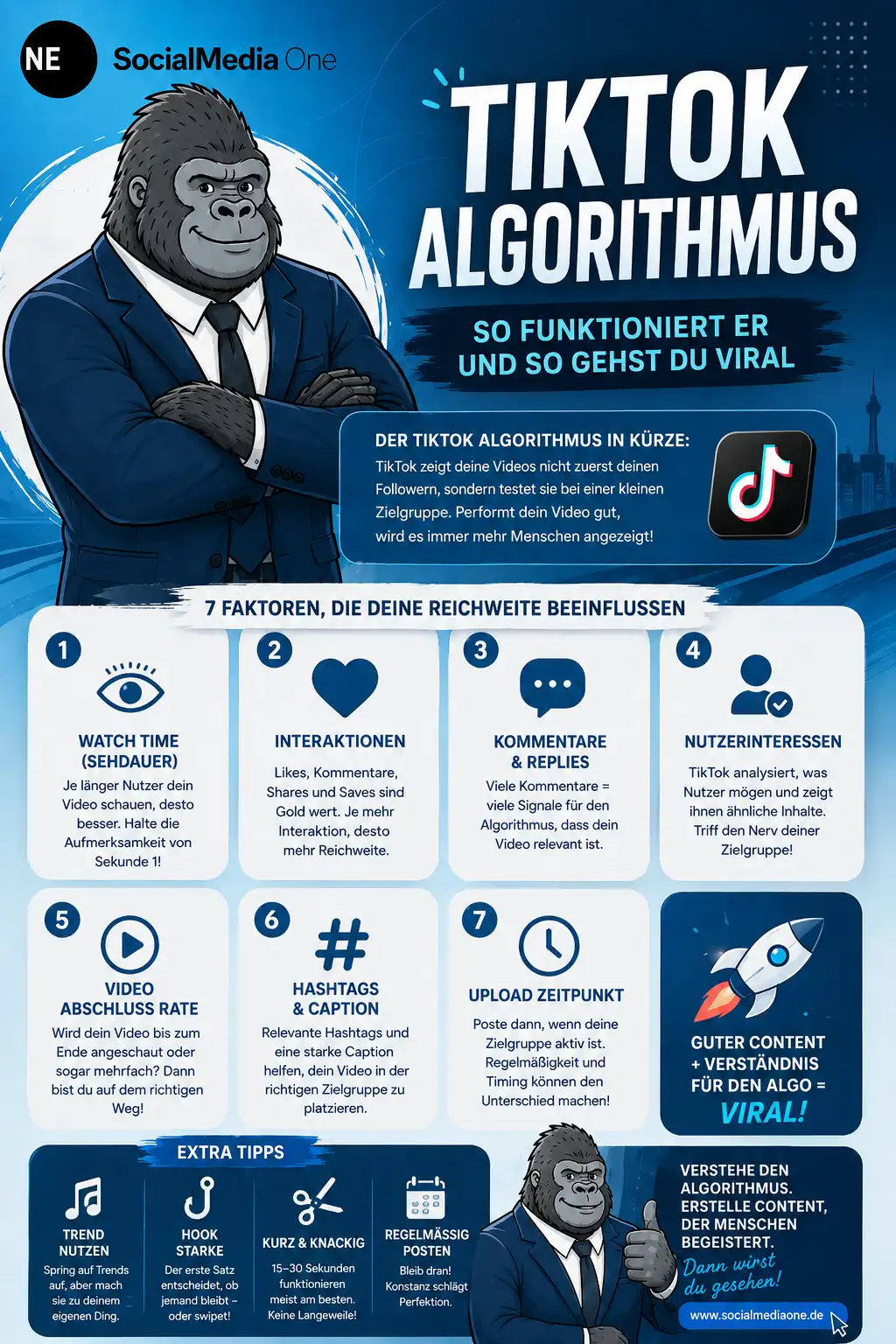
Mini Workflow: From a Blog Post to 5 Other Formats
The following workflow can be applied immediately to every new article. The order is not random: SEO content first, then the quick social media adaptations, and finally formats that require more production effort.
This infographic shows which content formats work best on which platforms—from short videos to Stories to carousel posts.
Step 1 — Write the base
A blog post with a clear structure, H2/H3 headings, specific data, and a central argument.
Step 2 — Extract the hook
Use the most powerful sentence or the most surprising statistic from the article as the opening for your LinkedIn post.
Step 3 — Visualize Key Messages
Turn 5–7 bullet points into a Canva infographic. Highlight the data sources.
Step 4 — Derive the reel script
Rewrite a single section (H2 block) as a 45-second video script. Speak it, don’t read it.
Step 5 — Condense the newsletter
Use the article’s conclusion plus three key points as an email introduction, and include a link to the article. Learn more about email marketing and newsletter automation.
Step 6 — Record a podcast snippet
Record the section with the most value (often a checklist or matrix) as a 2–3-minute audio clip.
What Types of Content Are Suitable for Repurposing? — Checklist
Not all content is suitable for repurposing. The following criteria can help you choose.
| Criterion | Suitable | Less suitable |
|---|---|---|
| Timeliness | Timeless Topics (Strategy, Fundamentals) | Daily News, Events |
| Depth | Articles with data, checklists, and matrices | Short opinion posts with no substance |
| Performance | Top Traffic Pages, Most-Shared Posts | Posts with zero organic traffic |
| Universality | Topics that appeal to multiple target audiences | Very niche, one-off examples |
| Structure | Clear H2 hierarchy, numbered steps | Continuous text without an outline |
Warning: Copy-pasting without adaptation is counterproductive
The most common mistake in repurposing is copying text directly without adapting it to the specific platform. LinkedIn rewards personal perspectives and line breaks—not long blocks of continuous text. Instagram Reels need a hook in the first three seconds, not an introductory sentence. Email readers expect added value right away, not a summary of the blog post.
Short paragraphs, personal tone, specific argument in the first line
Instagram / TikTok
Visual hook, motion, subtitles always on
- Newsletter: Immediate Benefits, No Repetition of the Blog Introduction
- Podcast: Use casual language, leave some pauses, and don’t just read the text aloud
- Infographic: Numbers and contrast first, no continuous text
Anyone who ignores this risks having their target audience recognize the same content across multiple channels—and perceive the account as repetitive. The opposite of reach.
Repurposing as Part of the Funnel Strategy
Well-executed content repurposing isn’t just a tool for efficiency—it’s funnel marketing in action. A blog post drives organic traffic. The Reel created from it generates awareness among a cold audience. The newsletter reactivates existing contacts. The infographic is shared in B2B conversations. All formats highlight the same core idea—and build trust across multiple touchpoints.
Repurposing is an underrated tool, especially for lead generation via social media: While a single channel reaches only a portion of the target audience, a multi-format strategy distributes the same content to different users with varying consumption habits.
An Overview of Content Transformation Tools
Description
Audio and Video Editing Using a Text Editor — Ideal for Podcast Snippets and Reel Scripts
- Canva: Infographics, carousel posts, and social media templates created from existing content
- Taplio / Supergrow: Generating LinkedIn Posts from Long-Form Content
- Notion / Airtable: Editorial Planning with a Repurposing Matrix for Each Article
CapCut
Reels with automatic captions, edited directly from longer clips
ChatGPT / Claude
First draft for a newsletter version or social media copy based on blog paragraphs
Repurposing and B2B Content
In the B2B environment, repurposing plays a particularly important role, as purchasing decisions take longer and require more touchpoints. A white paper becomes a series of LinkedIn articles, and a webinar recording is turned into short clips for the B2B social media strategy. The LinkedIn content strategy benefits directly from structured repurposing—regular posts based on existing content maintain visibility without the need for new content every week.
Conclusion
Content repurposing isn’t a stopgap measure for teams on a tight budget—it’s a strategic decision. Once you invest in creating strong foundational content, you can derive 5 to 6 additional formats from it that reach different target audiences on different channels. The key: The transformation must be tailored to each platform. No copy-and-paste, no one-size-fits-all approach—but genuine adaptation to the format, tone, and audience expectations. With the right repurposing matrix and a clear workflow, a single blog post can become a full week’s worth of content.

How-To Content: Using Tutorials, Guides, and Search Intent Effectively

History of Marketing: From Early Advertising to Modern Campaigns
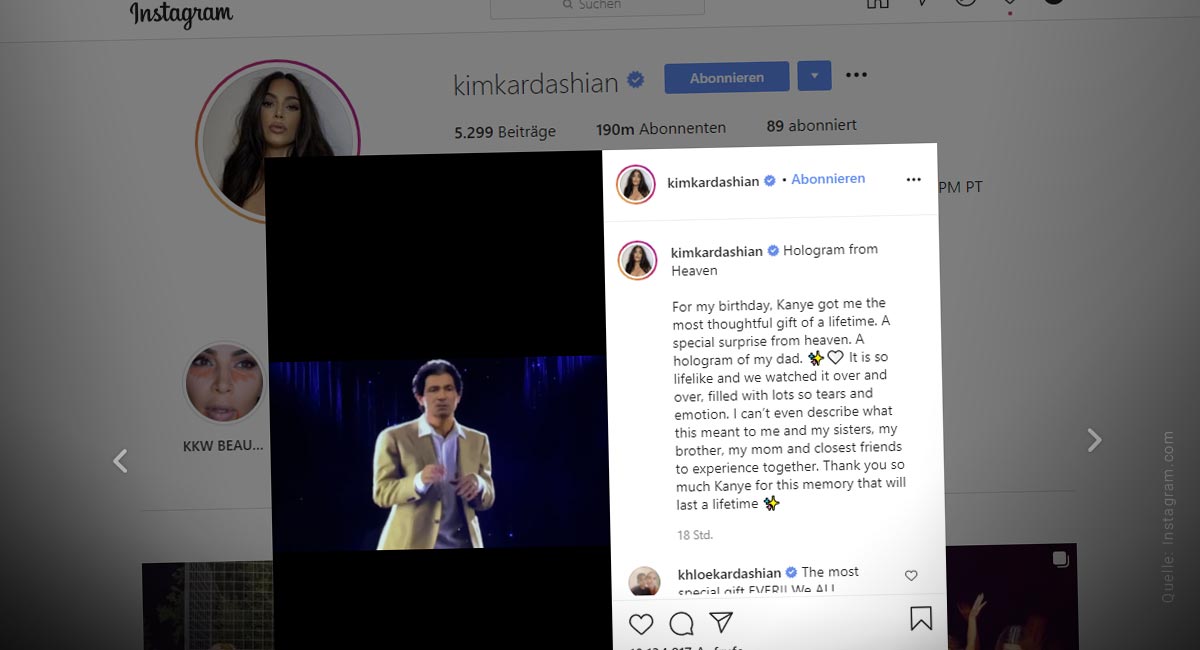
Live Commentary in Marketing: Real-Time Community Engagement
B2B Lead Generation: More Qualified Leads
More Downloads for Your App: 15 Strategies for ASO, Paid, and Organic

How to Attract Customers for Free: 10 Methods That Really Work















 4.9 / 5.0