
WhatsApp business marketing: customer communication and sales
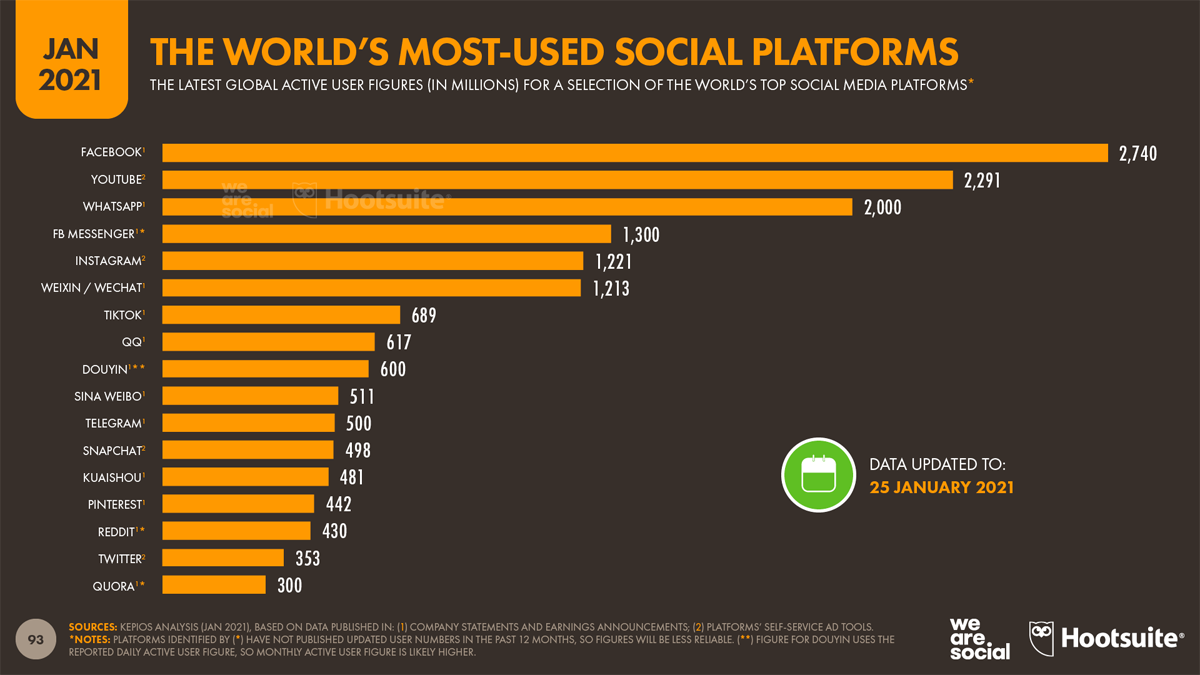
WhatsApp has over 2 billion active users worldwide – and in Germany, the messenger is the most used app of all, with a daily usage time that exceeds all social networks combined. This raises a clear question for companies: why do so few use this direct channel strategically?
Understanding WhatsApp Business as a corporate channel
WhatsApp Business exists in two versions: the free app for small companies and the WhatsApp Business API for medium-sized to large companies. Both have different possibilities, limits and strategic fields of application.
- 2+ billion users worldwide, market leader in Germany and Europe
- 98% open rate for WhatsApp messages (vs. 20-30% for email)
- Direct 1:1 communication without algorithmic filters
- Business API enables automation, chatbots and CRM integration
- WhatsApp Channels as a new broadcast format for brands
The WhatsApp Business app is aimed at sole traders and small teams. It offers a company profile (address, website, opening hours), automatic welcome messages, out-of-office notes and simple label systems for contact management. Sufficient for first steps in WhatsApp marketing – too limited for scalable communication.
The Business API is the professional solution: it enables the connection to CRM systems (Salesforce, HubSpot), the automation of customer inquiries via chatbots, integration into existing ticketing systems and the sending of templates to verified contacts. Access is via official business solution providers (BSPs) such as Twilio, MessageBird or Vonage – direct API registration with Meta is not possible for companies.
WhatsApp broadcast and channels: building reach
WhatsApp Channels is the latest feature for corporate communications: a broadcast format that allows companies to send messages to any number of subscribers without the recipients being connected to each other. The difference to broadcast lists: channels can be found publicly – users can search for them in an internal directory and subscribe to them.
For brands, this means a new distribution channel for newsletter-like content that works entirely within the WhatsApp app. The advantage: the open rates significantly exceed traditional email newsletters. The disadvantage: channels do not allow interaction – subscribers cannot reply, which negates the dialog-oriented nature of WhatsApp.
Broadcast lists (via the Business app or API) enable personalized mass communication: A message is sent to many contacts, but appears as an individual message in the personal chat. Important: The recipient must have saved the sending number in their contacts – otherwise the message will not land. This makes clean opt-in processes a technical necessity, not just a GDPR obligation.
Agency tip: Don’t start WhatsApp marketing with broadcasts, but with service automation. A well-configured FAQ bot that answers customer questions immediately creates more trust and measurable efficiency than a monthly broadcast newsletter. Broadcast communication only really makes sense once the service layer is in place.
WhatsApp for customer communication and support
The biggest immediate ROI of WhatsApp Business is in customer support. Customers today expect companies to be available on the channels they use every day anyway – and WhatsApp is the most used of all in Germany.
Concrete fields of application for WhatsApp in customer support:
- Order confirmations and shipping status: Transaction notifications via WhatsApp have significantly higher open rates than email
- Appointment confirmations and reminders: For service providers, medical practices, salons – automated and with confirmation option
- Request management: Automatically forward initial requests with standardized responses or to the right team
- Post-purchase communication: Query customer satisfaction, request reviews, place upsell offers
- Complaint handling: direct, fast solution communication without waiting in call center queues
Integration into existing CRM systems is crucial for the use of support. WhatsApp conversations must be visible and manageable for the team – not just as isolated app chats. This is where the Business API comes into play: it turns WhatsApp into a fully-fledged channel in the omnichannel support stack.
WhatsApp Commerce: product catalog and direct sales
WhatsApp has had a commerce function for several years that has considerable potential for e-commerce companies: The product catalog. Companies can create a structured product catalog directly in WhatsApp Business that customers can search through without leaving the app.
| Feature | WhatsApp app | WhatsApp Business API |
|---|---|---|
| Product catalog | Yes (max. 500 products) | Yes, via Catalog Manager |
| Payment processing | No (DE) | No (DE), Active in markets such as Brazil/India |
| Orders in Chat | Manual | Automated via chatbot/API |
| Broadcast lists | Yes (256 contacts) | Yes, unlimited via templates |
| Chatbot integration | No | Yes (complete) |
| CRM connection | No | Yes (via BSP) |
| Analytics | Minimal | Complete (delivery, opening, click) |
In markets such as Brazil and India, where Meta has already rolled out WhatsApp Pay, the entire purchasing process – from product discovery to payment – works entirely within WhatsApp. Payment processing is not yet available in Germany, but the infrastructure for conversational commerce (show product, arouse interest, redirect to store page) is already working.
WhatsApp automation and chatbots in use
The Business API unfolds its full value in combination with automation. A well-configured WhatsApp chatbot can solve the majority of recurring requests without human intervention – and only escalate complex cases to the team.
Typical automation scenarios:
- Welcome flow: As soon as a new contact writes the WhatsApp number, a structured welcome sequence with the most important information starts automatically
- FAQ bot: Frequently asked questions (opening hours, delivery times, returns) are answered automatically – reduces support volume by 40-60%
- Lead qualification: interested parties are guided through structured questions, the information is transferred directly to the CRM
- Re-engagement: Automatically reactivate inactive customers with personalized offers
- Post-purchase sequence: Automatically send shipping information, usage tips and evaluation request after purchase
Integration into the broader social media stack is just as important as the internal process. A social media agency that provides strategic support for WhatsApp Business does not think of WhatsApp as an isolated channel, but as part of an integrated communication ecosystem – together with Instagram, email and the direct sales process.
WhatsApp and GDPR: What companies need to consider
WhatsApp marketing in Germany is subject to strict requirements. The most important points:
- Opt-in obligation: customers must expressly agree to receive messages via WhatsApp – a screenshot is not sufficient proof
- Purpose limitation: Consent must be specific – those who have consented to order confirmations may not be contacted with advertising
- Data retention: Call data may only be stored for as long as the purpose requires – typically 6-12 months for support
- Meta as a processor: An order processing agreement (AVV) is required with Meta – handled via the BSP for API users
- Right to erasure: customers can request the erasure of their chat data – the process for this must be documented
GDPR compliance is not an optional extra, but a basic requirement for professional WhatsApp marketing. Companies that send broadcasts without proper opt-in processes not only risk fines, but above all a loss of trust – the opposite of what WhatsApp is supposed to do as a direct channel.
For SMEs with a limited budget, we recommend starting with the free WhatsApp Business App – before investing in API infrastructure, the basic interest of the target group in the channel should first be validated. As with UGC marketing, the same applies here: Test first, then scale.
Frequently asked questions
Related articles
- Social media agency: strategy, channels and campaigns from a single source
- Instagram agency: strategically combining meta channels
- Social media marketing for SMEs: making the most of strategy and budget
- UGC content marketing: using user-generated content strategically
- Request contact: Start your WhatsApp marketing with Social Media One

Customer Service in Marketing: Strategies, Channels, and Boosting Customer Satisfaction

New Customer Acquisition: Online and Offline Strategies for Attracting Customers
Attracting Customers as a Service Provider: Channels, Mistakes, and a Step-by-Step System

Owned Media: Build Your Own Channels and Use Them as Brand Assets

CRM: What Customer Relationship Management Really Does
Performance Max: The Automated Google Ads Campaign Type














 4.9 / 5.0