Singles’ Day: The World’s Largest Shopping Event and What Brands Can Learn From It
Every year on November 11, China transforms into a massive digital shopping mall—and the rest of the world watches in fascination. Singles’ Day generates more revenue in just a few hours than Black Friday and Cyber Monday combined. For brands worldwide, this date is no longer a niche Chinese phenomenon, but a strategic must-attend event on the marketing calendar.
What is Singles’ Day?
Here’s what it’s all about:
- Singles’ Day Explained Simply and Clearly
- How It Differs from Related Concepts
- The foundation for any marketing strategy
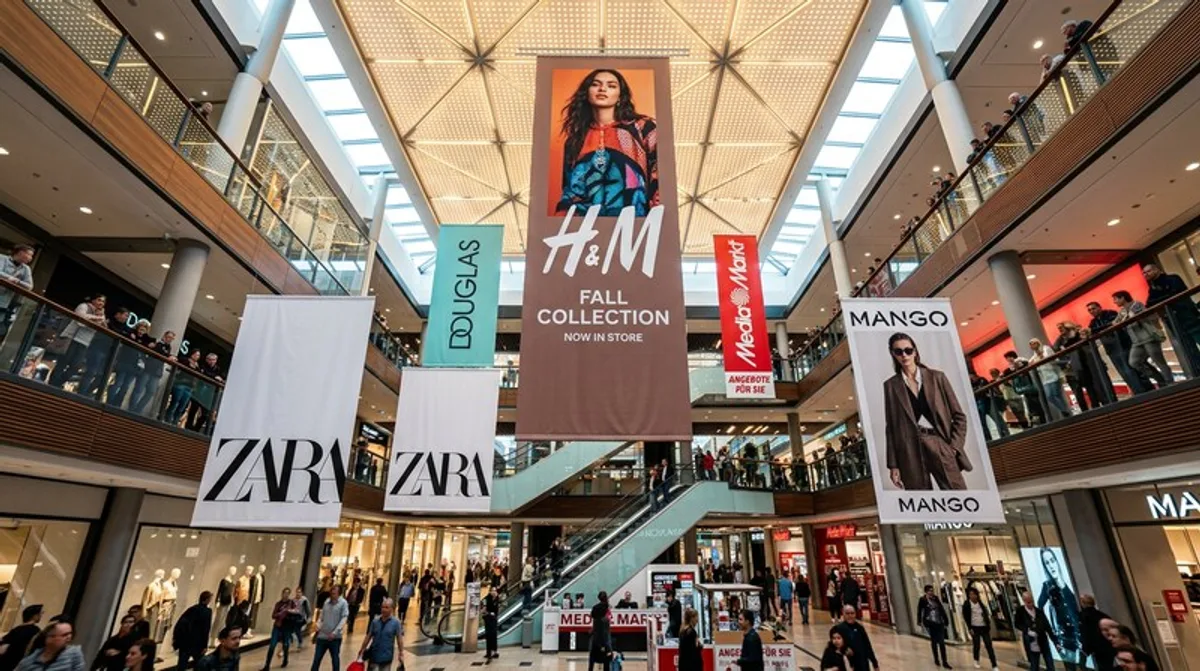
Singles’ Day, also known as Double 11 or 11.11, is the world’s largest shopping event by revenue. Originally created as a celebration for unmarried people, the day has evolved into a multi-billion e-commerce spectacle. Alibaba first commercialized the date in 2009 on its Taobao platform, setting a global standard for flash sales, countdown deals, and livestream commerce. The symbolic number 11.11—four ones representing four singles—has become the strongest marketing brand in Asia’s retail calendar. Today, not only Chinese platforms such as Tmall and JD.com participate, but increasingly also Western retailers such as Zalando, MediaMarkt, and Otto.
Origins and Cultural Roots
Singles’ Day originated in the early 1990s at Chinese universities as an unofficial alternative to Valentine’s Day—a day when unmarried people celebrate themselves and exchange small gifts with one another. The choice of the date 11/11 is deliberately symbolic: four ones represent four singles standing on their own. What began as a student tradition became a commercial movement in 2009 thanks to Alibaba’s strategic vision. With initial sales of just 7.8 million U.S. dollars in its first year, Alibaba founder Jack Ma proved that shopping events with cultural roots generate far more traction than mere discount promotions. By 2023, Singles’ Day had evolved into a global spectacle involving more than 290,000 brands from over 100 countries.
How It Differs from Other Shopping Events
Compared to Black Friday and Cyber Monday, Singles’ Day differs fundamentally in its mechanics. While North American shopping events rely primarily on linear discounts and are rooted in brick-and-mortar retail, Double 11 is a native digital ecosystem. Live streaming, mini-games, pre-orders, and multi-tiered discount systems generate engagement that begins weeks before the actual shopping day. JD.com complements the offering with a stronger focus on electronics and home appliances, while Tmall favors luxury and lifestyle brands. Together, these two platforms generate a sales volume that significantly exceeds even Amazon’s Prime Day.
| Aspect | Description |
|---|---|
| Origin | Student Traditions at Chinese Universities, 1990s |
| Commercialization | Alibaba Launches Its First Singles’ Day Sale of 2009 on Taobao |
| Global Reach | More than 290,000 brands worldwide participate in Tmall campaigns |
| Record Revenue | The Alibaba ecosystem generated more than $84 billion in gross merchandise value (GMV) in 2021 |
Implications for Brands
Keep in mind:
- Singles’ Day strengthens your brand and customer loyalty
- Direct impact on brand awareness and conversion
- Long-term development is always worthwhile
Singles’ Day is more than just a day of discounts—it’s a cultural phenomenon that’s changing the way brands interact with consumers. While Black Friday focuses on traditional price cuts, Double 11 combines entertainment, community, and commerce into a unique experience. Brands that strategically leverage Singles Day not only benefit from short-term sales spikes but also build long-term brand loyalty. Especially for brands looking to enter the Chinese market or strengthen their position there, November 11 is an indispensable tool for increasing visibility and acquiring new customers.
Facts and Figures on Market Significance
The figures for Singles’ Day are impressive: Alibaba’s ecosystem alone generated a GMV of 84.54 billion U.S. dollars in 2021—all in a single day. By comparison, Black Friday 2022 in the U.S. generated approximately $9.1 billion in online sales. Singles’ Day is thus not only five times larger, but is also growing at a faster rate. Studies by McKinsey show that Chinese consumers begin bookmarking and pre-ordering products an average of 4.2 weeks in advance—which opens up a significant window of opportunity for brands to run awareness campaigns. In addition, the share of international brands on Tmall is steadily increasing: In 2023, for the first time, more than 50 percent of participating stores were foreign brands, underscoring the event’s global appeal.
Strategic Importance Beyond Revenue
For many brands, Singles’ Day is first and foremost a goldmine of data and insights. The massive volume of transactions within 24 hours provides valuable insights into which product categories, price points, and creative formats resonate with target audiences. Brands like Estée Lauder and Dyson explicitly use November 11 as a testing ground: What works on Tmall is subsequently adapted for European markets. Furthermore, Singles’ Day is a first-rate brand-building tool—studies by Kantar show that brands that actively participate in the event achieve consistently higher awareness levels among the Chinese middle class than those that are only sporadically present.
Live-Stream Commerce and KOL/KOC
At the heart of modern Singles’ Day is livestream commerce. Key Opinion Leaders (KOLs) and Key Opinion Consumers (KOCs) showcase products in real time, answer questions, and trigger impulse purchases through limited-time deals. Top streamers like Li Jiaqi, known as the “Lipstick King,” sell millions of products in a matter of minutes. Western brands must understand this culture and build partnerships with local creators to come across as authentic.
Gamification as a Conversion Driver
Alibaba and Tmall have been incorporating gamification elements for years: earning points, inviting friends, and playing mini-games within the app—all of which keep users engaged for weeks leading up to the actual shopping day. The pre-event phase often begins as early as the start of October and generates tremendous momentum in user engagement. Brands that incorporate these mechanics early on benefit from significantly higher conversion rates on November 11 itself.
Strategic Deployment for Western Brands
Here’s how it works:
- Clearly Define Your Goals Before You Start
- Integrate Singles’ Day strategically into your marketing mix
- Test, measure, and continuously optimize
For brands from Germany and Europe, Singles’ Day presents a three-phase opportunity: First comes the pre-event phase (October through November 10), during which wish lists are filled, teaser campaigns are launched, and influencer collaborations are activated. On the day of the event itself, speed and exclusivity are key—limited-edition bundles, countdown timers, and flash deals create the necessary FOMO effect. In the post-event phase (November 12–20), brands can capture latecomers, gather reviews, and set up remarketing campaigns for Christmas. Platforms like Zalando are increasingly using November 11 as the kickoff for their entire winter sale season. A clear metrics strategy is crucial for success: GMV (Gross Merchandise Value) shows the absolute volume, while conversion rate and ROAS (Return on Ad Spend) measure the efficiency of the resources deployed. By tracking these three KPIs from the start, brands can iteratively improve their Singles’ Day campaign and adapt it for Western markets.
Step-by-Step: The Three-Phase Strategy
Phase 1 (Weeks 1–4 in October): Build awareness and anticipation. Brands run their first teaser ads on social media, engage their email lists with early access offers, and set up wish list features on their platforms. The goal is to gather as many intent signals as possible before the actual shopping day begins. Phase 2 (November 11): Conversion under time pressure. Countdown timers, exclusive bundles, and hourly deals create FOMO. Brands that also integrate livestreams or social commerce formats significantly increase the average time spent on site and, consequently, the likelihood of a purchase. Phase 3 (November 12–20): Follow-up and holiday remarketing. Those who haven’t purchased yet receive personalized offers based on their browsing history. At the same time, positive reviews are actively collected and used as social proof for the upcoming Christmas season.
Common Mistakes Made by Western Brands on Singles’ Day
The biggest mistake is starting too late: Brands that don’t begin their marketing efforts until November 10 miss out on the majority of pre-event traffic. Another common mistake is underestimating the importance of localization—generic discount banners without cultural context are perceived by Chinese consumers as foreign and untrustworthy. Brands that enter the market without local creator partnerships also face a structural attention gap: According to analysis data from Launchmetrics, KOL-backed campaigns achieve engagement rates up to three times higher than pure paid-media approaches. Finally, many brands underestimate the logistical burden: Those who fail to meet delivery promises on November 11 risk lasting reputational damage in a market that places extremely high value on on-time delivery.

Best Practice Examples
The most important thing:
- Leading brands prioritize consistency
- The courage to be different pays off
- Define measurable KPIs from the very beginning
Several international brands have shown how to successfully bring the Singles’ Day concept to Europe. Zalando launched its own 11.11 promotions early on, offering exclusive benefits to Zircle members and thereby expanding its customer loyalty strategy. MediaMarkt positions Singles’ Day as a warm-up for the holiday shopping season and runs target-audience-specific performance campaigns. Nike China is investing heavily in Tmall flagship livestreams featuring athletes as KOLs, achieving conversion rates that far exceed those of traditional display advertising. L’Oréal is among the top 5 brands on Tmall and combines beauty tutorials, sample programs, and countdown deals into a seamless sales funnel. Otto Germany has introduced November 11 as its own deal day and uses email segmentation and push notifications to reach existing customers with the right offers at the right time.
L’Oréal and Nike: Two Global Models
L’Oréal’s Tmall strategy is considered the gold standard in the industry: The company begins as early as September with beauty tutorial series on Douyin (TikTok China), establishes initial engagement through sample programs, and converts these users on November 11 with targeted countdown deals. Nike takes an athlete-centric approach: Local sports influencers host product launches via livestream, combined with limited-edition colorways produced exclusively for Singles’ Day. This exclusivity creates genuine scarcity rather than artificial urgency —a key difference that strengthens brand perception in the long term rather than damaging it with excessive discounts.
Zalando and Otto: A European Adaptation
For the German market, Zalando demonstrates how the Singles’ Day model can be effectively adapted without a direct connection to China. The focus is on the Zircle membership: Members receive early access to deals, exclusive product drops, and higher discount tiers than guests. This strategy transforms Singles’ Day from a general discount day into a loyalty program event. Otto, on the other hand, relies on precise segmentation: Customers with a purchase history in specific categories receive push notifications on November 11 tailored exactly to those categories. According to Otto, the open rate for these target-group-specific communications is 2.8 times higher than for generic promotional messages.
Alibaba’s Singles’ Day 2021 generated a GMV of over 84 billion U.S. dollars in just 24 hours—equivalent to the combined annual revenue of several DAX-listed companies.
Conclusion
- Singles’ Day is indispensable in modern marketing
- Think strategically, implement consistently
In less than two decades, Singles’ Day has evolved from a lighthearted student holiday into the world’s top-grossing shopping event. For brands worldwide, it serves as a case study in commerce innovation: livestreaming, gamification, KOL networks, and data-driven personalization are no longer trends—they’re the norm. Anyone who views November 11 merely as an extended Black Friday is missing out on enormous potential. The future belongs to brands that seamlessly blend entertainment and transactions—and far beyond the Chinese market.
What is Singles’ Day, and when does it take place?
Singles’ Day takes place annually on November 11 and is the world’s largest shopping event in terms of sales. It was commercialized by Alibaba in 2009 and has since generated billions in sales within just a few hours.
How is Singles’ Day different from Black Friday?
While Black Friday focuses on traditional discounts, Singles’ Day combines livestream commerce, gamification, and collaborations with key opinion leaders (KOLs) to create an entertaining shopping experience. Preparations often begin weeks before the actual shopping day.
Which German retailers are participating in Singles’ Day?
Zalando, MediaMarkt, and Otto are among the German retailers that have established November 11 as a standalone deal day and strategically use it to kick off the holiday shopping season.
Which metrics are the most important for Singles’ Day?
The three key KPIs are GMV (Gross Merchandise Value) as a revenue indicator, conversion rate to measure the relevance of offers, and ROAS (Return on Ad Spend) to measure the efficiency of advertising spending.
How can Western brands strategically leverage Singles’ Day?
Successful strategies consist of three phases: a pre-event campaign lasting several days that includes teasers and influencer engagement; intensive promotion of deals on November 11 itself; and remarketing and review collection during the post-event phase through November 20.
Shopping Event: How Brands Use Events to Create Shopping Experiences and Drive Sales

Marketing China: Agency, Experience, Economy, Strategy + Tips

Cross-Selling and Upselling: Difference, Examples, and Strategy

Shared Media: Definition, Meaning and Strategy in the PESO Model

PR Tools: Software for Monitoring, Analysis, and Public Relations
Sentiment Analysis: Definition, Methods, and Applications in Marketing








Global: Social Media Agency worldwide for TikTok, Youtube, Instagram, Facebook & Co.

New Customer Acquisition: Online and Offline Strategies for Attracting Customers
Retail Marketing: Strategies, Channels, and Customer Loyalty in the Retail Industry

Retail: Definition, Trends, and Strategies in Modern Retail



 4.9 / 5.0