
Momentum: When Campaigns Take on a Life of Their Own
Some campaigns exceed all expectations—not because they had a larger budget, but because they developed a momentum of their own that went beyond the direct influence of marketing. This ability of content to take on a life of its own is the most sought-after—and at the same time, the most difficult to plan for—goal in modern marketing.
What is “momentum” in marketing?
Here’s what it’s all about:
- Momentum Explained Briefly and Clearly
- Distinction from Related Concepts
- The foundation of every marketing strategy
“Momentum” describes the state in which a campaign, a piece of content, or a brand message begins to spread on its own—without further paid media spending. The content is shared, commented on, remixed, parodied, and discussed. The original brand loses complete control but, in return, gains organic reach and credibility that no budget can buy. Momentum arises at the intersection of relevance, timing, and emotional resonance.
Core Principles of Self-Sustaining Momentum
Viral spread follows a clearly recognizable pattern: A piece of content strikes an emotional chord, is shared by an initial group that sees it as something that defines their identity, and from there spreads to broader networks. The key factor here is what’s known as the “shareability factor”—the content must offer social value to the person sharing it. People share things that make them appear smarter, funnier, more informed, or more empathetic. Content that gains momentum on its own is never arbitrary: It has a clear message, a recognizable style, and an immediate emotional connection. Brands that understand this stop producing advertisements and instead begin to create topics of conversation.
Distinction: Organic Momentum vs. Viral Campaign
The terms “viral” and “momentum” are often used interchangeably, but they describe different phenomena. “Viral” refers to the speed and scope of dissemination: Content spreads rapidly and reaches many people in a short time. Momentum, on the other hand, describes a longer, self-sustaining process: The content is not only shared but also further developed, parodied, remixed, and placed in new contexts. Momentum is more sustainable than short-term virality. While a viral moment often fizzles out after just a few days, momentum can generate new waves of attention for weeks or even months. Another difference: Virality can be simulated through paid seeding, whereas genuine momentum arises exclusively organically.
| Aspect | Description |
|---|---|
| Triggers | Emotion, surprise, social relevance, humor |
| Distribution | Organic via social media shares, earned media, and word of mouth |
| Control | Low to none—the community takes the wheel |
| Value | Earned media, credibility, disproportionately large reach |

Why is momentum so crucial for brands?
Remember:
- Momentum creates a direct competitive advantage
- Measurable impact on revenue and reach
- Starting early pays off in the long run
In an era when ad blindness and ad blockers are increasingly undermining the impact of paid advertising, organic reach is more valuable than ever. When people share content of their own accord, they’re signaling to their community: “This is worth your time.” This social recommendation carries a level of credibility that no paid ad space can replicate. Viral reach, therefore, is not just a bonus—it’s a strategic goal that modern campaign planning should actively work toward.
Facts & Figures: What Organic Reach Is Really Worth
Studies by Nielsen show that 92 percent of consumers trust recommendations from friends and family more than any form of advertising. In the digital context, this principle applies directly to social shares and organic mentions. A study by the Wharton School of Business found that content perceived as “socially recommended” is up to three times more likely to trigger a purchase than direct advertising messages. The cost per acquisition drops significantly for campaigns with strong organic momentum: While traditional performance campaigns achieve CPAs ranging from 20 to 80 euros, viral campaigns can achieve the same effect at a fraction of the cost. For budget planning, this means that an investment in shareable content pays off significantly more in the long term than an equivalent paid media budget.
- 92% trust recommendations from friends over advertising
- Socially recommended content leads to a threefold higher likelihood of purchase
- Viral campaigns significantly lower the cost per acquisition
- Traditional campaigns cost 20–80 euros per CPA
- Shareable content is more profitable than paid media in the long term
- Organic mentions bring the principle of trust into the digital realm
Strategic Importance for Brand Building
Momentum isn’t just a short-term reach booster—it changes long-term brand perception. When a brand generates conversation that circulates organically, it becomes embedded in the cultural consciousness of its target audience. That’s the difference between a brand people talk about and a brand people know. Campaigns with genuine momentum consistently lead to a measurable increase in brand equity, an improved Net Promoter Score, and stronger emotional loyalty among existing customers. This is especially true in the B2C sector: Brands that become culturally relevant spend less on acquiring new customers because prospects are already positively primed.
Earned Media as a Booster
When a campaign gains momentum of its own, earned media almost inevitably follows: journalists, bloggers, and creators report on the phenomenon. This editorial coverage acts as a legitimacy booster. Brands that manage to make it into media outlets’ editorial calendars without paying for it have fully harnessed the power of momentum. The return on investment for earned media regularly exceeds that of paid media by a factor of several times.
Word of Mouth in the Digital Age
Word of mouth—one of the oldest marketing principles—is experiencing a renaissance in the age of social media. A single viral post can reach more people than a TV campaign that runs for months. The speed and reach of digital word of mouth are unparalleled: What starts as an Instagram post in the morning can end up on the evening news by nightfall. Brands need to understand that word of mouth shouldn’t be left to chance—it can be strategically driven.
How do brands build momentum?
Here’s how it works:
- Clearly define your goals before you start
- Integrate organic momentum strategically into the marketing mix
- Test, measure, and continuously optimize
Organic momentum cannot be forced, but you can create conditions that make it more likely to happen. The most important element is emotional relevance: content that evokes joy, surprise, outrage, emotion, or a strong sense of identification will be shared. Second, there needs to be a shareability factor—the content must be structured in such a way that sharing it enhances the sharer’s own identity. Third, timing plays a central role: Campaigns that respond to current social issues or moments can benefit from existing momentum. Fourth, a low barrier to sharing lowers the threshold: a simple hashtag, a memorable meme format, or a challenge that invites participation significantly accelerates the spread. The art lies in combining all these elements in such a way that the initial spark turns into a wildfire.
- Emotional relevance drives the willingness to share
- Content must reinforce the sharer’s identity
- Align timing with current topics
- Low barriers increase the speed of spread
- Hashtags and challenges accelerate the viral effect
- Combining all these elements creates momentum
Step-by-Step: Strategically Building Momentum
The first step is to define the target audience based on emotions: not “who buys our product,” but “what emotions and identities drive our target audience.” The second step is to identify a specific cultural moment or social discourse in which the brand can authentically engage. Third step: The format is chosen to suit the platform and user behavior—short video formats for TikTok and Instagram Reels, interactive challenges to encourage broad participation, and emotional long-form videos for YouTube and LinkedIn.
Fourth, the content is specifically shared with key opinion leaders—micro-influencers, community managers, editors—before it’s launched publicly. This “seeding step” creates the initial momentum. Fifth: Responsiveness is crucial. When the first organic waves hit, the marketing team must be ready to energize the community, respond to comments, and extend the momentum.
- Defining Target Audiences Based on Emotions Rather Than Demographics
- Cultural moments for authentic brand connection
- Adapt formats to platforms and user behavior
- Content seeding via influencers before launch
- Quick response to organic community waves
- Continuous engagement activation and extending the moment
Practical Tips: What Sets Good Content Apart from Great Content
The most common mistake when planning organic momentum: Brands think in terms of messages rather than conversations. A message is sent out; a conversation is invited. Specifically, this means that content should always include an open-ended question, a provocation, or an invitation to participate. Another practical tip is the “supercut principle”: Complex topics are distilled into a surprising core message that can be conveyed in a single sentence. Furthermore, authenticity trumps production value. A seemingly raw TikTok posted by an employee can generate more momentum than an expensively produced promotional video—if it comes across as more genuine. Brands should also deliberately leave “gaps” in their content that the community can fill: sequels, responses, reactions—anything that invites participation extends the lifespan of a campaign.
- Brands must think in terms of conversations.
- Content needs questions and opportunities for participation.
- Reduce complex topics to their core message.
- Authenticity trumps professional production.
- Deliberately leave gaps in the community for participation.
- Content created by employees comes across as more genuine and is more likely to go viral.
Common Mistakes That Prevent Momentum
The biggest killer of momentum is over-optimization. When every statement has to pass through five levels of approval, the content loses its rough edges—and with it, its conversational value. Equally harmful is thinking in terms of target audiences rather than communities: Target audiences are bombarded with messages; communities participate. Those who focus exclusively on their core buyers miss out on the “adjacent audience” effect, which is often what gets organic momentum going in the first place. Another mistake is too much branding: Content that displays the logo in every frame and ends every sentence with the product name is rarely shared.
People share content that speaks to them personally—not advertising messages. Finally, poor timing is a common reason why organic momentum fails to materialize: Excellent content that gets lost in a flood of news has little chance of gaining attention.
- Over-optimization completely destroys a piece of content’s organic momentum.
- Communities engage; target audiences are bombarded.
- Adjacent Audience generates genuine organic momentum.
- Too much branding prevents natural sharing.
- Poor timing sabotages excellent content.
- People share authentic content, not advertising.

Examples of campaigns with tremendous momentum
The most important thing:
- Leading brands prioritize consistency
- The courage to be different pays off
- Define measurable KPIs from the very beginning
The 2014 “Ice Bucket Challenge” is arguably the best-known example of modern viral phenomena: A simple idea spread across every continent within a few weeks and raised over $115 million for ALS research. In the context of branding, Dove’s “Real Beauty” campaign is a classic: The video “Real Beauty Sketches” sparked a global debate about self-perception and became the most-shared advertising video of all time. On a national level, the Otto campaign’s self-deprecating humor generated a momentum on social media that extended far beyond its paid reach. As a more recent example, Duolingo demonstrates how a brand mascot became a meme through a consistent TikTok presence—without traditional advertising. Each of these campaigns had one thing in common: they gave people something they wanted to share because it defined them or amused them.
- The Ice Bucket Challenge raised $115 million.
- Dove’s “Real Beauty” became the most-shared commercial.
- The Otto campaign successfully used self-deprecating humor.
- The Duolingo mascot organically became a TikTok meme.
- Successful campaigns offer shareable content.
- Viral content either defines or entertains.
Ice Bucket Challenge & Dove Real Beauty: Emotional Mobilization as a Blueprint
The Ice Bucket Challenge had three key ingredients: a low-barrier mechanism for participation (anyone can pour a bucket of water over their head), a personal chain of nominations (passing it on created a sense of social obligation), and an emotional cause (ALS research). The result was a global wave of participation in which celebrities, politicians, and ordinary people alike took part. Dove, on the other hand, chose a different path: the film “Real Beauty Sketches” confronted women with the difference between how they perceive themselves and how others see them. The emotional impact of this simple idea was so powerful that the film was translated into 25 languages and garnered over 70 million views in a single month. Both campaigns demonstrate that the decisive factor is not budget, but emotional precision.
- Ice Bucket Challenge: low-barrier, personal, emotional.
- The nomination chain sparked social engagement worldwide.
- Dove confronted women with their self-perception.
- Emotional impact reached 70 million views.
- Success through emotional precision, not budget.
- Both campaigns: participation over financial investment.
Duolingo & Brand Memes: How a Consistent Platform Culture Gains Momentum
Duolingo is perhaps the most instructive contemporary example of staged self-perpetuating momentum. The mascot Duo, a green eagle owl, became the central figure of a consistent comedy strategy on TikTok: Duo chased down users who forgot their language lessons, commented on pop culture moments, and responded to user comments in real time. Duolingo’s social media team operated like a comedy writers’ room, not a marketing department. The result: millions of users began creating and sharing Duolingo memes themselves—unpaid brand ambassadors acting purely for fun. For other brands, the Duolingo example teaches us this: momentum builds when a brand consistently develops its own personality and isn’t afraid to be funny, self-deprecating, or provocative—as long as it fits the brand identity.
- Duolingo makes creative use of its Duo mascots.
- TikTok Strategy: Follow, Comment, React.
- The social media team operates like a team of comedy writers.
- Users become unpaid brand ambassadors.
- Momentum is created through consistent character development.
- A brand needs humor and self-deprecating humor.
“Viral marketing isn’t about creating content that spreads—it’s about creating content worth spreading.” – Seth Godin, marketing thought leader and bestselling author.
Conclusion: Momentum as a Key Marketing Factor
Conclusion:
- Momentum is indispensable in modern marketing
- Think strategically, implement consistently
Momentum isn’t a matter of chance—it’s the result of strategic creativity. Brands that understand which emotional triggers drive their target audience, who the relevant influencers are, and which formats encourage sharing can create the conditions under which momentum can take hold. The crucial step: having the courage to embrace emotion and let go. Those who cannot relinquish control over their message will never experience true momentum. Those who let go can see it return a millionfold.
Can you deliberately plan for momentum?
It can’t be planned in its entirety, but you can create the right conditions: emotional relevance, shareability, timing, and a low barrier to entry for the community are key factors.
What is the difference between “viral” and “self-sustaining momentum”?
“Viral” describes the speed at which something spreads, while “momentum” describes the state in which a campaign sustains itself and continues to evolve—often beyond the original content through remixes, parodies, and memes.
How important is timing for a campaign to gain momentum?
Extremely important. Campaigns that respond to current social issues or trends have a significantly higher chance of gaining momentum because they tap into existing conversations.
What are the typical risks associated with a campaign gaining momentum on its own?
When campaigns grow unchecked, they can also develop negative momentum—for example, due to misunderstandings or criticism. Brands must be prepared for such scenarios and be able to respond quickly.
What role do influencers play in creating momentum?
Influencers can act as a spark: When accounts with high credibility pick up on a piece of content, it increases the likelihood that it will spread further. They are catalysts, but not a guarantee.
- Momentum arises from strategic emotional creativity
- Letting go of control is necessary for true momentum
- Key factors: emotion, shareability, timing, low barrier to entry
- Viral ≠ organic momentum: The latter is self-sustaining
- Timing is crucial for social relevance
- Negative momentum is possible: a quick response is required
- Influencers act as catalysts, but success is not guaranteed

Marketing Twist: How Surprising Twists Make Campaigns Go Viral

Viral Ads: What Successful Commercials Have in Common

Case Studies: Structure, Social Proof, and Use in Marketing

McDonald's Soccer Cups: Collectible Campaign, Schweinsteiger, and Samuel Jackson Under the Marketing Microscope
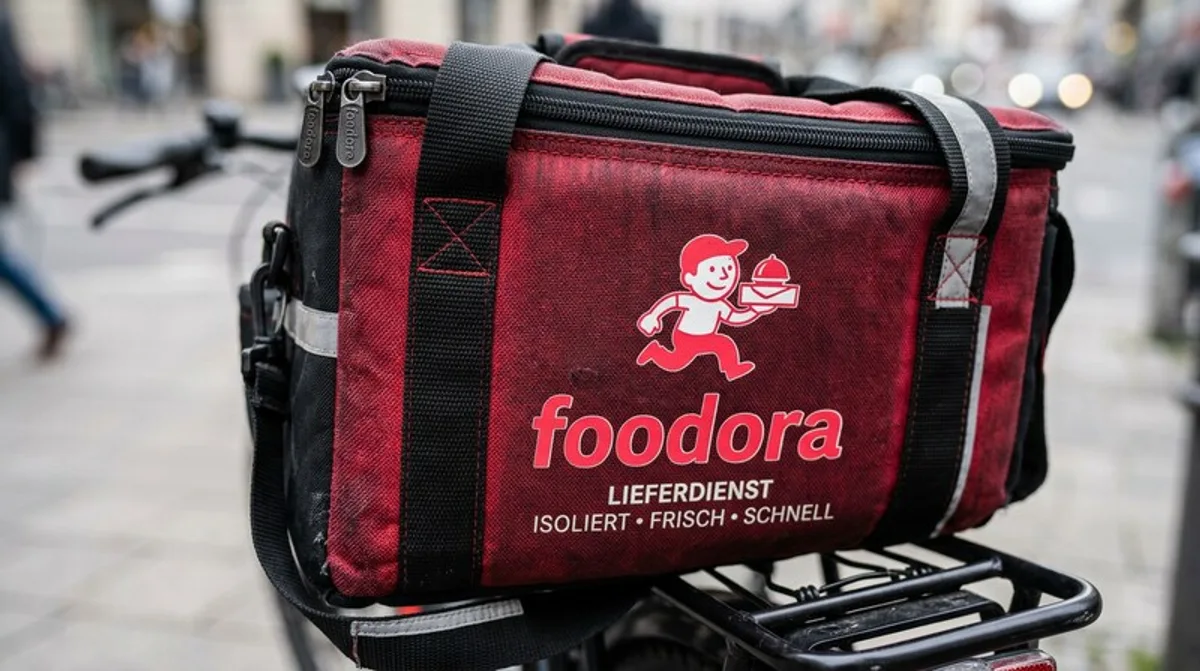
Fast Food Marketing: Strategies, Advertising, and the Secrets to Success of Major Chains
QSR: Quick-Service Restaurant Marketing for Fast-Food Chains















 4.9 / 5.0