
Creative Teams in Advertising: Roles, Processes, and Creative Collaboration
Behind every iconic campaign is not a single genius—but a well-coordinated team that collectively amplifies ideas. The creative team in advertising is the heart of every communications agency and every in-house marketing department: it transforms strategy into emotion, briefs into images, and text into attitudes.
What is a creative team in advertising?
Here’s what it’s all about:
- Creative Teams in Advertising: A Brief and Clear Explanation
- Distinction from Related Concepts
- The foundation of every marketing strategy
In advertising, a creative team is the group of professionals responsible for the conceptual and design development of advertising messages. In the traditional agency model, the art director and copywriter form the core duo—a concept established by David Ogilvy and Bill Bernbach in the 1960s that continues to shape the industry today. Modern creative teams are more multifaceted: motion designers, strategists, social media specialists, and UX designers expand upon the classic duo with digital skills that did not exist in the analog era. The goal remains the same: to develop an idea that resonates with target audiences.
Key Roles and Their Areas of Responsibility
Every role on the creative team carries a specific responsibility that cannot simply be replaced by another. The art director steers the visual language—he decides on imagery, colors, typography, and the overall visual feel of a campaign. The copywriter, in turn, gives voice to the idea: they write headlines that stick, body copy that persuades, and taglines that permanently define a brand. In today’s digital landscape, motion designers are no longer just an add-on but core members—because video and animation dominate all relevant platforms. A well-structured creative team balances these roles so that no single discipline becomes a bottleneck.
Distinction: Agency Team vs. In-House Creative Team
Creative teams come in two fundamental organizational forms, each with its own strengths. Agency teams work for multiple clients at the same time—this provides a broad perspective, fresh viewpoints, and the ability to cross-pollinate ideas from different industries. The downside: deep brand knowledge takes time, which is often lacking in the day-to-day operations of an agency. In-house creative teams know the brand from the inside—they have firsthand understanding of product details, corporate culture, and the reality of the target audience. According to a survey by the In-House Agency Forum, 64 percent of companies have expanded their in-house capabilities over the past five years because speed and brand consistency are seen as critical advantages. The best solution for many mid-sized brands: a lean in-house core team supplemented by specialized agency partners for large-scale campaigns.
| Role | Responsibilities | Skills | Where active |
|---|---|---|---|
| Creative Director | Overall Creative Responsibility | Strategy, leadership, quality control | Agency, In-House Senior |
| Art Director | Visual Language and Design | Design, Visual Concepts, Layout | Agency, In-House |
| Copywriters | Verbal Messages | Concept Development, Headlines, Storytelling | Agency, Freelance |
| Motion Designer | Animation and Moving Images | After Effects, Cinema 4D, Video | Agency, In-House, Freelance |

Implications for Brands
Keep in mind:
- A creative team in advertising strengthens the brand and customer loyalty
- Direct impact on brand awareness and conversion
- Long-term development always pays off
A strong creative team is the key competitive advantage in saturated markets. When products and prices become increasingly similar, the brand that communicates more effectively wins. The creative team is where brand identity is translated into concrete communication—it determines the visual style, tone, and core messages a brand conveys. Weak creative leadership is immediately apparent: inconsistent campaigns, haphazard visual language, and generic copy that leaves no lasting impression and fails to differentiate the brand.
The classic duo: art director and copywriter
The duo of art director and copywriter is the most tried-and-true concept in the advertising industry. The art director thinks in terms of images, shapes, and aesthetics—the copywriter in terms of language, reasoning, and emotion. Together, they develop ideas that would be neither purely visual nor purely verbal. The friction between two different ways of thinking isn’t a problem—it’s the process. The best campaigns don’t arise from harmonious agreement, but from constructive conflict between two perspectives that challenge one another.
Creative Director: Guardian of the Creative Vision
The Creative Director is the team’s quality gatekeeper and creative leader. He or she decides which ideas are worth presenting, guides the team through strategic phases, and serves as the link between creation and strategy. A good Creative Director inspires without dictating—giving the team enough freedom to let genuine ideas emerge, while setting clear quality standards that define the creative level of the agency or brand.
Data and Numbers: What Makes Creative Strength Measurable
The impact of a strong creative team can be quantified—and the numbers speak for themselves. An analysis by Nielsen shows that creative quality accounts for about 47 percent of an advertising campaign’s sales impact—more than reach, targeting, or media budget. According to a McKinsey study, brands that consistently invest in creative excellence achieve a revenue growth rate 67 percent higher than the industry average over a ten-year period. The IPA (Institute of Practitioners in Advertising) confirms in its database of over 1,000 evaluated campaigns: Emotionally charged campaigns generate twice as much profit growth as purely rational communication. These figures underscore that a creative team is not a cost factor—but rather a growth driver with a direct impact on ROI.
Creative Process: From Briefing to Production
In a nutshell:
- Using the Creative Team in Advertising Strategically and Purposefully
- Always keep the target audience and context in mind
- Continuously test and improve
The creative process begins with the briefing—the foundation of all creative work. A good briefing precisely defines the target audience, communication goal, key message, budget, timeline, and success criteria without limiting the creative scope too narrowly. The more precise the briefing, the more focused the creative work, and the fewer rounds of iteration are needed. The briefing is followed by the concept development phase: ideas are developed without self-censorship (brainstorming), then filtered, refined, and developed into viable concepts that demonstrate both creative merit and strategic relevance. The presentation to the client is a craft in its own right—creative concepts must be sold, not just shown. Storytelling, the right pacing, and a clear rationale make the difference between a concept being accepted and one being rejected. After client feedback comes production: photo shoots, video shoots, finalizing copy, and final layout design. In this phase, the creative team works closely with photographers, directors, and production teams. Quality control before delivery ensures that the final result remains true to the original idea.
Step-by-Step: The Structured Creative Process
A professional creative process follows a clear phased approach that enables creativity without creating chaos. Phase 1 is the briefing-debrief: The team reads the briefing, asks questions, and identifies the actual creative core—often, what a client has said differs from what they really need. Phase 2 is the divergence phase: generating as many ideas as possible without judging them—even absurd ones. Phase 3 is the convergence phase: distilling three to five genuine concepts from the mass of ideas that are strategically viable. Phase 4 is the internal review by the Creative Director. Phase 5 is the client presentation. Finally, Phase 6 encompasses client feedback, revisions, and production. Those who skip or cut corners in this process produce mediocre work—those who follow it rigorously consistently deliver strong results.
Common Mistakes in the Creative Process
The most common mistakes in the creative process are as widespread as they are avoidable. Mistake number one: providing feedback too early. When clients or executives comment on ideas too early in the process, it disrupts the divergence phase and prevents unconventional ideas from emerging in the first place. Mistake number two: presenting concepts without a strategic foundation. Creativity without strategy is art—advertising must always combine both. Mistake number three: Iteration cycles without a clear decision-making structure. If it’s not defined who gives the final go-ahead, endless rounds of feedback ensue, which demotivate teams and burn through budgets. Mistake number four: Starting production before the concept is truly finalized. Changes during production cost three to five times more than changes during the concept phase—a structured gate system between the phases protects against this classic mistake.

Best Practice Examples
The most important thing:
- Leading brands prioritize consistency
- The courage to be different pays off
- Define measurable KPIs from the very beginning
Apple and its long-standing agency, TBWA Chiat Day, represent one of the most successful creative partnerships in history. The “Think Different” campaign, developed by a small but well-coordinated creative team, redefined Apple as a brand and laid the foundation for the greatest corporate success in tech history. Nike has been working with Wieden+Kennedy for decades—an example of how a creative team with deep brand knowledge consistently delivers increasingly relevant work, because their shared history fosters trust and the courage to pursue bold ideas. Dove’s Real Beauty campaign, developed by Ogilvy, emerged from a radical briefing process: The creative team was tasked with completely rethinking beauty communication—and delivered one of the most influential campaigns of the 21st century. Volkswagen and DDB—the “Lemon” ad from the 1960s is still considered a milestone in advertising history and was the result of close collaboration among a small, bold creative team that thought differently from the rest of the industry.
What these examples have in common
All of the success stories mentioned share three key similarities that go beyond mere creativity. First: continuity in collaboration. Apple and TBWA, Nike and Wieden+Kennedy, Dove and Ogilvy—none of these partnerships was formed overnight. The deepest brand insights and boldest ideas emerge only after years of working together, during which mutual trust is built. Second: strategic clarity as a foundation. All major campaigns had a crystal-clear strategic foundation—creative freedom was made possible by a precise framework, not in spite of it. Third: the courage to polarize. None of the campaigns mentioned tried to appeal to everyone. “Think Different” was provocative. “Real Beauty” was controversial. “Lemon” defied all conventions of automotive advertising. Creative teams that play it safe produce mediocre work—the best campaigns emerge when teams are willing to defend uncomfortable ideas.
Factors Contributing to the Success of German Brands
In German-speaking countries, brands such as Deutsche Telekom, Edeka, and the Sparkassen demonstrate how long-term creative partnerships and a consistent creative system deliver strong results. Edeka’s “Supergeil” campaign was created in 2014 by a small, bold creative team at Jung von Matt—and went viral because it uncompromisingly pursued a unique creative idea instead of playing it safe in the middle of the category. For over 15 years, Telekom has consistently stuck with Magenta as its visual anchor—a result of creative leadership that prioritizes consistency over trends. For medium-sized German companies, the rule is: investments in creative teams don’t have to be large to be effective. A well-coordinated two-person team with a clear process regularly outperforms large teams lacking structure and focus.
According to a study by Effie Worldwide, brands with long-term relationships with creative agencies (5 or more years) achieve, on average, 65 percent higher effectiveness scores in campaign evaluations than brands that frequently switch agencies.
Conclusion
- A creative team in advertising is indispensable in modern marketing
- Think strategically, execute consistently
A creative team isn’t a cost—it’s a strategic asset. The world’s best brands know this and invest accordingly: in stable teams, clear processes, precise briefings, and the freedom to develop truly new ideas. Whether at an agency or in-house, investing in creative structures means investing in brand communication that stands out from the crowd. In an age when any brand can publish content, it’s the creative team that determines the difference between noise and relevance—and thus the value a brand holds in the minds of its target audience.
What is the difference between an art director and a creative director?
The Art Director is responsible for the visual design of individual projects. The Creative Director holds the overarching creative leadership role: He or she leads the team, is responsible for the creative strategy, and serves as the final authority on quality before a presentation to the client.
Does every company need its own creative team?
Not necessarily. Small businesses can work with freelancers or agencies. Once content production reaches a certain frequency and the brand grows to a certain size, it’s worth having an in-house creative team—it develops deep brand knowledge and delivers consistent results more quickly.
What makes a good creative briefing?
A good briefing is precise, not restrictive. It clearly defines the target audience, objective, key message, and parameters—but leaves the creative team enough leeway to come up with their own solutions. Briefings that are too detailed stifle creative ideas before they even emerge.
How many people are on a creative team?
That depends on the project size and budget. The minimum is the classic duo (art director and copywriter). Full teams for large-scale campaigns consist of 5 to 15 people, including a creative director, concept developer, motion designer, and production coordinator.
What’s the most effective way to brief a creative team?
The most effective briefing combines a written outline with a face-to-face discussion. In writing: target audience, insights, objective, KPIs, budget, timeline. In the discussion: inspiration, brand context, examples of what works and what doesn’t. Actively encourage questions from the team.
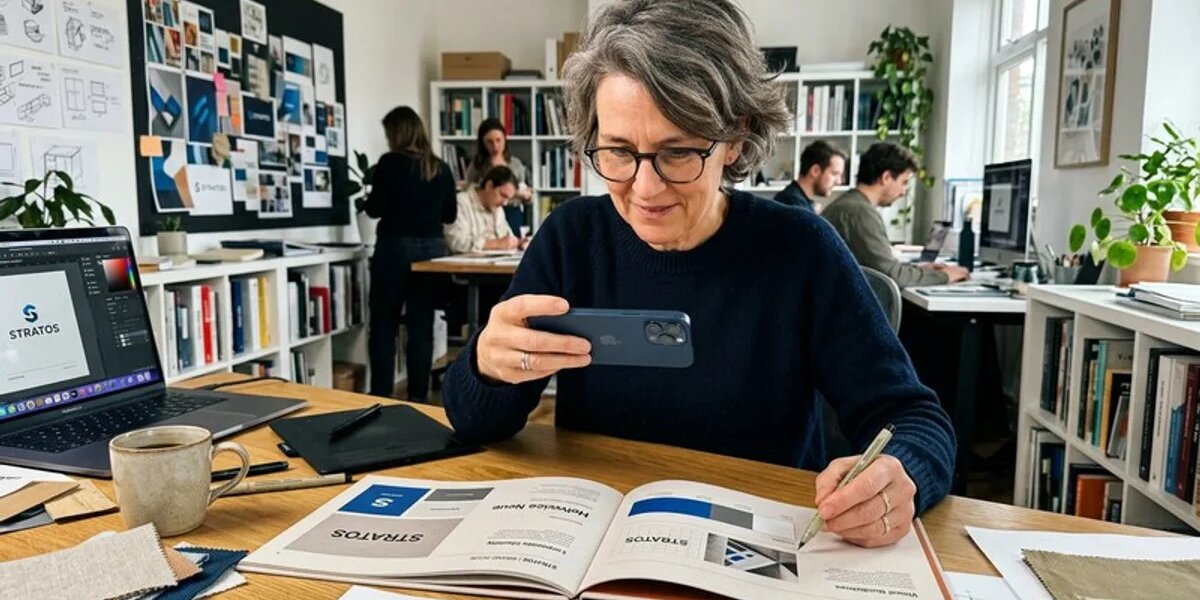
Art Director: Responsibilities and Role in Agencies and Production

Production Teams in Advertising: Roles, Processes, and Collaboration

Influencer marketing tasks: What we do for your brand as an agency!

Social Marketing Manager w*m*d - Job in Cologne (NRW)

Content Production for Fitness Studios: TikTok, Instagram and the Journey from Concept to Finished Video

Media Coverage: Generating Earned Coverage and Optimizing Public Relations














 4.9 / 5.0