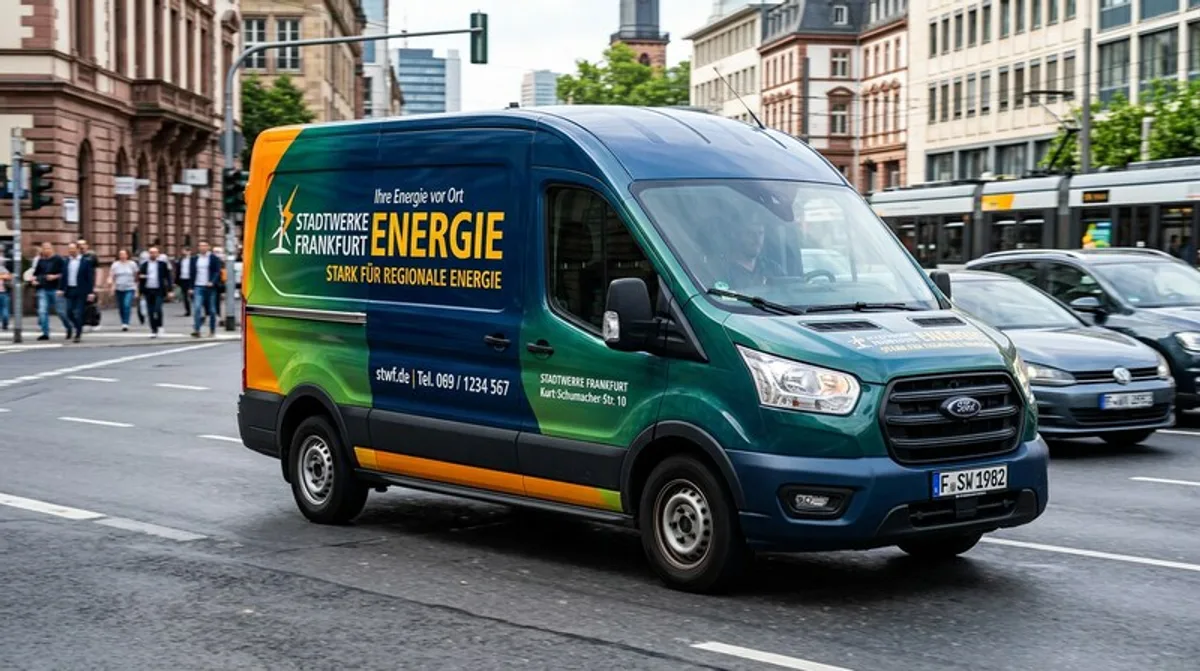
B2B Commercial Vehicle Marketing: Strategies for Vans, Trucks, and Fleet Vehicles
Marketing for commercial vehicles operates by completely different rules than the passenger car market. Fleet decision-makers don’t buy into emotions —they buy cost-effectiveness, reliability, and service quality. Anyone who wants to gain market share in the B2B commercial vehicle market must speak the language of logistics directors, fleet managers, and CEOs.
Definition and Classification
Here’s what it’s all about:
- Placing B2B Commercial Vehicle Marketing in the Broader Marketing Context
- Understanding the term, its origins, and its meaning
- A foundation for strategic decisions
B2B commercial vehicle marketing targets companies that purchase vans, trucks, buses, or specialty vehicles as operational assets for their business activities. The market ranges from light commercial vehicles (e.g., Mercedes-Benz Sprinter, Volkswagen Transporter, Ford Transit) to heavy semi-trailer trucks (MAN, Volvo Trucks, Scania, DAF). Unlike the consumer market, decisions here are often made collectively by several people: the CEO, fleet manager, finance department, and operational procurement team are all part of the buying center. Purchasing cycles are long—fleet decisions are often planned years in advance—and the economic complexity is high, as leasing models, maintenance contracts, and Total Cost of Ownership (TCO) are key purchasing considerations. Commercial vehicle brands must therefore communicate on multiple levels simultaneously: providing data to rational decision-makers while instilling confidence in quality and reliability among operational users.
Key Characteristics of the B2B Commercial Vehicle Market
The B2B commercial vehicle market differs structurally from other procurement markets. Purchasing decisions are based on detailed specifications that precisely define payload, range, cargo space, and service intervals. Manufacturers must address these technical parameters in their sales materials and online configurators—emotional messaging alone fails to reach the target audience. Compounding the challenge is the fact that fleet managers at larger companies often use standardized bidding processes in which objective evaluation matrices determine the outcome based on TCO, service network, and warranty terms. A strong brand image opens the door to the bidding process, but only hard numbers lead to a deal.
The Buying Center: Who Really Makes the Decisions
In B2B commercial vehicle purchases, an average of four to seven people are involved in the decision-making process. The fleet manager evaluates operating costs and the service network; the logistics manager assesses load capacity and reliability; the finance department compares leasing and purchase models; and senior management approves the budget. Often, the drivers themselves are also involved, as their acceptance is crucial to operational quality. Successful B2B marketing specifically addresses each of these roles: technical white papers for the fleet manager, ROI calculations for the CFO, and arguments about driver comfort for the operational level. Those who communicate only to one target group lose the other decision-makers in the buying center process.
| Segment | Examples | Primary Target Audience | TCO Focus |
|---|---|---|---|
| Light Commercial Vehicles | VW Transporter, Mercedes Sprinter | Tradespeople, delivery services | Fuel costs, maintenance, financing |
| Medium-duty trucks | MAN TGM, Mercedes Atego | Freight forwarders, municipalities | Payload capacity, fuel consumption, service network |
| Heavy-duty semi-trucks | Scania R Series, Volvo FH | Transport & Logistics | Fuel efficiency, ride comfort, parts supply |
| Special-Purpose Vehicles | Municipal vehicles, refrigerated trucks | Municipalities, Food Logistics | Adaptability, Durability, Service |

Implications for Brands
Keep in mind:
- B2B commercial vehicle marketing strengthens brand and customer loyalty
- Direct impact on brand awareness and conversion
- Long-term development always pays off
Commercial vehicle brands face the challenge of reinforcing rational purchasing decisions with an emotional appeal. A fleet manager procuring fifty trucks needs robust TCO data, reliable service networks, and flexible financing models. At the same time, trust in the brand plays a central role: downtime caused by vehicle defects results in direct financial losses. MAN Truck & Bus therefore consistently communicates under the slogan “Trucking the future” and combines messages of efficiency with sustainability and electromobility in the heavy-duty sector.
Total Cost of Ownership as a Selling Point
TCO is the key metric in the commercial vehicle B2B sector. The purchase price often accounts for less than 30 percent of the total cost of ownership over the vehicle’s lifespan—fuel, maintenance, tires, drivers, and downtime dominate the TCO calculation. Brands such as Scania and Volvo Trucks are investing heavily in digital TCO calculators that transparently show potential customers how their vehicle can be operated more cost-effectively over five years than a competitor’s model. This data-driven communication is indispensable in the B2B commercial vehicle market.
After-Sales as a Differentiator
No logistics company can accept repair times that last for weeks. After-sales services—service network density, parts availability, response times, and telematics-based predictive maintenance—have become a key competitive factor. Mercedes-Benz Trucks specifically highlights the density of its service network in Europe. Modern fleet management systems (such as Mercedes Fleetboard or MAN SimpleConnect) integrate vehicle telematics with maintenance schedulers and serve as a powerful tool for post-purchase customer retention.
Electrification as a New Form of Brand Communication
The shift toward electric mobility is fundamentally changing commercial vehicle marketing. Manufacturers such as Volvo Trucks, MAN, and Mercedes-Benz Trucks are positioning their electric truck lines not only as an environmentally friendly alternative, but also as a strategic response to rising CO₂ taxes and urban driving bans. Fleet operators who make the switch early on secure competitive advantages in urban logistics tenders. Brands that specify concrete ranges, charging times, and incentive programs in their communications build trust during the transition phase—in contrast, abstract sustainability messages without reliable data fail to resonate with the target audience of cost-conscious fleet managers.
Strategic Deployment
Here’s how it works:
- Clearly Define Your Goals Before You Start
- Integrate B2B commercial vehicle marketing strategically into the marketing mix
- Test, measure, and continuously optimize
B2B commercial vehicle marketing takes place primarily at trade shows, through direct sales, and via digital channels targeting professional decision-makers. The IAA Transportation in Hanover is the sector’s leading trade show: Here, manufacturers unveil world premieres, conduct test drives, and sign fleet contracts. In-person sales through dealerships and importers remain central, but are supplemented by digital configuration tools and virtual product presentations.
Content marketing is also gaining importance in the commercial vehicle sector: case studies from satisfied fleet operators, fuel consumption comparisons, test drives, and guides to fleet optimization are aimed at professional decision-makers during their research phase. LinkedIn and industry-specific trade publications such as “lastauto omnibus,” “trans aktuell,” and “Fernfahrer” are the relevant channels. Test drives and pilot projects with key customers play an important role, as the actual driving experience and operating cost performance are decisive for follow-up orders. The electrification of the commercial vehicle market also opens up new areas of communication related to charging infrastructure, incentives, and sustainability goals.
Digital Configuration Tools and Lead Qualification
Modern commercial vehicle manufacturers are increasingly turning to interactive online configurators that go beyond simple vehicle configuration. Integrated TCO calculators, leasing calculators, and subsidy checkers transform the website into a true sales tool. When a fleet manager uses the Scania or Mercedes-Benz website to calculate their vehicle needs by entering specific operational data, they provide valuable qualification data. The field sales team can then follow up with specific offers based on the calculated operational profiles. This combination of digital self-service and sales follow-up has been shown to reduce the average sales cycle length by 20 to 30 percent.
Step-by-Step: Developing a B2B Commercial Vehicle Marketing Strategy
A successful B2B commercial vehicle marketing strategy follows a clear structure. First, the relevant decision-maker roles in the target segment are identified and provided with appropriate content: technical data sheets for the fleet manager, ROI studies for the finance department, and ride comfort testimonials for drivers. The second step involves establishing a presence in relevant trade publications and on LinkedIn, supplemented by targeted participation in industry trade shows such as the IAA Transportation. The third step involves integrating test programs and pilot fleets: Customers who test a vehicle in real-world operations for three months are significantly more likely to convert to large-scale orders. Finally, the after-sales division is established as a standalone communication channel that delivers continuous added value through predictive maintenance, driver training, and fleet optimization reports.
Common Mistakes in B2B Commercial Vehicle Marketing
The most common mistake is thinking in terms of passenger car categories: emotional lifestyle campaigns that work on Instagram fail to resonate with the fleet manager who spends his mornings optimizing operating costs with a spreadsheet. Equally problematic is neglecting the service network as a marketing topic—many brands highlight vehicle features but remain silent on response times and parts availability, even though these factors are decisive for large fleet operators when making purchasing decisions. Another common mistake: launching communication efforts too late. Since fleet decisions are planned years in advance, brands must reach fleet managers with relevant content as early as the initial evaluation phase—those who only become visible shortly before the RFP goes out will lose the contract to competitors who have been engaging with decision-makers over the long term.

Best Practice Examples
The most important thing:
- Leading brands prioritize consistency
- The courage to be different pays off
- Define measurable KPIs from the very beginning
With its Efficiency campaign, Scania has demonstrated how to infuse rational TCO messages with emotional appeal: Documentaries about long-haul truck drivers and their connection to their vehicles link brand trust with promises of efficiency. Volkswagen Commercial Vehicles deliberately positions the Transporter for tradespeople and small businesses and focuses on community building through the “Bulli” legend. MAN Truck & Bus uses comprehensive digital configurators and the integration of e-truck information to actively engage in the fleet transition debate. With the Daily panel van, Iveco has specifically addressed urban delivery traffic amid the e-commerce boom and combines product communication with logistics expertise content for fleet customers.
Scania: Storytelling Meets TCO Calculation
Scania’s marketing strategy is regarded throughout the industry as the benchmark for combining emotional storytelling with rational sales communication. The Swedish brand produces high-quality documentary-style content in which real long-haul truck drivers talk about their work and their relationship with their vehicles. This content generates above-average engagement on YouTube and LinkedIn—while also creating an emotional foundation upon which the sales teams can build using hard TCO data. The strategy is complemented by the “Scania Driver Competitions,” which highlight driver competence and position the brand as a partner to drivers. The result: Scania consistently achieves above-average repeat purchase rates among large fleet customers in Europe.
Volkswagen Commercial Vehicles: Community and Positioning Among Tradespeople
Volkswagen Commercial Vehicles leverages the cultural “Bulli” legend as a unique differentiator in the light commercial vehicle market segment. While competitors focus primarily on cargo space and fuel costs, VW is building an active community of small businesses, tradespeople, and delivery services that identify with the vehicle. The social media strategy combines stories from tradespeople, content on vehicle customization, and practical tips for everyday use of the Transporter. This community engagement directly contributes to customer loyalty: VW Transporter users are more brand-loyal than average when purchasing their next vehicle. Added to this is a broad network of partners specializing in vehicle conversions, ensuring that the Transporter can be tailored for use in virtually any industry.
According to a study by the Federal Association of Road Haulage, fuel costs account for up to 35 percent of total operating costs in the heavy-duty truck sector—no wonder that TCO calculators have become the industry’s most important sales tool.
Conclusion
- B2B commercial vehicle marketing is indispensable in modern marketing
- Think strategically, implement consistently
B2B commercial vehicle marketing requires a deep understanding of the economic decision-making processes of fleet operators and logistics companies. To convince fleet decision-makers, companies must present data-driven TCO arguments, demonstrate a dense service network, and communicate after-sales services as genuine added value. At the same time, digital channels, content marketing, and the debate surrounding electrification and alternative powertrains are gaining importance. The brands that actively shape this transformation will secure long-term market leadership in one of Europe’s most capital-intensive B2B markets.

Shared Media: Definition, Meaning and Strategy in the PESO Model

PR Tools: Software for Monitoring, Analysis, and Public Relations

Sentiment Analysis: Definition, Methods, and Applications in Marketing

AVE: Advertising Value Equivalent Explained Simply

More B2B Sales: Leads, LinkedIn, and Sales Strategy

End Consumers: B2C Marketing, Consumer Behavior, and Strategies
















 4.9 / 5.0