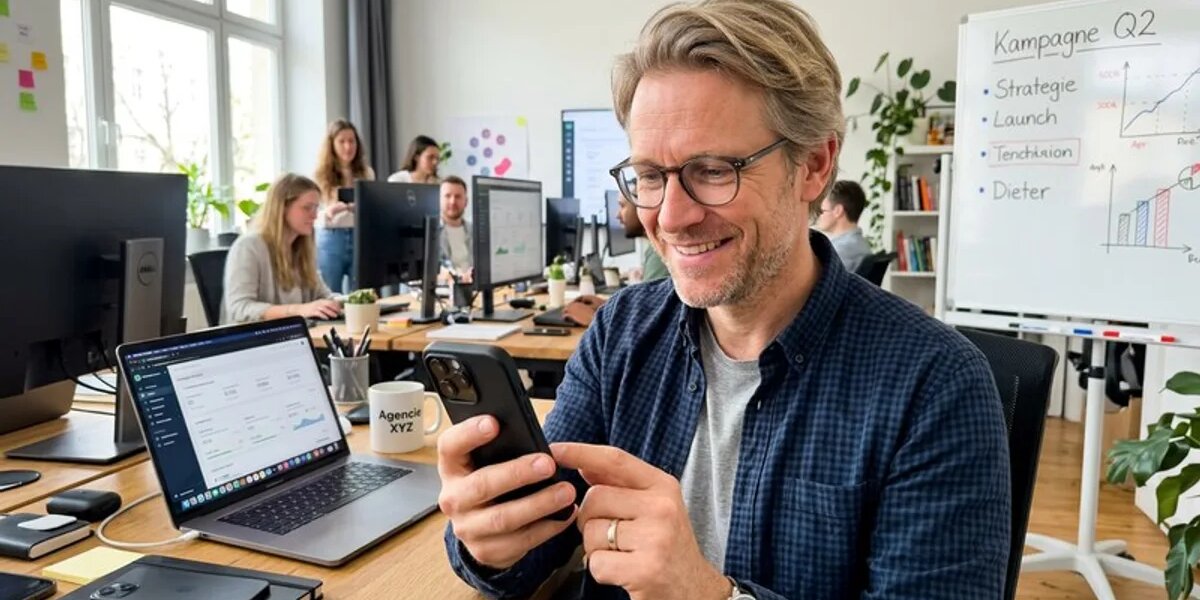
Naming & Claiming: Developing Brand Names and Slogans That Stick
In a fraction of a second, a brand name determines whether a company is perceived as trustworthy, innovative, or interchangeable. Together with a compelling tagline, it forms the foundation of all brand communication—even before a logo is designed, an advertising budget is planned, or a channel is launched.
What Naming and Claiming Really Achieve
Naming refers to the process of strategically developing a brand name. Claiming complements this name with a sentence or phrase that encapsulates the brand promise. Studies show that consistent brand names can increase brand recognition by up to 80 percent.
Characteristics of a Strong Brand Name
Length and Pronunciation
A maximum of three syllables makes something easier to remember
- Distinctiveness: The name stands out from the competition
- Ambiguity: Overly narrow descriptions limit brand growth
Eligibility for Protection
Without trademark protection, any investment in the name remains at risk
- Domain Availability: Ideally, both .de and .com should be available
Emotional Resonance
The name evokes an appropriate association when you hear it
Types of Names: From Descriptive to Abstract
Experts distinguish between descriptive names, coined names (made-up words), associative names, abbreviations, and proper names. Descriptive names are easy to understand but difficult to protect. Coined names are strong from a trademark perspective but require a larger budget for marketing and brand awareness.

Key Insight: A company’s brand name is the text that is printed, spoken, and seen most often—it deserves the same strategic attention as the business model itself.
Developing Claims: Brevity Is the Ultimate Skill
A tagline is the verbal essence of a brand’s promise. Good taglines work on three levels simultaneously: they are rationally understandable, emotionally compelling, and memorable in form. The ideal length is between two and seven words.
In agency practice, claim development doesn’t start with writing copy, but with a positioning matrix: What does the td>
Very high Book a strategy call with our teamGet in touchHow to Build Always-On Partnerships
The first step is creator selection: Always-On only works with creators who are truly a good fit for the brand—not just in terms of content, but also personally. A one-month trial agreement before signing a long-term contract helps validate the chemistry and content quality.
Next comes drafting the contract: In addition to posting frequency, format requirements, and compensation, exclusivity provisions must be clearly defined. Clauses that are too restrictive deter creators; those that are too broad allow direct competition to slip in through the back door.
Once up and running, the Always-On program requires regular check-ins. Creators who feel treated as partners deliver better results. Learn more about strategic integration into the influencer marketing concept.
Budget and Costs in the Always-On Model
Micro-influencers with 10,000 to 50,000 followers can often be booked as brand ambassadors for 800 to 2,500 euros per month—including four to eight pieces of content. By comparison, four individual campaign posts from the same creator would cost 1,200 to 3,200 euros. The discount for long-term partnerships is typically 30 to 50 percent.
For brands looking to build brand awareness on social media, the “always-on” model is the most efficient approach. It achieves deeper brand awareness and sustainable trust among the target audience over the long term. In the context of influencer contracts, specific points such as exclusivity, notice periods, and content ownership must be addressed with particular care in always-on models.
“The biggest mistake in influencer marketing is a short-term approach. Creators who truly understand a brand are better at promoting it—because they’re convinced of its value themselves.” — Social Media One, Creator Relations Team
How much does an Always-On Ambassador program cost per month?
Micro-influencers with 10,000 to 50,000 followers can often be booked as brand ambassadors for 800 to 2,500 euros per month—including four to eight pieces of content.
How many brand ambassadors does a brand need?
To get started, three to five creators who are active on the core platform are sufficient. You can scale up later to ten to twenty ambassadors.
What is the difference between an ambassador and a brand ambassador?
The terms are often used interchangeably. “Ambassador” is also used to refer to micro-creators in the “always-on” model, while “brand ambassador” is more commonly used for more prominent figures.
What is the minimum term for an “always-on” contract?
At least three months, preferably six to twelve months. It takes several months to determine whether the creator and the brand are truly a good fit.
Can “always-on” influencer marketing be combined with paid social?
Yes, that’s actually recommended. Ambassador content is ideal for whitelisting and Creator Ads because it comes across as authentic and can be boosted for paid social.
Always-On Influencer Brand
Market Positioning: Strategy, Differentiation, and Competitive Advantages

Manufacturer Brand: Definition, Structure, and Strategy for Successful Product Brands
Brand Management: Definition, Responsibilities, and Tools in Marketing

Brand Examples: How Coca-Cola, Red Bull, LEGO, and Others Do Marketing
Marketing Claims: How a Strong Slogan Defines a Brand

Brand Identity: Definition, Structure, and Examples of Strong Brand Personality













 4.9 / 5.0