
Marketing Claims: How a Strong Slogan Defines a Brand
A strong tagline is more than just a catchy slogan—it’s the verbal heart of a brand, conveying in just a few words what the brand stands for, what it promises, and why it matters. In today’s competitive environment, where consumers are exposed to thousands of messages every day, the right tagline determines whether a brand sticks in people’s minds or gets lost in the noise. Good taglines don’t happen by chance—they are the result of strategic positioning.
What Is a Claim? Definition and Meaning
Here’s what it’s all about:
- A Brief and Clear Explanation of the Marketing Claim
- Distinction from Related Concepts
- The foundation of every marketing strategy
A claim—also known as a slogan, tagline, or brand claim—is a short, concise statement that captures the core message of a brand. It serves as the brand’s verbal identifier and conveys, in a condensed form, the benefits, values, or promise a company offers its target audience. The claim is a central element of branding and always appears in conjunction with the brand logo—either as a subline beneath the logo or as a standalone text element in communications. In a marketing context, the claim helps anchor a brand’s positioning, differentiate it from competitors, and create emotional anchor points in consumers’ minds. A good claim endures for years, sometimes decades, because it is phrased in a timeless way while remaining flexible enough to work in various contexts.
Core Principles of an Effective Tagline
Research on brand communication shows that claims must follow certain basic principles to be effective over the long term. First, there is the principle of cognitive ease: The easier a claim is to process, the more positively it is evaluated emotionally—as studies in behavioral psychology have shown. Second, a strong claim needs a unique linguistic quality, whether through alliteration, rhythm, contrast, or a surprising twist. Third, it must convey a clear message without leaving room for interpretation that could lead to confusion. Claims like “Just Do It” or “Because I’m worth it” combine all these principles: They are short, rhythmic, unambiguous in their message, and simultaneously trigger emotional associations. Brands that consistently apply these principles have been shown to achieve higher scores in brand awareness and brand recall.
Distinctions: Claim, Slogan, Tagline, and Motto
In German marketing, the terms “claim,” “slogan,” “tagline,” and “motto” are often used interchangeably, but there are important differences. The brand claim is the overarching, long-term statement that encapsulates the entire brand identity—it is used consistently over the course of years or decades. The campaign slogan, on the other hand, is time-limited and geared toward a specific communication campaign; it can change from season to season. Technically, the tagline refers to the fixed line of text placed directly below the logo and, in most cases, corresponds to the brand claim. A motto, on the other hand, is more internally focused—it articulates the company’s expectations of itself and its employees, rather than those of external target audiences. For strategic branding, this distinction is crucial: short-term slogans may change, but the brand claim should remain a stable foundation.
| Feature | Description |
|---|---|
| Brevity and Conciseness | Effective claims consist of 2–7 words that are immediately understood and remembered |
| Positioning Power | The tagline communicates the brand’s unique selling point (USP) in a single sentence |
| Emotional Resonance | Powerful claims evoke emotions and create an emotional connection to the brand |
| Longevity | Good claims are phrased in a timeless way and remain effective consistently over decades |
Why is the tagline important? Strategic significance
Remember:
- A marketing claim creates a direct competitive advantage
- Measurable impact on revenue and reach
- Starting early pays off in the long run
In brand communication, the tagline is the most consistent element across all channels. While campaigns come and go, budgets fluctuate, and trends change, a strong tagline remains the unifying element that creates brand recognition. Consumers can assess in a fraction of a second whether a brand is relevant to them—and the tagline is often the first verbal touchpoint that shapes that assessment. A well-developed tagline also reduces internal communication friction: When everyone in the company knows what the brand stands for, marketing, sales, and customer service become more cohesive. Psychologically, the tagline acts as an anchor: It activates associated brand values as soon as it is perceived, thereby reinforcing brand awareness at every touchpoint.
Facts and Figures on the Impact of Claims
The effectiveness of brand claims can be demonstrated with concrete figures. According to a study by the market research firm Nielsen, 65% of consumers remember visual-verbal combinations of a logo and a claim after a single brand encounter—compared to just 10% for purely visual communication. An analysis of over 200 brands by the Institute for Brand Research shows that brands with a consistent, long-term claim achieve, on average, 23% higher brand recall than brands that frequently change their claim. The cumulative effect is particularly impressive: After ten years of consistent slogan use, a brand’s recognition rate increases on average threefold compared to the baseline. These figures illustrate why investing in a strong slogan is one of the most profitable marketing decisions in the long term.
Claims as a Positioning Tool
The tagline is the verbal essence of a brand’s positioning. Clear positioning defines who a brand is for, what it offers, and why it is better or different from the competition. The tagline must convey all of this in just a few words. BMW’s “Sheer Driving Pleasure” positions the brand as a provider of emotional driving enjoyment, thereby clearly distinguishing itself from Mercedes (status) and Audi (Vorsprung durch Technik). This difference in positioning has shaped the purchasing decisions of car buyers for decades—proof of the strategic power of the tagline as a tool.
Tagline and Brand Identity
A tagline should not be developed in isolation, but rather as an integral part of the brand identity. It must align with the brand’s tone, style, values, and personality. A luxury brand that uses “Affordable and Good” as its tagline creates cognitive dissonance—consumers cannot reconcile the message with their expectations of the brand. Conversely, a tagline that consistently reflects the brand identity builds trust and credibility. This consistency between the tagline and the brand’s image is one of the most important factors for a slogan’s long-term effectiveness.
How Do Brands Develop a Strong Tagline? Strategies and Tactics
Here’s how it works:
- Clearly define your goals before you start
- Integrate the marketing claim strategically into the marketing mix
- Test, measure, and continuously optimize
Developing an effective tagline doesn’t start with writing copy, but with strategic work. First, the brand positioning must be clearly defined: Who is the target audience? What is the brand’s unique selling point? What emotional needs does it fulfill? Only on this basis can a tagline be developed that encapsulates this positioning. In practice, taglines are developed in several rounds: Brainstorming sessions generate 50–100 rough drafts, which are narrowed down to 5–10 candidates through several rounds of screening. These are then qualitatively tested with the target audience—for clarity, emotional impact, uniqueness, and memorability. Claims must also be tested for translatability if international markets are relevant. A good claim works in German, English, and within the culture of the most important markets. Finally, the claim should be reviewed for trademark compliance and, if possible, protected as a word mark.
Step-by-Step: From Briefing to Final Tagline
A structured claim development process typically consists of five phases. Phase 1 involves laying the strategic groundwork: brand positioning, target audience analysis, and competitive research provide the input. Phase 2 is creative exploration: In facilitated workshops or using creative techniques such as analogy-based thinking, word field mapping, and perspective shifting, 50 to 100 initial rough claims are generated. Phase 3 is selection: Based on defined criteria—uniqueness, conciseness, brand fit, and emotional appeal—the list is narrowed down to 5 to 10 candidates. Phase 4 is target audience validation: Qualitative interviews or quantitative surveys test whether the claim has the intended effect. Phase 5 is the legal review and trademark application. Agencies that skip this process and jump straight into the “creative” phase often produce claims that sound good but lack strategic substance.
Common Mistakes in Claim Development
One of the most common mistakes is developing a tagline internally without involving the target audience. What sounds convincing in the conference room may come across completely differently to the target audience. A second classic mistake is overcomplicating things: claims that try to convey all brand values at once end up as incomprehensible strings of words. Less is almost always more. The third mistake: a lack of differentiation. Slogans like “Quality that wins you over” or “Always there for you” could come from any brand in any industry—they don’t create brand recognition. Fourth, many slogans fail due to a lack of long-term planning: Brands change their slogan after two years because it “no longer feels fresh” —yet brand awareness only begins to build after years of consistent use. And fifth, translatability is checked too rarely: Subway’s English claim “Eat Fresh” works internationally, while some German claims take on embarrassing meanings in other language regions.

Success Stories: The Claim in Practice
The most important thing:
- Leading brands prioritize consistency
- The courage to be different pays off
- Define measurable KPIs from the very beginning
The most powerful slogans in marketing history demonstrate just how much strategic intelligence can be packed into a few words. Nike’s “Just Do It” has remained unchanged since 1988 and has transformed the brand from a running shoe manufacturer into a global sports-lifestyle icon. The tagline speaks to a drive to take action and push past one’s limits—universal human values that know no language barriers. Apple’s “Think Different” positioned the brand, during the era of IBM’s monopoly, as a tool for creatives and unconventional thinkers—and in doing so, created one of the most loyal fan bases in the tech world. Red Bull’s “Gives You Wings” is a prime example of a tagline that translates a specific product benefit (energy, performance) into a universally understandable metaphor. In German-speaking countries, Sixt’s “Experience what’s possible” is a successful example of a tagline that combines premium positioning with a touch of adventure and clearly differentiates the brand from budget car rental providers.
International Success Stories in Detail
Nike’s “Just Do It” campaign was created in 1988 in collaboration with the advertising agency Wieden+Kennedy—inspired, according to an urban legend, by the last words of a condemned man. The irony: A phrase taken out of a dark context became the epitome of positive willpower. The slogan works so well because it doesn’t describe a product feature, but rather an attitude. L’Oréal’s “Because I’m worth it” (originally “Because I’m worth it,” 1973) revolutionized advertising: Instead of courting women, the brand addressed them as self-confident individuals. This shift in perspective was radical for its time and remains relevant today. McDonald’s “I’m lovin’ it,” with 119 markets worldwide, is one of the most widely heard slogans in history—and demonstrates that even a grammatically colloquial phrase works if it strikes exactly the right emotional chord. These examples demonstrate that the most powerful slogans do not describe products, but rather embody ways of life.
German Brands with Strong Claims
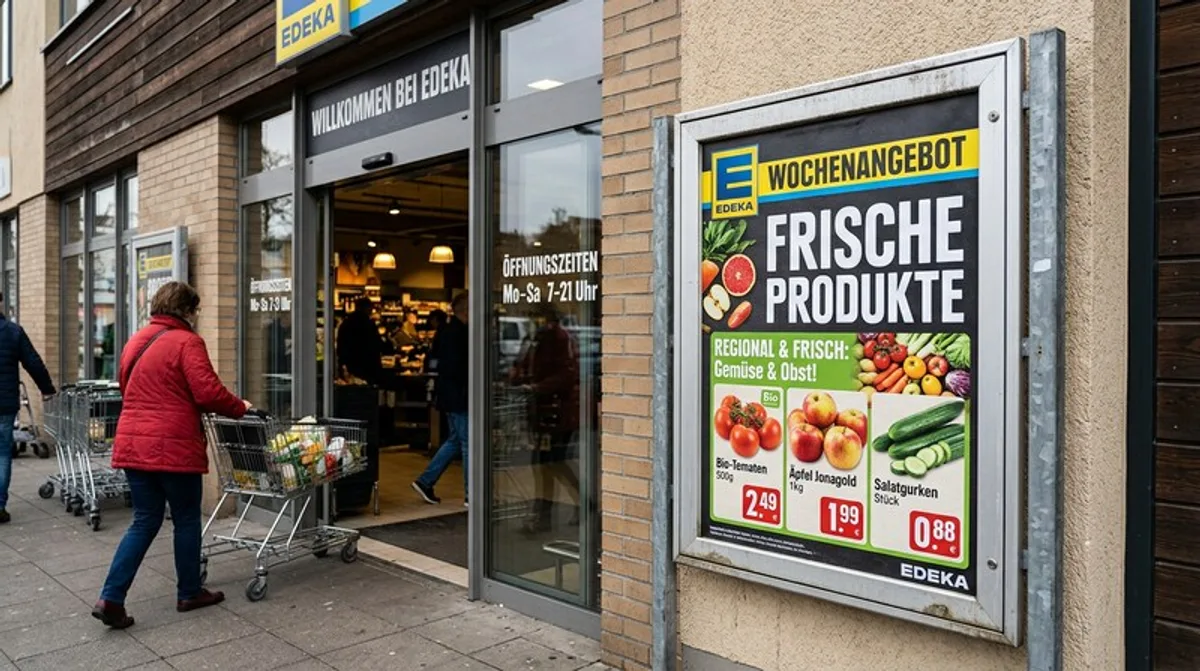
In the German-speaking world, there are several taglines that exemplify how positioning is translated into language. Volkswagen’s “Das Auto” is an extreme example of self-confidence: Reducing the brand to a generic term signals market leadership and a sense of inevitability. Deutsche Telekom’s “Experience what connects” combines functional benefit (establishing connections) with an emotional dimension (community, closeness). Edeka’s “We love food” builds trust through passion and deliberately distances itself from the discount-store tone of its competitors. Haribo’s evolution is particularly interesting: “Haribo makes children happy, and adults too” is actually jingle lyrics that have served as a tagline since 1935—making it one of the longest-running German brand slogans ever. These examples show that strong taglines in the German market often use direct, emotional language that signals trust and closeness.
“A good tagline is like a good joke—it works right away, needs no explanation, and sticks in your mind without you even realizing it.” — A branding strategist on the power of concise brand messages
Conclusion: The Claim as a Competitive Advantage
Conclusion:
- A marketing claim is indispensable in modern marketing
- Think strategically, implement consistently
A strong brand claim is one of the most enduring and valuable investments in marketing. It creates brand recognition, conveys positioning, and builds emotional connections —over the course of years and decades. Brands that consistently protect and use their tagline benefit from a cumulative awareness effect that, over time, translates into market share, customer loyalty, and a price premium. The key: Invest time and resources in strategic development, test the tagline carefully with your target audience, and then protect it consistently—both through trademark law and in your communications. A good tagline becomes your brand’s strongest voice.

Naming & Claiming: Developing Brand Names and Slogans That Stick

Shared Media: Definition, Meaning and Strategy in the PESO Model

PR Tools: Software for Monitoring, Analysis, and Public Relations

Sentiment Analysis: Definition, Methods, and Applications in Marketing

AVE: Advertising Value Equivalent Explained Simply

More B2B Sales: Leads, LinkedIn, and Sales Strategy













 4.9 / 5.0