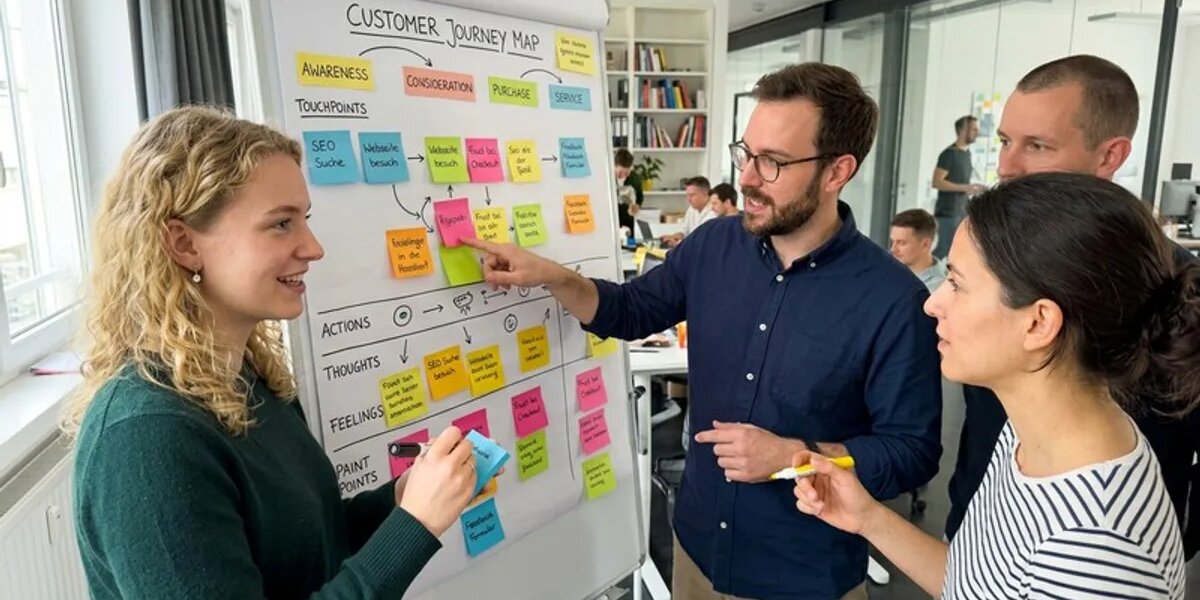
Customer Journey: An Overview of Phases, Touchpoints, and Optimization
The customer journey describes the entire path a potential customer takes from their first interaction with your brand through to the purchase—and far beyond. Those who understand, design, and optimize this journey will attract more customers, reduce drop-offs, and build genuine loyalty.
What is the customer journey?
The customer journey is not a linear process, but rather a complex network of touchpoints, decisions, and emotions. A user might see an Instagram ad, then read a blog post, compare prices on another site, return three days later via a retargeting ad—and finally make a purchase through a Google search.
For marketers, this means that performance marketing alone isn’t enough. You need to understand the entire journey and be present at every relevant touchpoint—with the right content, at the right time.
Most brands are familiar with their checkout process. Very few are familiar with the seven touchpoints that come before it.
Touchpoints — online and offline
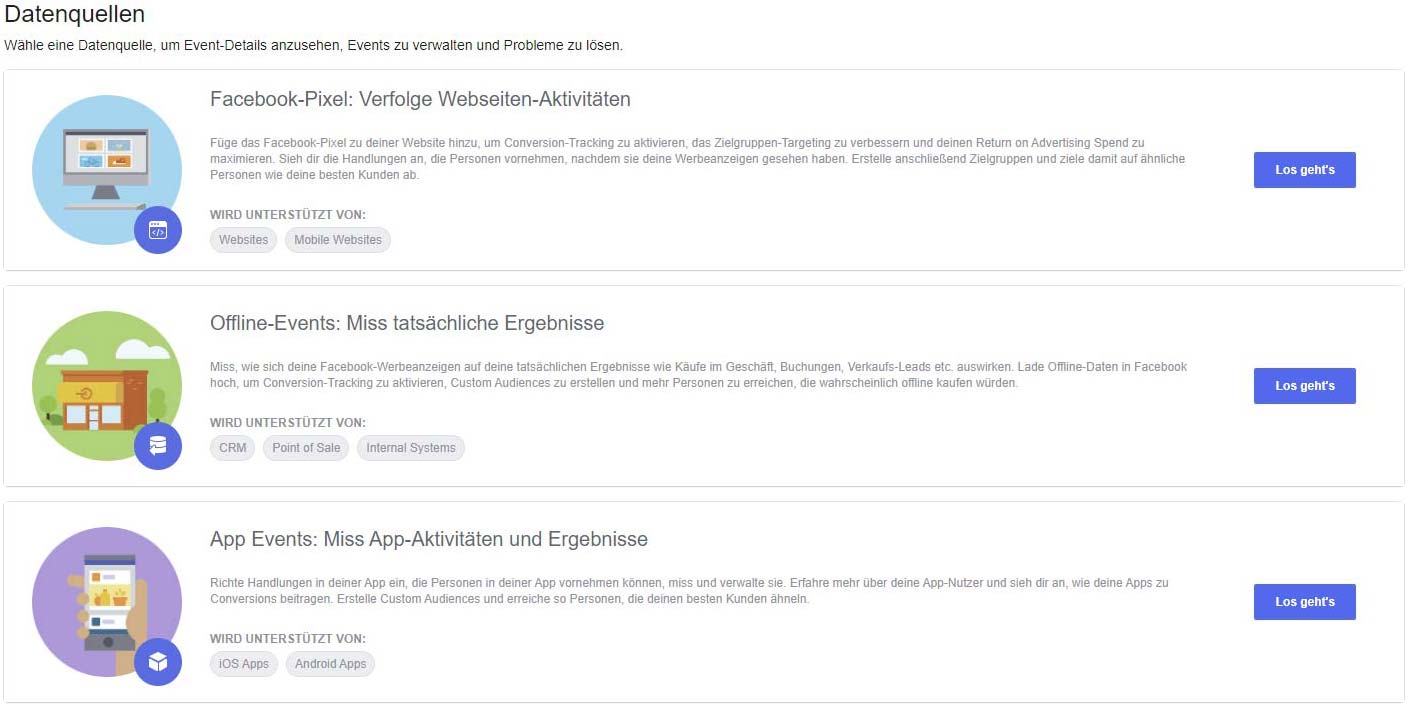
A touchpoint is any point of contact between a customer and a brand. These can include ads, search results, social media posts, recommendations, emails, in-store visits, or interactions with customer service. On average, a B2B buyer has 6–8 touchpoints with a brand before making a decision—in B2C, the number is similar for products that require explanation.
This infographic provides an overview of the most important marketing strategies—from organic content to paid media to influencer marketing.
Why Traditional Funnels Fall Short
The classic funnel is a simplified model. The customer journey is nonlinear, jumps between channels and devices, and is driven by trust, not just by offers. Those who focus solely on closing the deal miss the crucial moments that come before it.
The 5 Phases of the Customer Journey
Despite its complexity, the customer journey can be divided into five basic phases—each with its own goals, touchpoints, and actions.
| Phase | Customer Goal | Marketing Focus |
|---|---|---|
| Awareness | Identifying a problem or need | SEO, Social Ads, Brand Awareness |
| Consideration | Compare and evaluate options | Content, Reviews, Comparison Sites |
| Decision | Select the best option and buy | Retargeting, Offers, Trust Signals |
| Retention | Have a good experience, come back | Email, Support, Loyalty Programs |
| Advocacy | Recommend the Brand | UGC, referral programs, community |
Customer Journey Mapping — Here’s How to Do It
A journey map visualizes how your customers interact with your brand—where they enter the journey, where they drop off, and what emotions they experience along the way. It is one of the most effective tools in strategic marketing.
Step 1: Define Personas
Good journey maps are based on real user data. Create 2–3 personas based on market research, CRM data, and customer interviews. Each persona has different entry points, different channels, and different decision-making hurdles. A “B2B buyer” persona behaves completely differently from a “B2C impulse buyer.”
Step 2: Map Touchpoints
List all touchpoints—from the first Google search to after-sales service. Evaluate each touchpoint based on relevance, quality, and potential for improvement. To do this, use web analytics, heat maps, customer surveys, and social selling data from your sales channels.
A journey map isn’t a one-time project. Markets and user behavior change—your map should reflect that every 6–12 months.
The Most Common Mistakes in the Customer Journey
Many brands invest in journey maps but don’t use them. Or they optimize only individual phases without seeing the big picture. The most common mistakes:
Channel Focus Instead of Customer Focus
Touchpoints are defined from the brand’s perspective, not from the customer’s perspective
Too many personas
Seven different personas make prioritization impossible—start with no more than three
Lack of a database
Journey maps based on gut feelings rather than actual user data lead to dangerously false conclusions
No follow-up
Map created, filed away, forgotten—without implementation, even the best mapping is useless
Forgot “Awareness”
Many brands focus solely on consideration and decision-making—and then wonder why B2B lead generation is so expensive
Optimizing the Customer Journey — Specific Leverage Points
Each phase of the customer journey offers its own opportunities for optimization. These measures have the greatest impact:
Strengthen the Awareness Phase
Visibility is key here: organic reach through content marketing, paid visibility through targeted ads, and influencer partnerships to reach new audiences. The more precisely you define your target audience, the more efficiently every euro is spent during this phase.
Optimize the Decision and Retention Phases
During the decision-making phase, trust and a seamless experience are key: clear product pages, authentic reviews, fast loading times, and transparent pricing. In the retention phase, the email funnel maintains the connection—with relevant content, offers, and a personalized approach instead of mass emails.
What is the difference between a customer journey and a sales funnel?
The sales funnel describes the purchasing process from the company’s perspective—from lead to closing. The customer journey describes the same process from the customer’s perspective, including emotions, touchpoints outside the company’s own system, and the post-purchase phase.
How long is a typical customer journey?
That depends heavily on the product and the target audience. An impulse purchase on Instagram takes just a few minutes. A B2B software decision, on the other hand, can take months, involving dozens of touchpoints, multiple decision-makers, and formal evaluation phases.
What tools can help with customer journey mapping?
For simple maps, Google Slides or Miro will suffice. For data-driven mapping, Google Analytics 4, Hotjar, HubSpot, and specialized journey-mapping tools such as Smaply or Custellence are suitable.

End Consumers: B2C Marketing, Consumer Behavior, and Strategies

LinkedIn Ads for B2B: Campaign Setup, Costs, and Targeting Strategy

Relevance in Marketing: How Brands Stay Relevant Over the Long Term

Funnel marketing: gaining leads and guiding customers through the buying process

Omnichannel Marketing for SMEs: Strategy, Channels, and Consistent Communication
Frequency Capping: Control Ad Frequency, Reduce Waste, and Optimize Costs







Pop Culture in Marketing: How Brands Use Trends, Memes, and the Zeitgeist

New LinkedIn Features: Optimizing B2B Marketing, Content Strategy, and LinkedIn Ads
Creating an online store #2: design, payment providers, delivery costs, ... - Marketing Podcast

Content: Content Types, Content Marketing, and Quality at a Glance



 4.9 / 5.0