
Editorial and Content Planning: An Agency’s Process, Calendar, and Workflow
Anyone who posts on social media and blogs without an editorial calendar is producing content based on gut instinct: a Reel today because it fits the current trend, a blog post tomorrow because the deadline is looming, and three days of radio silence the day after tomorrow because no one knows what’s next. Professional social media managers work differently: They use an editorial calendar, a pool of topics, and an approval process to build a system that keeps running even when the campaign of the month is in full swing. Instead of improvising from scratch every week, a well-coordinated team relies on established structures that clearly define responsibilities, deadlines, and quality standards.
The foundation of any effective social media strategy is a predictable, repeatable content output. This guide provides a step-by-step overview of how an agency methodically organizes this output—from identifying topics to establishing content pillars to final approval.
Why Editorial and Content Planning Are Key to Success
Content Without a Plan Wastes the Budget
Companies that produce content on a whim end up paying twice: they pay for production and then again for the consequences of inconsistency. A feed that’s sometimes promotional, sometimes personal, and sometimes empty loses any recognizable identity. Followers won’t remember a brand that doesn’t keep track of when it posts. This is exactly where professional editorial planning comes in: it turns individual posts into a coherent narrative.
Without a plan, bottlenecks also arise at the times when they hurt the most: right before holidays, during product launches, or when team members are on vacation. An editorial team that plans weeks in advance can address these gaps before they become a problem.
From Gut Feeling to System
In practice, the transition from reactive to planned content operations takes place on three levels: a strategic level (content pillars and objectives), an operational level (editorial calendar and frequency), and an organizational level (roles and approvals). Only when all three levels work together does content production become a robust system.
An editorial plan is not a bureaucratic tool, but rather a safeguard against random content.
Content Pillars: The Foundation of Any Editorial Plan
Thematic Areas Instead of Individual Ideas
Before a single post is planned, a good editorial plan defines content pillars—that is, core themes—from which all content is derived. These pillars are based on the brand’s positioning, the interests of the target audience, and the formats that work on the respective platform. Instead of having to figure out anew every month, “What should we actually post about?”, the editorial team draws on a fixed set of three to five pillars and varies its content within this structure.

How many content pillars make sense?
In practice, four pillars have proven effective: one for products and offerings, one for expertise and specialized knowledge, one for brand and team, and one for community and interaction. Too many pillars dilute the focus; too few become boring. At every editorial meeting, we check to ensure that the planned content is evenly distributed across these pillars, rather than narrowing unnoticed to a single topic.
- Product Pillar: Solutions and Use Cases
- Expertise Pillar: Expertise and Industry Context
- Brand Pillar: Values, Team, History
- Community Pillar — Questions, User-Generated Content, Interaction Formats
- Event Pillar: Seasonal, Recurring Industry Topics
The Editorial Calendar: Organization, Structure, Frequency
These fields belong in every editorial calendar
A functional editorial calendar is more than just a list of date fields. For each post, it documents at least the following: platform, content pillar, format, text or image status, person in charge, approval status, and publication date. If any of these fields is missing, it leads to follow-up questions that slow down day-to-day editorial work.
It is also important to clearly distinguish between the planning horizon and detailed planning: The rough overview of topics covers several months in advance, while detailed planning with finalized assets typically covers two to three weeks. This ensures there is enough lead time for approvals, but also enough flexibility to accommodate current events.
Frequency by Platform
How often you post doesn’t depend on the desire for visibility, but rather on resources, platform logic, and your target audience. A posting frequency that cannot be sustained over the long term does more harm than good, because algorithms penalize irregularity. The following overview shows a practical basic structure that can be customized in the editorial calendar.
| Platform | Frequency | Content Type | Responsible |
|---|---|---|---|
| Instagram Feed | 3–4 times a week | Image, Carousel, Reel | Social Media Manager |
| Instagram Story | Daily | Short-form content, polls, behind-the-scenes | Community Manager |
| 2–3 times a week | Link, image, video | Social Media Manager | |
| 1–2 times a week | Feature article, company news | Editor | |
| TikTok | 2–3 times a week | Short videos, trending format | Video editorial team |
| Blog | Once a week | SEO articles, guides | Editor |
Finding Topics: Where Does the Content Come From?
The Ratio of Evergreen and Trending Content
An editorial team that merely reacts to trends lacks substance. An editorial team that produces only evergreen content misses out on opportunities to expand its reach. A proven mix is about seventy percent evergreen content—that is, timeless content such as guides, FAQs, or product information—to thirty percent trend- and event-driven content that responds quickly to current developments. This ratio is clearly outlined in the editorial calendar so that the balance isn’t left to chance.
Sources for Identifying Sustainable Topics
Topics don’t just materialize out of thin air at a desk; they result from systematic research. Experienced editorial teams draw on multiple sources simultaneously and document the results in an ongoing pool of topics, which is used to populate the editorial calendar.
- Customer inquiries provide direct insight into content needs
- Comments show genuine interest
- Search volume shows topics that people are actually searching for
- Identifying Gaps in the Competitive Landscape
- Recurring industry topics not tied to a specific year
- Team expertise not yet reflected in the content
Approval Workflows and Team Roles
Who Does What: Division of Roles in the Newsroom
An editorial process can only work if responsibilities are clearly assigned. In practice, it has proven effective to assign roles that deliberately separate content creation, subject-matter approval, and final publication, so that no single person serves as the author, reviewer, and approver all at once.
- The editorial director is responsible for Pillars and Linie
- Implements posts, maintains the calendar
- Writes and researches blog posts and technical articles
- Produces still and video assets
- Checks for accuracy and brand compliance
- Moderates comments after publication
Approval Process Without Bottlenecks
The most common mistake in approval workflows is having a single, overburdened approver who holds up every article. A two-step model has proven effective: an initial, quick internal quality check within the editorial team, followed by a consolidated approval process with the client on a weekly basis rather than for each individual post. This prevents backlogs, and the approval team doesn’t have to approve individual posts on a daily basis.
Equally important is a documented escalation policy in case approval is not received at short notice. Without clear guidelines for covering for absent staff, the entire production process comes to a standstill as soon as the person in charge is on vacation or sick. Good editorial planning therefore establishes from the outset who is authorized to approve content in the event of a substitution and at what point an article may be published—if necessary, without final approval—but in accordance with pre-agreed criteria.
Practical Tool Recommendations for Implementation
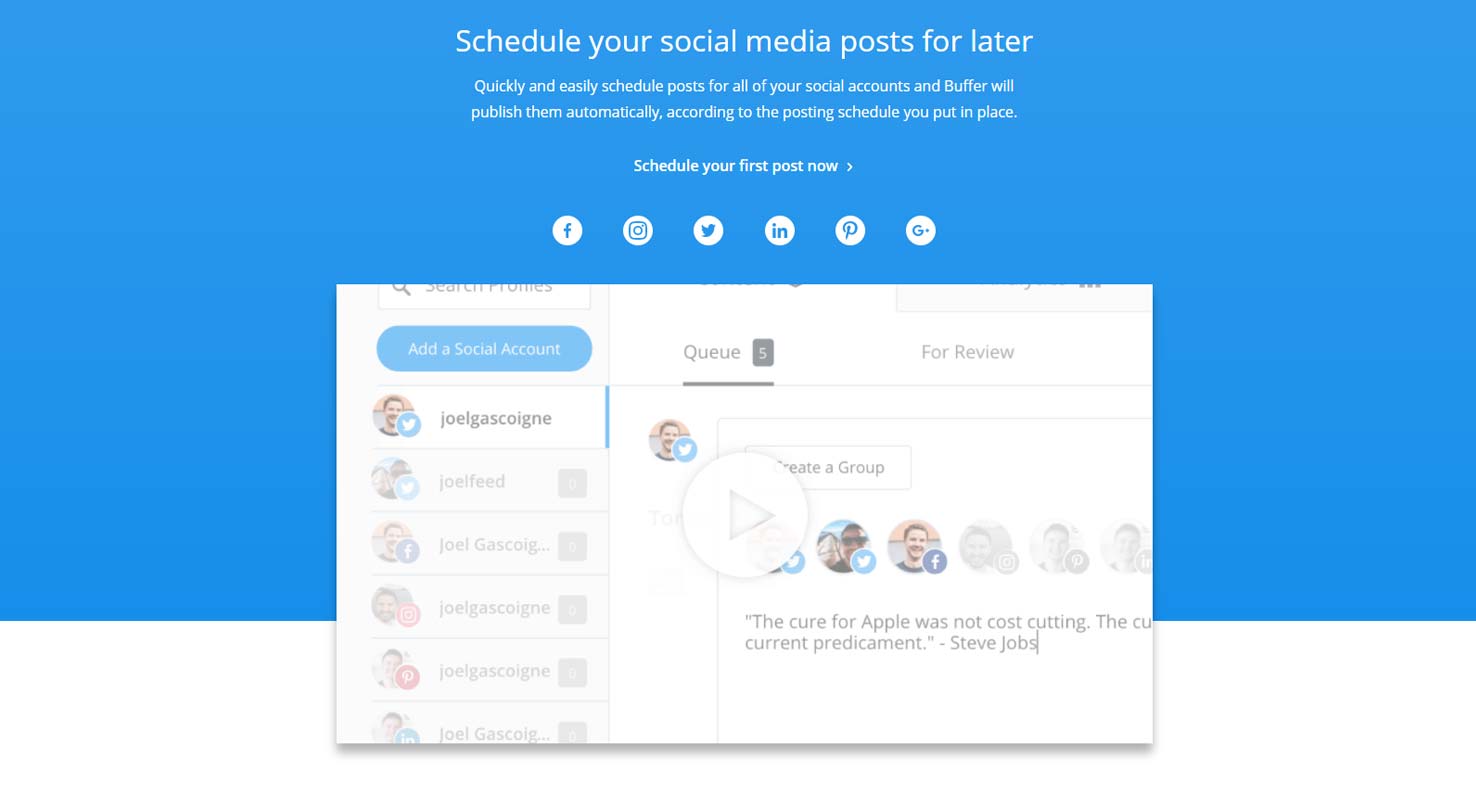
A well-thought-out process requires the right tools to manage the editorial calendar, approvals, and monitoring on a day-to-day basis. Two tools have proven particularly effective in practice and are presented in detail in separate articles: Buffer, a streamlined alternative to Hootsuite for editorial planning, is ideal for teams looking for clear, predictable advance planning across multiple platforms. Social Hub combines editorial planning with monitoring and is the right choice if, in addition to pure planning, you also want to track mentions and reactions within the same tool. For beginners, it’s also worth taking a look at Hootsuite as a starting point for content planning.
Checklist: How to Successfully Set Up Editorial and Content Planning
- Define three to five core thematic pillars
- Plan for a realistic frequency rather than overloading
- Continuously and systematically expand the topic pool
- Balance Between Evergreens and Trends
- Separate Creation, Review, and Approval
- Fixed release dates instead of individual approval
- One Centralized Tool Instead of Excel Chaos
- Regularly check what’s really performing well
Those who consistently implement these points combine Facebook marketing and Instagram marketing into a unified, predictable editorial workflow rather than isolated, individual efforts. Topics such as lead generation via social media or building genuine community interaction also benefit directly from well-managed editorial planning, because results only materialize through continuous, consistent content.
The analysis itself is also part of the editorial process and should not be treated as a separate, loosely connected task. Those who regularly analyze key metrics and monitoring data can identify early on which content pillars actually drive reach and engagement, and can refine the editorial calendar accordingly, rather than continuing to plan year after year based on the same assumptions.
Frequently Asked Questions About Editorial and Content Planning
How does an editorial calendar differ from a simple posting schedule?
A posting schedule simply lists the date and content of a post. An editorial calendar goes a step further and maps out the entire process: content pillars, responsibilities, approval status, and the strategic positioning of each post. This makes it a central management tool for the entire editorial team, rather than just a simple schedule.
How often should the topic pool be updated?
In practice, a monthly schedule for the general replenishment of the topic pool has proven effective, supplemented by a weekly review of current events. This ensures sufficient strategic lead time without missing out on current developments.
Does every company need a multi-step approval process?
Not every company needs the same level of formalization. Smaller teams with short decision-making chains can often get by with a single, clearly designated approval authority. However, as soon as multiple departments, locations, or external partners are involved, a structured, multi-step approval process reliably prevents delays and conflicting messages.

Increase Instagram reach: What really works in 2026

Social Media Algorithms: Reach, Ranking Factors, and Platform Strategies
Instagram Reels Algorithm: Watch Time, Shares, and Originality Score
Social media for real estate: making brokers and project developers visible

Facebook marketing for companies: Page, groups and ads

Social media for start-ups: grow big with a small budget














 4.9 / 5.0