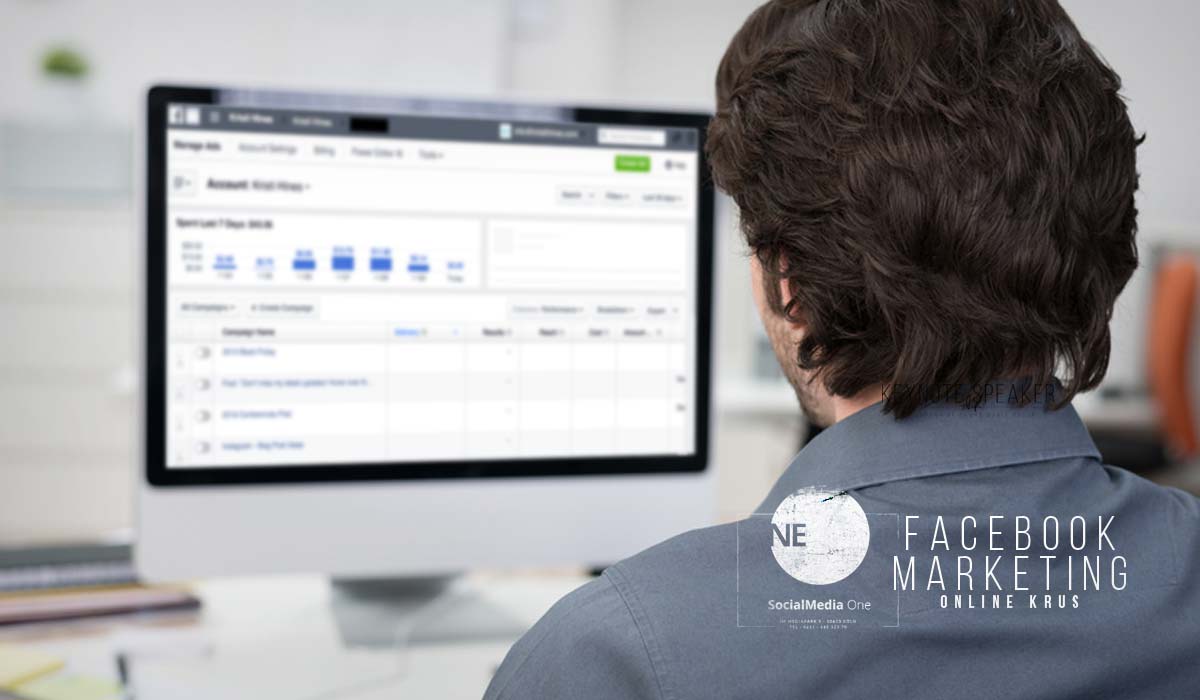
An Alternative to a Facebook Marketing Agency: How to Drive Traffic, Generate Leads, and Attract Customers!
Facebook Marketing Agency – What’s the secret behind aFacebook marketing agency, and are there alternatives? Specifically, marketing campaigns on Facebook revolve around classic, tried-and-true advertising. Only the format is new. Even today, advertising remains one of the easiest ways to attract a high volume of visitors. Although there are many different technical terms and buzzwords in social networks—especially in social media marketing—that agencies like to use in meetings, it ultimately comes down to traditional advertising. Not every company wants to or can afford a Facebook marketing agency. Often, companies want to keep expertise in-house and have social media managers work closely with the content team.
Facebook Marketing?!
Before we go into detail about content, ads, and users, you can go directly to the online video course here : Facebook Ad Traffic 5.0. More online help on Facebook marketing:
- Editor’s Tip! Learn step by step—for free: Facebook Ads & Advertisements
- Product: Facebook Fan Page and Campaigns Online Course
- Product: How to Break the 1-Cent CPC Barrier
What do Facebook marketing agencies actually do?
- Facebook Strategies
- Campaign Optimization
- Local Facebook Campaigns
- Benefits of Facebook Marketing
- Workshops and Training Courses
How to Create the Perfect Facebook Campaigns?
The best alternative to a Facebook marketing agency is your own expertise! Today we’re introducing a hands-on online course. Through a series of videos, you’ll learn how to create your own Facebook ads! You’ll learn step by step how Facebook works at its core, how to run ads, and how to ultimately generate fans and sales! The course focuses on practical knowledge and experience, presented in a simple and easy-to-understand way. With this new knowledge, you can boost your own sales and increase your traffic! But first, let’s take a closer look at Facebook marketing by agencies:
Advertising and Viral Effects on Social Media
Many agencies particularly tout the viral effects of social media marketing to their clients. This means that content spreads through word of mouth, without advertising budgets. However, virality is a somewhat unpredictable factor—in fact, it’s virtually impossible to predict! When it comes to achieving viral effects, it’s not just the actual content that matters, but also the influencers behind each campaign. That’s because virality always stems from the spirit of the times. When the right influencers participate in, pick up on, or share a campaign, many of their followers will do the same. This snowball effect is what we call virality. But do investments in viral campaigns pay off compared to Facebook ads? Social media marketing only becomes truly effective when combined with “traditional” ads that reach a large audience. But why is that the case?
The Evolution of Social Networks and Trends
As we have already described in detail in the article on the development of social networks, social networks have grown tremendously in recent years. While early precursors like MySpace reached a few hundred thousand people—which was, and still is, a large user base for an internet platform—social networks today reach millions, and YouTube and Facebook even reach billions of people. Not only do they reach billions of people, but social networks actually have billions of registered, returning users. They visit the respective platform not just once a week, but several times a day. This incredible reach —and, of course, the highly active user base—makes social media such a powerful advertising platform for companies and businesses. Whether it’s about new products or services, everyone wants to have a presence here.
Rising Costs for Advertising Placement: Campaign Optimization Is Becoming Increasingly Important
This widely sought-after presence is actually growing among companies, as more and more large corporations are jumping on the social media marketing bandwagon. Consequently, prices for ad placements on social networks are rising. As a Facebook marketing agency, our primary focus is on finding the most effective ads so that clients pay the lowest possible cost per click. We’ve covered click prices and how you can pay less than a cent with high-quality content in our article “Facebook Ads for 1 Cent (CPC).”
Due to the rapidly growing and already strong presence of social networks within modern societies, not only are prices rising, but so is competition within these channels—despite the diversity of the networks. That’s why, as a Facebook marketing agency, it’s worth looking not only at advertising but also at the various additional features that social networks offer. On the one hand, this involves advertising campaigns that can be distributed in groups, for example. Facebook groups, too, have incredible power. Some have tens of thousands, even hundreds of thousands of members who check in on their favorite groups every day. Don’t limit yourself to niche topics. Often, it’s the big, relevant topics—such as diets, activities/residents of a city, animals, or even sports, nutrition, and nudity—that attract the most attention.
Topic Relevance on Social Media: Content, Interests, Trolls, and Shitstorms
Relevant topics on social media do not differ significantly from those in everyday society. The same issues that matter to everyone in their daily lives are also discussed on social media. That’s why emotions often run high here, leading to so-called “shitstorms.” Shitstorms are clusters of negative comments and statements made by users on social media against companies or projects. They arise due to a perceived injustice that is denounced by the “general public.” However, “the general public” in this context does not necessarily correspond to demographic generalities. People who regularly post on social media—especially those who do so negatively—are called “trolls.” Anonymity makes it easy. Companies must also deal with this in their social media marketing if they want to be active on Facebook, Instagram, X (formerly Twitter), and YouTube. There will always be negative comments and opinions; companies simply have to deal with criticism, just as they do at a local store or over the phone with customer service. Those who go the extra mile for their customers and take legitimate or constructive criticism to heart can only win over their fans and their own customers!
Generating Relevance: Advertising as a Strategy for Shaping Public Opinion
However, relevant topics don’t just arise because of their relevance to society, but also through the targeted placement of ads. This is because ads on social media aren’t as clearly labeled or noticeable as a large billboard in the city center, which most people ignore. Advertising on
So before you realize that a post is an advertisement, you first have to recognize the promotional aspect yourself. The only visible indication that it’s an advertisement is a small label below the name that says “sponsored.” At first glance, of course, it isn’t immediately visible. Various companies and organizations exploit precisely this advantage to deliberately shape public sentiment. One of the most striking examples, however, comes not from commercial enterprises but from governments. Major players in influencing public opinion through content include both China and Russia. Both countries influence public opinion on social media—and, of course, on the internet in general. These nations employ their own staff who, every day, post positive or negative comments, write blog posts, or share photos—depending on their instructions.
Constant Presence Sells: Facebook Ads and Marketing Messages
So the investments aren’t made in advertisements, but in staff and a constant stream of new content. The effect is the same: a message is shown to people over and over again. Consequently, those who maintain a constant presence with people no longer merely implant their message in users’ short-term memory but anchor it there for the long term.
Aside from the information controlled by companies and corporations, social media tends to revolve around pretty much the same topics that are trending in the real world. It’s about the latest gossip, it’s about rumors, it’s about conspiracy theories, but also about new beauty tips or diets. Cats and dogs are always a hit, and erotic content and pornography go without saying. Within circles of friends, the conversation naturally revolves around the latest activities, trips, or experiences of people they know. It’s a virtual marketplace for all kinds of thoughts and needs. Facebook marketing agencies deal with all these topics and strive to generate maximum reach for their clients and their projects.

Generating Facebook Traffic: How to Increase Your Reach
Many companies prefer to invest in their own staff and their employees’ expertise rather than in a Facebook marketing agency. This is a completely understandable consideration in strategic business decision-making. That’s why there are many workshops, offerings, and online video courses available on the internet for companies and employees. For those who want to generate targeted Facebook traffic on their own, here’s the perfect online video course: FB AD Traffic 5.0.
This guide explains in detail how to set up your own Facebook page, attract followers, and ultimately run ads—not just to your own followers or a random group, but in a highly targeted and specific way!
More online help on Facebook marketing:
- Facebook Fan Page and Campaigns Online Course
- Create / Optimize Facebook Campaigns
- How to Break the 1-Cent CPC Mark
Step 1: A Hands-On Facebook Tutorial
Many people initially ask themselves, “How do you actually use Facebook in practice?” In practice, many things are quite different from how they initially appear to outsiders. After all, theoretical knowledge alone isn’t enough to create successful Facebook campaigns. To avoid the infamous “danger of half-knowledge,” it’s worth investing a little time in a workshop or online course. Whether you’re a freelancer, a startup, or a small or medium-sized business (SMB), handling social media marketing in-house is beneficial for many. And the advantages are clear:
- Short communication channels, minimal loss of information
- Quick Decisions, Campaign Launches
- Direct Access to Expertise
- One’s own emotions, ideas
- Original photos and videos
Social Media Is Personal: Facebook Management
For many people, social media management is a very personal matter, and they appreciate very brief coordination and quick channels for meetings. Not every Facebook marketing agency can dedicate as much time to a single client as many would like. Likewise, for many clients, it’s not within their budget to take up that much of their agency’s time. Because of these various factors, many companies handle their social media marketing themselves—including their Facebook management, campaigns, and ads.
That’s exactly what this online course focuses on: Facebook in Practice! What matters most, and what should an agency pay attention to? You can explore various questions using the practical examples in the video tutorial from the first part.
Step 2: How to Run Your Own Facebook Ads and Campaigns
Your fan page is set up, and you’ve gained your first fans. At some point, you’ll run your first Facebook ads to expand your reach even further. The number of fans is often one of the goals, because it not only reflects the size of your company or product but also provides organic reach for every single post—reach that doesn’t have to be paid for. That’s why it’s worth running ads, if only to build your fan base.
Testing campaigns: Segment by interests, age, location, devices, and much more
Ads on Facebook are displayed on various devices, including smartphones running Android and Apple operating systems, as well as various tablets and laptops. In addition to the different devices, there are other optional settings, such as the target audience. Your target audience varies not only by the gender of your followers, but also by age, interests, location, and other factors; it also changes depending on the time of day.
In the best-practice example, this could be a product targeted at two groups: working women and mothers. Young mothers are targeted in the morning. That’s when they’re usually at home—the kids are at daycare or school—and they’re cleaning or preparing meals. In between, they take breaks to check their cell phones, tablets, or laptops. During this time, you naturally reach far more young mothers than in the evening, when, for example, the hustle and bustle of dinner and doing the dishes is underway. Right after that, they have to put the kids to bed. A second target group consists of working women. However, the same woman might also be very busy and arrive at the office promptly at 8 a.m. every morning—in which case, the ad needs to be served differently. That said, the best time would be in the evening, since that’s when people have free time after a hard day at work. The insider tip: split testing! This allows you to separate different target groups and run the ads against each other.
The main goal of Facebook ads is to test these different variations and options against each other and then analyze the effectiveness of each individual group. By creating separate groups, you can define very specific characteristics, just as described above. As a Facebook marketing agency or a social media manager within a company, you can now see—based on individual campaigns and their specific settings—that a certain target audience, within a specific age range and with specific interests, makes more purchases than another. We allocate budgets accordingly to the successful segments.
Insider Tip for Online Stores: Facebook Retargeting
In addition to the ads that can be shown to all Facebook users, there are other options you can use in your marketing campaigns. Retargeting on Facebook, for example, plays a crucial and significant role. With retargeting, you can target fans who have already “liked” your Facebook Page, or people who have visited your online store or website. These individuals are generally much more likely to make a purchase; they’re already familiar with the brand or product and have taken the initiative to learn more on their own. As a result, you’re likely to achieve higher engagement. You can target these groups with completely separate ads. Thanks to these separate ad campaigns, Facebook has become almost indispensable for today’s online marketing.
That’s why, in the second part of the online course, you’ll learn the best ways to run and set up Facebook ads.
Step 3: How to Get Traffic, Leads, and Customers from Facebook
Since we’re on the topic of websites and online stores, this is essentially the purpose of advertising on Facebook. Through advertising, you can drive traffic to your own online platforms and effectively promote your products or services to consumers. In the third part of the online course, you’ll therefore learn how to effectively drive traffic to your own online platforms. This video is packed with tips you can put into practice on Facebook right away. By targeting users in this way, you can acquire traffic relatively inexpensively. As we already revealed in the article about the Facebook 1-Cent Click Formula, the goal is to achieve the best cost per click (CPC). If you acquire high-quality content—that is, high-value users who are a good fit for your offering—and do so with minimal investment, you’ll continue to enjoy fairly high margins, even in Facebook marketing without an agency.
That’s exactly what matters in online marketing and Facebook advertising. In this online course, you’ll learn how to effectively drive traffic! You’ll be guided step by step through a complete Facebook campaign. In a video interview between online marketers Ralf Schmitz and David Seffer, you’ll learn what else Facebook ad traffic can do for you! But the video has even more insider tips to offer. In addition to simple step-by-step instructions for creating your own Facebook campaign, Schmitz and Seffer share not only small tips and tricks but also real insider secrets from the field. This knowledge, drawn from successful best practices, helps you avoid common mistakes and supports you in creating effective Facebook campaigns.
After that, you’ll have learned how to attract more fans, leads, and customers. With this combination, you’ll learn how to create the perfect advertising campaigns! Start your Facebook Marketing online course now:

Facebook marketing for companies: Page, groups and ads

Facebook Ads Agency: Place ads

Facebook Ads 2.0: Ads for Affiliate and Coaching - Online Course

Cashflow Ads 2.0: Facebook Ads step by step - Online Course
Facebook Ad Traffic: 10x more reach - Online Course

Live Stories - Video Marketing on Facebook, Snapchat and Instagram















 4.9 / 5.0