
AI Systems: An Overview of ChatGPT, Perplexity, and Gemini
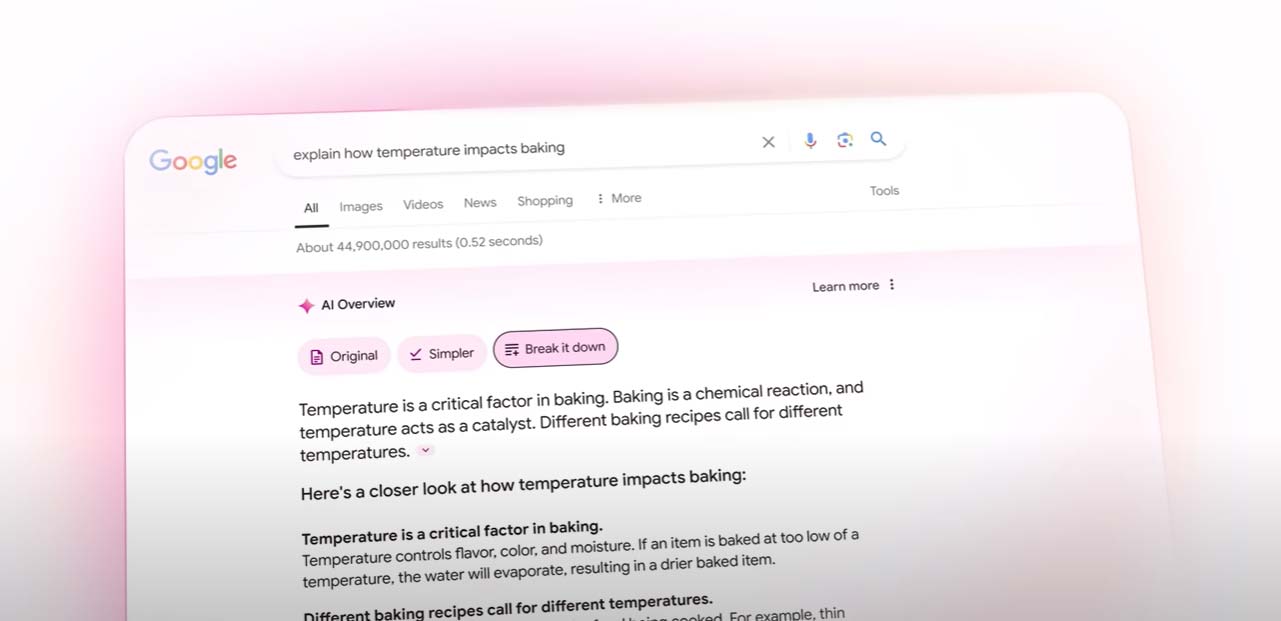
These days, when someone asks a question, they’re increasingly likely to find a fully formed answer rather than ten blue links. Generative AI systems like ChatGPT, Perplexity, and Google’s Gemini are fundamentally changing how search works and how users access information. For companies, it’s becoming crucial whether their own content appears in such answers at all—an issue that every GEO agency is now addressing intensively.
The Most Important AI Systems in the Context of Search
OpenAI’s ChatGPT was the first system to draw widespread attention to generative AI search. It answers questions directly, but can now also search the web in real time and display sources, rather than relying solely on older training data. For many users, this has made it their first port of call, even before they open a traditional search engine.
Note: Not every system searches the web in real time. Some answers are derived exclusively from training data and are therefore not up to date, which can lead to noticeable errors when dealing with rapidly changing topics.
Perplexity, on the other hand, was designed from the outset as an answer engine that cites sources and is considered one of the most transparent systems, since every statement is directly backed up by a link. This allows users to immediately verify any claim for themselves without having to blindly trust the system.
- ChatGPT: Conversation with optional web search
- Perplexity: Answers with Sources
- Gemini: Deeply Integrated with Google
- All three use language models as a foundation
How These Systems Select Content
Unlike traditional social media algorithms or search engines, AI systems do not provide a list, but rather a condensed response drawn from multiple sources. Which source is cited depends on the clarity, structure, and trustworthiness of the respective page, not solely on the sheer frequency of keywords in the text.
This is exactly where Generative Engine Optimization comes in: Content is structured in such a way that a language model can easily summarize it and correctly attribute it to a source. Short, clearly answered questions often fare better than long, convoluted blocks of text without a discernible structure. Technical terms should also be used consistently so that a model can reliably recognize a brand.
- A Clear Structure Instead of a Sea of Text
- Clear Answers to Specific Questions
- Credible sources cited in the text
- Up-to-date information rather than outdated information
Relevance for Businesses
For marketing professionals, this means that visibility no longer ends with the top spot on Google, but extends into the answers provided by AI systems. Those who don’t appear there are missing out on a growing number of touchpoints even before a single click takes place. Especially when it comes to brand and product questions, for many users, AI-generated answers now completely replace the traditional search process—without a single website being visited directly. This trend is no longer limited to tech-savvy audiences but is increasingly affecting the entire market.
- Visibility Across Multiple Systems
- New touchpoints before the click
- Trust begins with the response itself
- Classic SEO remains the foundation, however
How Companies Should Monitor AI Systems
Since answers can vary depending on the system and the time of day, it’s worth periodically checking your own key questions in ChatGPT, Perplexity, and Gemini on a random basis. This is the only way to determine whether and how often your brand is actually mentioned, and whether competitors are already ahead of you in this regard. A simple table listing the question, date, and result is usually all you need for this, supplemented by an occasional SEO/GEO audit to check the technical foundation.
- Check key issues manually on a regular basis
- Monitoring Multiple Systems in Parallel
- Document cited sources accurately
- Compare Changes Over Time
Understanding AI Systems: Common Mistakes Made by Companies
A common mistake is to treat all AI systems the same, even though they access live web data to varying degrees and prefer different sources. Anyone who applies a strategy designed for ChatGPT directly to Perplexity or Gemini overlooks the fact that each system uses its own criteria for source selection and citation.
Similarly, the technical foundation is often neglected: Without solid technical SEO as a foundation, a website remains just as difficult for generative systems to access as it is for traditional search engine crawlers.
- Do not treat systems identically
- Each system prefers its own sources
- A technical foundation remains a prerequisite
- Do not apply the strategy one-to-one
Tailoring Content Specifically for AI Systems
The first step is usually a content audit to identify which existing pages already cover the right topics but are not yet phrased clearly enough. Next, targeted text optimization helps break down answers into short, clear sections that a language model can easily process.
Those who repeat these two steps regularly, rather than performing them just once, will remain visible even as individual systems or their evaluation criteria change over time.
- Content Audit as the First Step
- Text Optimization for Clear Paragraphs
- Repeat both steps regularly
- Maintaining Visibility Despite System Changes
Those who take their visibility in AI systems just as seriously as traditional rankings will gain a head start that will only pay off fully over time. Companies that already regularly monitor how they appear in generative responses will be able to respond to future shifts in the search landscape with far greater composure than competitors who only react once the decline in visibility has long been measurable.

Sentiment Analysis: Definition, Methods, and Applications in Marketing

AI Sales Software: Comparison of Features, Providers, and ROI

Robots in Marketing: How Technology and Automation Are Transforming Brands

Perplexity: The AI Search Engine That Cites Sources—Explained Simply

Language Model (LLM): Definition and Importance for SEO/GEO

Generative AI Models: How ChatGPT, Perplexity, and Google AI Overviews Are Changing Visibility















 4.9 / 5.0