
Cognitive Filters: How the Brain Filters Advertising and What Brands Are Doing About It
Every day, up to 10,000 advertising messages bombard a person—and the brain completely ignores the overwhelming majority of them. Cognitive filters are the gateways to our consciousness: in a matter of milliseconds, they decide what gets noticed and what gets lost in the noise of the information deluge. For brands, understanding these filters is not just an academic interest, but a strategic necessity.
Definition and Classification
Here’s what it’s all about:
- Classifying cognitive filters in a marketing context
- Understanding the term, its origins, and its meaning
- A foundation for strategic decisions
Cognitive filters refer to neural and psychological mechanisms that selectively process incoming stimuli. The human brain can consciously process only about 40 bits per second—out of the roughly 11 million bits that the sensory organs take in simultaneously. Whatever does not pass through the filter simply does not exist for consciousness. In cognitive psychology, various filtering mechanisms are distinguished: habituation, selective attention, and top-down-driven expectation filters. They all serve the evolutionarily meaningful goal of conserving resources and prioritizing only relevant signals.
Core Principles of Cognitive Filtering
Cognitive filtering operates according to three fundamental principles that have emerged over decades of neuropsychological research. First, the principle of capacity limitation: Our working memory can hold a maximum of 7 ± 2 units of information at a time—anything beyond that is actively suppressed, not simply forgotten. Second, the principle of relevance: The brain evaluates every incoming stimulus within 100 to 200 milliseconds based on its significance for current goals and needs. Third, the principle of economy: Neural processing consumes energy—the brain conserves energy wherever possible and delegates familiar stimuli to automated routines that require virtually no conscious resources. For marketers, this means: Anyone who fails to send a clear signal of relevance will be ruthlessly filtered out by the principle of economy.
Definition of Filter Mechanisms
Not all cognitive filters work the same way—their differences are crucial for marketing practice. Habituation is a passive process: Repeated exposure to the same stimulus gradually dampens the neural response until no conscious signal is received anymore. This is the mechanism behind banner blindness. Selective attention, on the other hand, is an active top-down process: The brain directs its processing capacity specifically toward stimuli that align with current goals—a user who is currently comparing running shoes is much more likely to notice ads for sports brands. Finally, expectation filters are based on learned schemas: The brain automatically fills in patterns and skips information that matches what is expected. This is precisely why unexpected, schema-breaking stimuli have such a much stronger impact.
| Filter Mechanism | Description | Marketing Relevance | Countermeasure |
|---|---|---|---|
| Selective Perception | Only stimuli relevant to the goal are processed | High – Irrelevant messages are ignored | Personalization and Target Audience Relevance |
| Cocktail Party Effect | Proper names and personal triggers capture attention | Medium – Names and personalized appeals boost recall | Addressing people by name, personalized ads |
| Inattentional Blindness | Focused attention blocks out peripheral stimuli | Very high—banners in peripheral areas are not seen | Placement within the focus of attention |
| Banner Blindness | Learned Ignoring of Typical Ad Placements | Critical—Traditional Display Ads Are Losing Their Effectiveness | Native advertising, unconventional formats |
Implications for Brands
Keep in mind:
- Cognitive filters strengthen brand and customer loyalty
- Direct impact on brand awareness and conversion
- Long-term development is always worth it
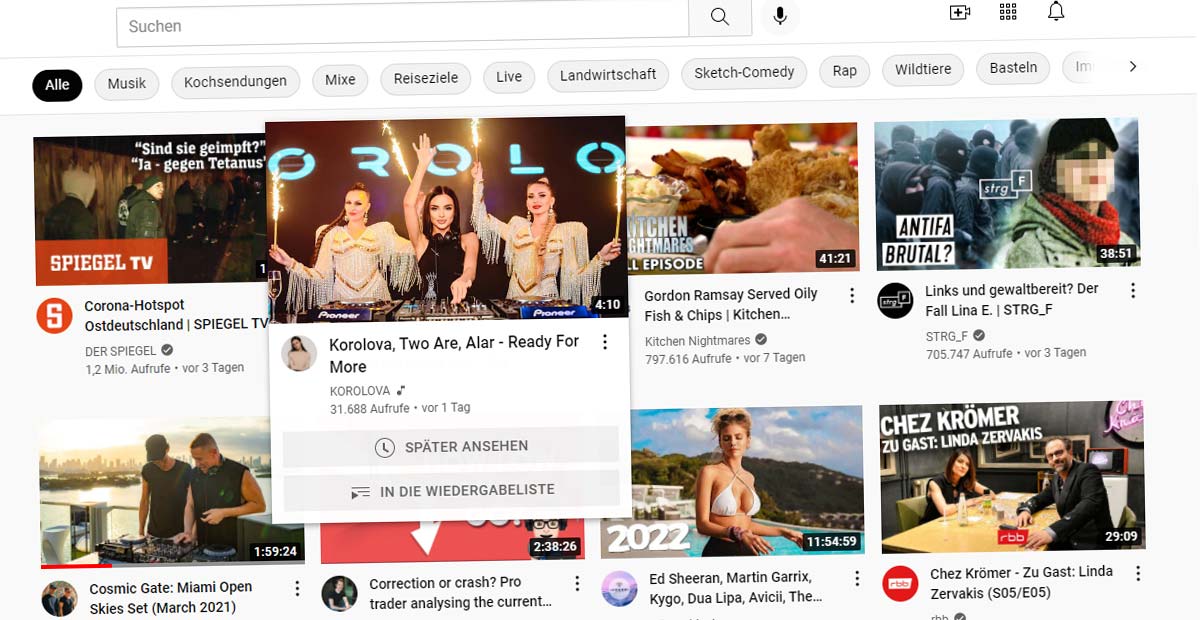
Anyone who ignores the brain’s filtering mechanisms is wasting their budget. Brands that truly want to reach their target audience must understand the criteria the brain uses to assess relevance. Three factors determine whether a stimulus passes through the filter: novelty, personal significance, and emotional intensity. Traditional display advertising often fails on all three criteria at once—it is neither novel nor personally relevant nor emotionally charged. The result is banner blindness: users literally no longer see ad banners, even when they’re looking directly at them.
Facts and Figures on the Brain’s Filtering Capabilities
The statistics behind cognitive filtering are sobering for traditional mass marketing. According to a study by the Nielsen Norman Group, users remember, on average, only 1 out of every 14 display ads they see—a recall rate of less than 8 percent. The average time spent looking at banner ads is less than 0.5 seconds, which is too short to trigger any processing of the content. Even more striking: Research from Microsoft shows that the human attention span in the digital environment has dropped to about 8 seconds—shorter than that of a goldfish, according to the oft-cited, albeit simplified, study. For brands, this means in concrete terms: Every second it takes for a message to get to its core point is a lost second—the cognitive filter kicks in before the added value has been communicated.
Strategic Importance for Media Planning and Budget Allocation
The implications of cognitive filters for media planning and budget allocation are far-reaching. Channels with high levels of sensory overload—traditional display networks, cluttered social media feeds, intrusive pre-roll videos—are structurally at odds with the brain’s filtering mechanisms. Channels with a natural attention architecture—search engine advertising during active research, native advertising in editorial contexts, influencer content in familiar environments—use these filters to their advantage because user intent is already present. A study by Kantar shows that search engine ads achieve a conversion rate up to four times higher than equivalent display ads when there is active purchase intent—a direct effect of these filtering mechanisms. Brands that reallocate their budgets based on this knowledge can advertise significantly more efficiently.
Take Advantage of the Cocktail Party Effect
The cocktail party effect describes the brain’s ability to selectively filter out one’s own name or personally relevant information from a babble of voices. In marketing, this means that personalization isn’t just a nice-to-have—it’s a neurological must. Ads that address a person’s name, city, or personal interests activate filtering mechanisms that favor the message—allowing it to pass more easily through the cognitive gatekeeper.
Inattentional Blindness as a Strategic Problem
Inattentional blindness explains why people fail to notice even conspicuous advertisements when their attention is focused elsewhere. The famous “gorilla experiment” by Simons and Chabris in 1999 showed that 50% of participants did not notice a gorilla in a video because they were focused on something else. For digital marketing, this means that placement within users’ natural attention path is crucial.
Strategic Deployment
Here’s how it works:
- Clearly define your goals before you start
- Integrate cognitive filters strategically into the marketing mix
- Test, measure, and continuously optimize
Marketers have three proven strategies at their disposal to overcome cognitive filters. First, contrast: The brain automatically registers what stands out from its surroundings. An eye-catching color scheme in a gray feed, unusual typography, or a jarring visual element forces attention. Second, relevance: Personalization based on behavioral data, location, or demographics increases the perceived importance of a message and lowers the filter threshold. Third, surprise: The brain pays attention when expectations are broken. Unexpected storytelling —that is, stories that don’t follow a predictable pattern—breaks through cognitive habituation and leaves a deeper impression on the memory. The combination is particularly effective: A message that is personally relevant, uses contrasting elements, and contains a surprising twist has the best chance of getting past all filters.
Step-by-Step: Overcoming Filters in Campaign Planning
A structured approach increases the likelihood of systematically overcoming cognitive filters rather than breaking through them by chance. Step one: Target audience analysis based on current needs—not demographic characteristics, but psychographic states. What goals is the target audience currently pursuing? What problems are they grappling with? Only by answering these questions can you establish relevance. Step two: Contrast analysis of the advertising environment—what does the direct competition look like in the feed, which formats dominate, and which colors and visual styles are overused? The goal is to create visual or content-based contrast with the average. Step three: Incorporate an element of surprise—an unexpected opening, a counterintuitive statement, or a dramatic break in the first 3 seconds of a video. Step four: Control frequency—excessive repetition of the same message triggers habituation and reduces filter permeability. Three to five impressions per user over the course of a campaign is optimal; after that, creative rotation should be implemented.
Common Mistakes in Dealing with Cognitive Filters
The most common mistake is over-exposure: Brands run the same ad until habituation sets in and the brain automatically suppresses the message. Studies show that after the seventh exposure to identical creative, recall no longer increases but actually decreases—a phenomenon known as “wear-out.” Mistake number two is a lack of contextual relevance: A perfectly personalized ad that’s served at the wrong moment will still fail the relevance filter. Anyone who displays vacation offers immediately after a return from vacation or shows sports equipment ads after a purchase is fighting against the context. Mistake number three is visual genericity: stock photo aesthetics, predictable imagery, and interchangeable layouts fail to trigger a cognitive response—the brain immediately classifies them as irrelevant background noise and filters them out without any conscious involvement.
Best Practice Examples
The most important thing:
- Leading brands prioritize consistency
- The courage to be different pays off
- Define measurable KPIs from the very beginning
Spotify takes personalization to the highest level: The Wrapped campaign filters directly into users’ consciousness because it shows only data that is personally relevant to them—the cocktail party effect in its purest form. Apple has relied on visual contrast for decades: white products on a black background, minimalist design in an oversaturated advertising landscape. The shock of simplicity breaks through cognitive habituation. With its Real Beauty campaign, Dove broke through inattentional blindness by showing real women instead of models—the unexpected forced the brain to engage. Old Spice pulled off the perfect surprise strategy with its viral “The Man Your Man Could Smell Like” commercial: completely unpredictable scene changes ensured maximum cognitive activation.
Spotify Wrapped: Personalization as a Filter Key
Spotify Wrapped is perhaps the most precise example of overcoming filters on an industrial scale. The campaign shows each of its 456 million active users (as of 2023) exclusively their own listening data—favorite songs, most-played artists, and total listening time. This maximizes the cocktail party effect: not a single element of the message is generic. At the same time, sharing the results on social media creates a moment of surprise for everyone who sees another person’s content—thus generating viral momentum without paid reach. The result: Every year, Wrapped generates more organic social media mentions than any of the company’s paid campaigns. Here, the strategy for overcoming cognitive filters works on three levels simultaneously: relevance (personal data), novelty (annual format), and social trigger (comparison with others).
Apple and Dove: Contrast Through Simplicity and Reality
Apple and Dove seem to pursue opposing strategies, but both are based on the same filtering principle: contrasting with the norm of their respective markets. Apple operates in an advertising world of cluttered images, loud colors, and frantic editing—and consistently relies on silence, white space, and slowness in contrast. This visual minimalism creates a stronger contrast effect than any garish eye-catcher. Dove, on the other hand, created contrast through content: in an industry that worked exclusively with idealized beauty, it showcased real bodies—such a stark departure from the norm that the brain had no choice but to process it. Both brands demonstrate that the most effective contrast doesn’t always have to be loud—it simply has to be the unexpected within its context. For marketers, this means analyzing their own category communication and deliberately taking the opposite approach.
“We don’t see the world as it is. We see the world as we are.” – Anaïs Nin. In marketing, this means that advertising must fit the target audience’s worldview in order to get through the filter.
Conclusion
- Cognitive filters are indispensable in modern marketing
- Think strategically, implement consistently
Cognitive filters are the invisible gatekeepers of every marketing campaign. Ignoring them means investing your budget in stimuli that the brain automatically blocks out. On the other hand, those who understand how selective perception, the cocktail party effect, and inattentional blindness interact can design campaigns that actively overcome these filters. The tools are clear: personal relevance, visual contrast, and the element of surprise. Brands that consistently use all three pay less for greater impact—because their messages reach the target audience’s consciousness instead of disappearing into the neurological noise.

Case Studies: Structure, Social Proof, and Use in Marketing

Need: Hierarchy of Needs, Desire, and Buying Motive in Marketing

How-To Content: Using Tutorials, Guides, and Search Intent Effectively

Social Media Videos: Reels, Stories, and Formats for Strong Reach

Sales Message: Structure, Examples, and the Impact of Strong Copy

Measuring Success: KPIs, Vanity Metrics, and the Right Measurement Framework















 4.9 / 5.0