
Social Media Basics: Peak Traffic Times – Video Tutorial #7
Knowing the best times to post on social media isn’t a secret—it’s a matter of data. If you post when your target audience is asleep, you’re throwing away organic reach. Timing is one of the few free levers in social media marketing —and yet it’s systematically underestimated. Learn more about the social media agency —or contact us directly.
Why Posting Times Affect Organic Reach
Algorithms on social media prioritize content that generates engagement in the first few minutes and hours after it’s posted. A post that appears at 3 a.m. and initially receives no engagement is classified by the algorithm as low-relevance—even if its content is strong.
How Algorithms Evaluate Timing
- Early engagement as a relevance signal — Instagram, Facebook, and LinkedIn consider engagement during the first 60–90 minutes after publication to be a primary relevance signal; Posts that receive likes and comments right away are shown to a wider audience; posts that are initially ignored disappear from the feed before most followers are online
- Platform-specific peak times — each platform has its own traffic peaks based on the usage patterns of its respective community; LinkedIn users are active on weekdays, while TikTok users are active in the evenings and at night; these structural differences should form the basis of any posting calendar
- Consider time zones — if you’re targeting an international audience, you need to plan posting times for different time zones; an audience that is 60% based in Germany has different peak times than a U.S.-dominated audience; analytics data reveals the geographic distribution of your followers
- Consistency beats perfect timing — posting regularly at the same time is more important than occasional perfect timing; algorithms reward consistent accounts; it’s better to post daily at 8 a.m. than three times a week at different times
Best Times by Platform: Guidelines for 2024/2025
Platform Comparison: Posting Times
| Platform | Best Days of the Week | Best Time | Avoid |
|---|---|---|---|
| Tue, Wed, Thu | 7:00 a.m.–9:00 a.m., 12:00 p.m.–1:00 p.m. | Weekend, Friday evening | |
| Mon, Wed, Fri | 11:00 a.m.–1:00 p.m., 7:00 p.m.–9:00 p.m. | Early in the morning (before 7 a.m.) | |
| Wed, Thu, Fri | 9:00 a.m.–12:00 p.m. | Saturday morning | |
| TikTok | Tue, Thu, Fri | 7:00 PM–11:00 PM, 6:00 AM–9:00 AM | Lunchtime |
| X (Twitter) | Mon–Fri | 9:00 a.m.–11:00 a.m., 5:00 p.m.–6:00 p.m. | Late at night (after 10 p.m.) |
These times as a starting point—not as a rule
- Your own data trumps industry benchmarks —the times listed above are averages; your own target audience may exhibit significantly different patterns; Instagram Insights, LinkedIn Analytics, and Facebook Analytics provide account-specific data on the times when your followers are most active
- Conduct A/B tests with posting times — post the same type of content at different times and compare engagement rates; analyze the data after 4–6 weeks; your own tests will provide more precise insights than any general guide
- Seasonal Adjustments — User behavior changes depending on the time of year and holidays; during school breaks, many target audiences are active at different times; those who understand seasonal patterns and adjust their posting times will benefit from increased attention
- Competitor Timing as a Counterstrategy — When all competitors post at the same time, competition in the feed increases; sometimes it’s more effective to post 30 minutes before or after the industry’s peak to face less competition in the feed while still reaching active users
Tools for Optimizing Posting Times
- Platform-specific analytics —Instagram Insights, LinkedIn Creator Analytics, and Facebook Business Suite—provide follower activity data for free; this is the first and most important starting point for timing decisions; when checked daily, this data builds a precise picture of your community’s active times
- Scheduling tools like Buffer or Hootsuite — allow for automatic posting at optimal times; particularly relevant for brands that operate across multiple time zones; create content in advance and then publish it automatically at the right time
- Sprout Social’s “Best Time to Post” feature — analyzes historical engagement data and automatically recommends optimal posting times; it’s a paid tool, but well worth the investment for larger social media teams; algorithm-based recommendations are more accurate than manual analyses
- Weekly Review Routine — Every Monday, sort the previous week’s performance by posting time; identify which posts generated the most engagement and at what time they were published; spending 15 minutes on this review each week builds reliable knowledge of optimal posting times over the course of several months
The best time to post on social media is when your specific target audience is active—not the time that some random article on the internet presents as a universal truth. Use your own data, conduct your own tests, and draw your own conclusions. Anything else is just guesswork with a source cited.
Posting Frequency and Timing: Understanding the Connections
Frequency and Timing as a Combined Lever
- Posting too much at the wrong time is doubly harmful —if you post excessively and choose the wrong times to do so, you’ll flood your followers’ feeds with content that no one sees; this not only leads to a loss of reach but also to higher unfollow rates because followers get annoyed by irrelevant content
- Quality and timing have a synergistic effect —a top-notch post at the optimal time generates exponentially more engagement than an average post at the same time or a good post at the wrong time; the combination of both factors is crucial; neither factor can fully compensate for the other
- Platform-specific posting frequency recommendations — Instagram Feed: 3–5 posts per week is optimal; LinkedIn: 3–4 posts per week for business accounts; TikTok: 1–3 videos daily for algorithmic growth; Twitter/X: 3–5 tweets daily for a visible presence; no platform rewards daily oversaturation in the long run
- Avoid peak-time competition —when all brands in an industry post at the same “optimal” time, competition in the feed increases; For social media marketing efficiency, it may make more sense to post 15–30 minutes before or after the absolute peak to face less competition while user activity is still high
International Audiences and Time Zone Management
- Multiple posting slots for global brands — Brands with target audiences in different time zones need to plan for multiple daily posting slots; prioritize the main market but don’t completely exclude secondary markets; a content calendar that takes advantage of time zone overlaps reaches more people without having to produce twice as much content
- Analytics segmentation by country — Instagram and LinkedIn display follower activity data by country; if 40% of followers are in a country other than where the company is located, posting times must be adjusted accordingly; Incorrectly calibrated timing in secondary markets results in lost real reach without this being visible inthe overall dashboard
- Social Media Automation for Time Zone Management — Content creation and scheduling tools such as Buffer, Hootsuite, or Later allow you to schedule posts in advance for different time zones without manual input; a well-configured system automatically posts at the right time for each target audience worldwide
Checklist: Optimizing Posting Times
- ☑ Analytics enabled — Regularly retrieve follower activity data from every platform
- ☑ Active Times Documented — Table of Your Community’s Peak Times by Platform
- ☑ A/B test launched — same content tested at different times
- ☑ Scheduling tool set up — automatic posting at optimal times
- ☑ Time zones taken into account — international audience? Posting times adjusted
- ☑ Seasonal adjustments planned — Holidays and vacation periods marked on the calendar
- ☑ Weekly Review Routine — KPI Comparison by Posting Time on the Calendar
- ☑ Analyzing Competitor Timing — When Do the Main Competitors Post?
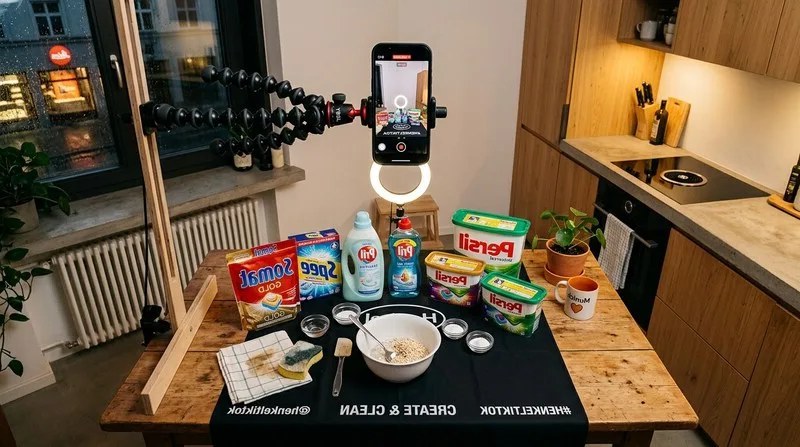
Posting times aren’t a silver bullet—poor content posted at the right time is still poor content. But good content posted at the wrong time wastes potential that the algorithm won’t make up for. Timing is the final touch to a content strategy built on solid foundations: relevant content, a clear target audience, and consistent analysis.

Kickstarter campaign video: What to watch out for?

Content creation: Production & implementation of valuable content - equipment & types
Thumbnail explained: thumbnail for photos and videos + optimization tips

WordPress: installation, setup to SEO texts in 5 episodes - Learn for free with videos

Create infographics with Photoshop: design, SEO and viral posts - free explanatory videos (German)

Hasselhoff Dollar - Photoshop Tutorial: Tools, Crop, Magic Wand and Masks
















 4.9 / 5.0