Meta Ads Advantage+ Targeting: Optimize AI Audiences, CPM, and Conversions
Meta Ads have undergone a fundamental transformation—and anyone still working with manually curated audiences in 2025 is throwing money away. Advantage+ Targeting isn’t just a new feature—it’s a paradigm shift in the way Facebook and Instagram deliver ads. As an agency, we see every day how companies with outdated targeting approaches are burning through their budgets, while savvy advertisers are achieving significantly better results with AI-powered campaigns.
What Advantage+ Targeting Really Means
With Advantage+ Targeting, Meta has fundamentally redefined control over audience delivery. Instead of manually configuring narrow interest clusters and demographic restrictions, the algorithm is given significantly more leeway—with the goal of maximizing conversions while lowering CPM. For advertisers, this means less micromanagement and a deeper strategic understanding of the system.
An Overview of the Key Components
Advantage+ Audience
The algorithm learns from past conversions and automatically expands the target audience —campaigns with at least 50 conversion events per week have been shown to achieve a CPA that is up to 32% lower.
Detailed Targeting Expansion
Meta automatically expands interest-based targeting if the algorithm expects better results outside the defined target audience—opting out is possible to a limited extent, but rarely makes sense.
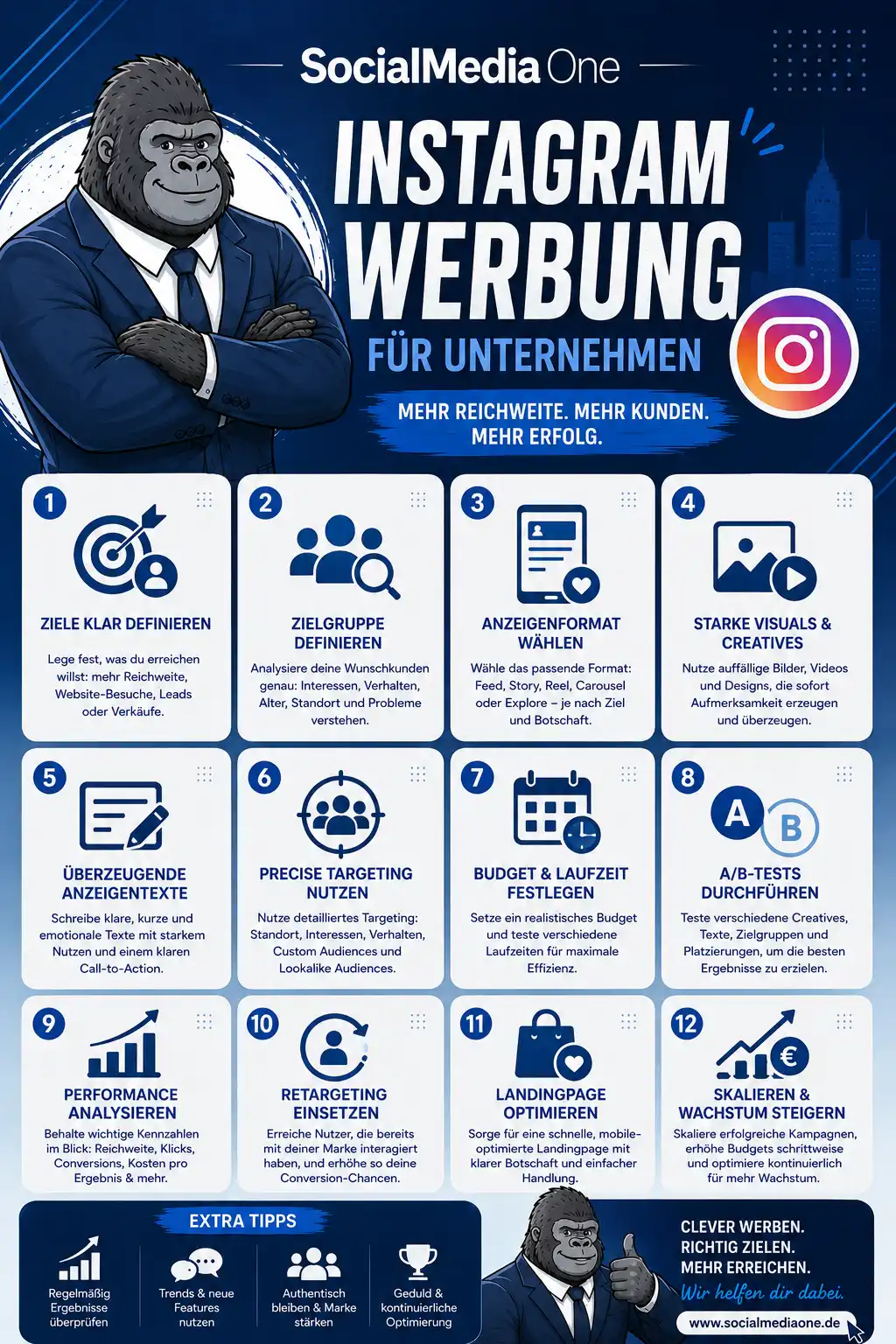
The infographic shows how Instagram ads can be precisely targeted—from defining the target audience to choosing ad formats and conducting A/B testing.
Audience Controls Instead of Audience Restrictions
Instead of strict exclusions, there are now so-called control options—minimum demographic requirements can still be set, but narrow exclusions based on interests have largely been eliminated.
Pixel and Signal Quality as a Key to Success
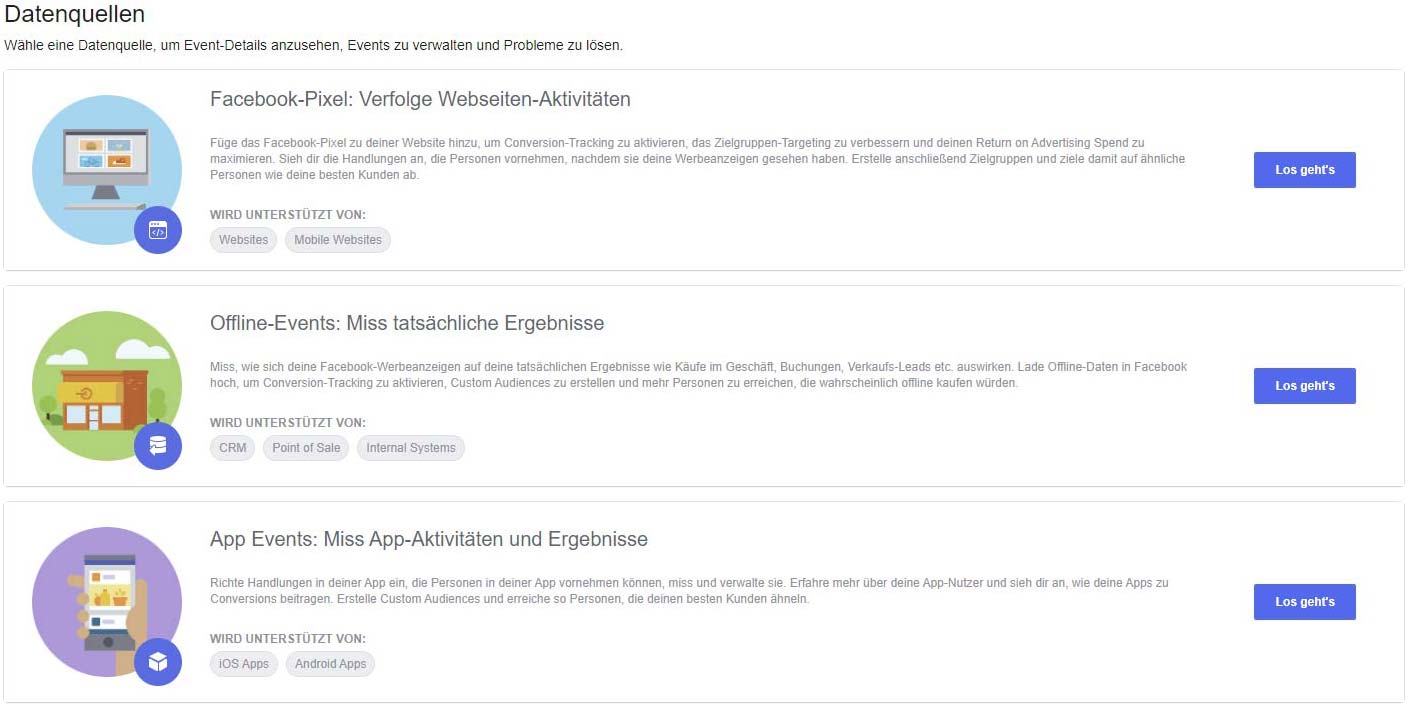
The more thoroughly conversion tracking is implemented, the more accurately Advantage+ learns. According to Meta data, companies with the Meta Pixel and Conversions API fully implemented achieve up to 20% lower cost per result.
Custom Audiences as an Anchor
Existing lists of customers and prospects remain the strongest indicator—Advantage+ uses them as a starting point and extrapolates similar profiles from them across the entire available inventory.
Campaign Budget Optimization (CBO) as a Natural Partner
Advantage+ Targeting only reaches its full potential when used in combination with CBO, since both are based on algorithmic decision-making.
Advantage+ Targeting doesn’t mean losing control—it means delegating operational decisions to an AI that processes more data points in real time than any media planner could manually.
Practical Implementation Within the Campaign Structure
The transition to Advantage+ Targeting requires a shift in thinking when it comes to campaign architecture. Many advertisers make the mistake of adopting existing structures exactly as they are—and then wonder why their results are stagnating. It’s crucial to design the campaign from the start to rely on algorithmic learning rather than manual control.
Step-by-Step: How to Set Up the Advantage+ Campaign Correctly
Clearly Define the Campaign Goal
Only performance goals such as “revenue,”“leads,” or “app installs” unlock the full range of Advantage+ features—awareness campaigns benefit very little.
Plan for a learning phase
Plan for at least 7–14 days without making any adjustments until the algorithm has collected enough data. Intervening too early disrupts the learning phase and increases the CPM.
Creative Diversity as a Driving Force
Advantage+ Shopping Campaigns recommend at least 8–10 different assets (videos, images, text) so that the algorithm can find the best combination for different audience segments.
Integrate Existing Custom Audiences
Use email lists, website visitors from the last 180 days, and buyer audiences as input—not as restrictions, but as a basis for learning.
Prioritize Conversion Events
In the Events Manager, set the most important bottom-of-funnel events (Purchase, Lead) as your primary optimization goal and ensure there is sufficient volume.
| Targeting Approach | Manual Audience (Legacy) | Advantage+ Targeting (new) |
|---|---|---|
| Range | Narrow, manually defined segments | Dynamically Expanded Target Audience Pool |
| Basis for Optimization | Human Assumptions & Tests | Real-Time AI Signals & Conversion Data |
| Learning speed | Slowly through manual iterations | Fast thanks to continuous machine learning |
| Creative Presentation | Static per ad group | Dynamic based on target audience preferences |
| Optimal CPA | Higher Due to Inefficiencies | Up to 30% cheaper with a strong enough signal |
| Level of Control | High (Interests, Age, Location) | Medium (minimum demographics and geos only) |

Our Agency Strategy for Maximum Performance
In our day-to-day work as a Meta Ads agency, we’ve learned that Advantage+ Targeting isn’t a sure thing. It requires a well-thought-out social media strategy behind the scenes that aligns creatives, landing pages, and funnels. Anyone who simply sets the targeting to “automatic” and leaves the rest unchanged will be disappointed. It’s crucial that all touchpoints—from the first impression to the conversion—consistently contribute to the defined conversion goal. As a social media agency, we rely on a hybrid strategy: Advantage+ Shopping Campaigns for scaling e-commerce clients, combined with manually managed retargeting layers for high-value existing customer segments.
In addition, we regularly analyze overlaps with channels such as Instagram marketing to avoid frequency cannibalization and efficiently allocate the overall budget across channels. Three principles guide our work: first, clean tracking as a non-negotiable foundation; second, creative excellence as the most important lever within Advantage+; and third, consistent testing—not at the audience level, but at the creative and offer levels, since that’s where the real difference in performance lies.
- Advantage+ Requires a Well-Thought-Out Social Media Strategy
- Align creatives, landing pages, and the funnel
- Ensure all touchpoints are consistent with the conversion goal
- Hybrid strategy: automated plus manual retargeting
- Accurate tracking as an indispensable foundation
- Creative excellence is the most important performance driver
- Testing at the creative and offer levels
Conclusion
By 2025, Advantage+ Targeting will no longer be an optional feature, but rather the new standard for high-performing Meta campaigns. Those who understand how it works and structure their campaigns accordingly can achieve significant efficiency gains in CPA and ROAS. Marketing professionals should review their tracking infrastructure now, modernize their campaign structures, and—above all—treat creative production as a strategic priority—because the algorithm can only be as good as the assets it receives for testing. Those who lay this foundation will gain a real competitive advantage with Advantage+ over competitors who are still thinking in terms of old targeting paradigms.