
Video Advertising: Strategy and Media Buying for Video Campaigns
A compelling video alone does not guarantee a successful campaign. It is only through the right platform, target audience, and execution that moving content actually becomes effective video advertising. We handle exactly this part: strategy, media buying, and ongoing optimization of video campaigns, regardless of where the video content was produced.
Platforms for Video Campaigns
Video ads are now running on significantly more channels than they were a few years ago, with each platform having its own formats and user habits:
- YouTube Ads with In-Stream and Discovery Formats
- Instagram and Facebook Reels, as well as feed ads
- TikTok Ads with Short-Form Formats That Look Native
- Connected TV and Streaming Advertising for Greater Reach
- Programmatic Video via Display Networks
Why Media Buying Determines Effectiveness
The same video ad can yield completely different results depending on the audience setup, bidding strategy, and placement.
A common mistake: scaling up to a single placement too soon. Only when a test shows consistent results over several days and at different times of day is it worth reallocating the main budget.
That’s why we specifically test different audience segments and placements against each other before allocating budget on a larger scale.
- Testing Audience Segments Against Each Other
- Compare placements before scaling
- Small test budget before scaling up
- Review results over several days

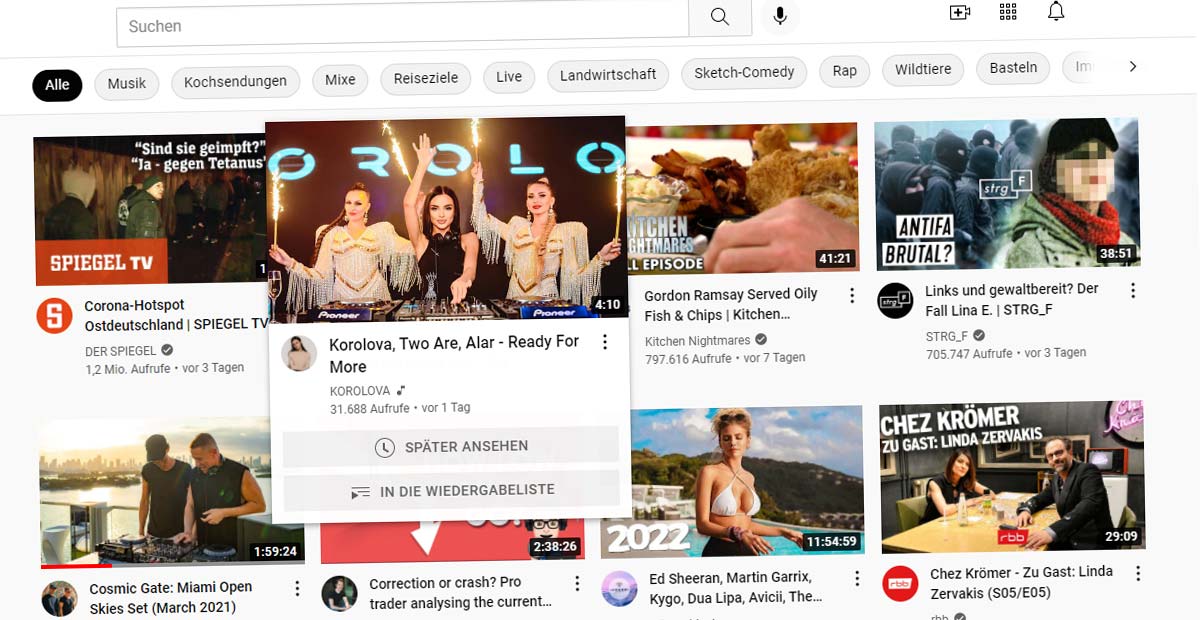
Frequency and Change of Subject
A video that is shown too often in a short period of time loses its impact and can even trigger negative reactions—an effect known as ad fatigue. We therefore actively manage the playback frequency and switch between different visuals or edits before performance drops measurably.
- Ad Fatigue Due to Excessive Frequency
- Actively limit playback frequency
- Switch creatives and edits in a timely manner
- Detect a decline in performance early on
Subtitles and Sound-Off Optimization
A large proportion of users scroll through social media with the sound turned off, which is why video ads without captions often lose a significant portion of their message. We therefore make sure that the key message remains understandable even without sound, for example through on-screen text or clear visual imagery.
- Many users scroll with the sound off
- Key message understandable even without sound
- On-screen text instead of audio alone
- Clear visual language supports the message
Success Metrics Beyond Views
A high number of video views may look impressive, but it says little about whether a campaign is actually working. Metrics such as average watch time, the click-through rate on a post-video call-to-action, or the percentage of viewers who watch a video all the way through are more meaningful. We specifically analyze these nuanced metrics rather than measuring success solely by reach, since an ad with fewer but more engaged viewers is often more valuable in the long run than one with many but fleeting impressions.
- Evaluating Average Playback Duration
- Check the click-through rate on the call-to-action
- Give greater weight to full views
- Views alone don’t tell the whole story
Coordination with Production and Tracking
The video footage used can come from your own production or be existing material. Equally important is an effective way to measure success: Without clear attribution in conversion tracking, it’s nearly impossible to distinguish the impact of a video campaign from that of other initiatives.
- Video footage from your own production
- Accurate attribution in conversion tracking
- Effect is otherwise difficult to isolate
Our Approach to Video Campaigns
Once the target audience and campaign objective have been defined, we select the appropriate platforms and formats and allocate an initial test budget. Based on the analysis from the overarching paid media marketing strategy, successful combinations are then scaled up.
- Define the target audience and campaign objective
- Select suitable platforms and formats
- Targeted use of an initial test budget
- Scale successful combinations accordingly
Avoiding Exclusion of Target Audiences and Wasted Coverage
An often-underestimated strategy in video advertising is the targeted exclusion of audiences that aren’t relevant to a campaign anyway—such as existing customers in a campaign aimed at new customers, or people outside the delivery area. Without such exclusions, the budget is spread across impressions that are unlikely to lead to a conversion from the outset. We therefore continuously maintain exclusion lists and adjust target audiences as soon as new insights emerge from ongoing campaigns, rather than letting a target audience definition set up once run unchanged for months on end.
- Exclude existing customers from new customer campaigns
- Consistently observe delivery area boundaries
- Continuously maintain exclusion lists
- Reducing reachwaste minimizes budget waste
Collaboration with Internal Marketing Teams
For companies with their own marketing departments, we typically manage campaigns in conjunction with the internal team, which often remains responsible for brand guidelines and overarching positioning. Clear coordination regarding who grants which approvals and how quickly we can respond to performance data prevents delays in optimization. We therefore designate dedicated points of contact and establish defined decision-making authority so that minor adjustments—such as budget reallocations between well-performing ads—can be implemented without lengthy back-and-forth.
- Define Clear Points of Contact
- Clarify approvals and responsibilities early on
- Budget reallocations without lengthy back-and-forth
- Avoid delays in optimization












Leave a Reply
Want to join the discussion?Feel free to contribute!