Trade Show Design: How a Trade Show Booth Attracts Attention
In an exhibition hall, dozens of booths compete for the same limited attention from visitors. Exhibition design determines whether a booth stands out from a distance or gets lost in the overall scene—a task that is closely linked to professional booth design and construction and begins well before the actual exhibition day.
Why Trade Show Design Is More Than Just Aesthetics
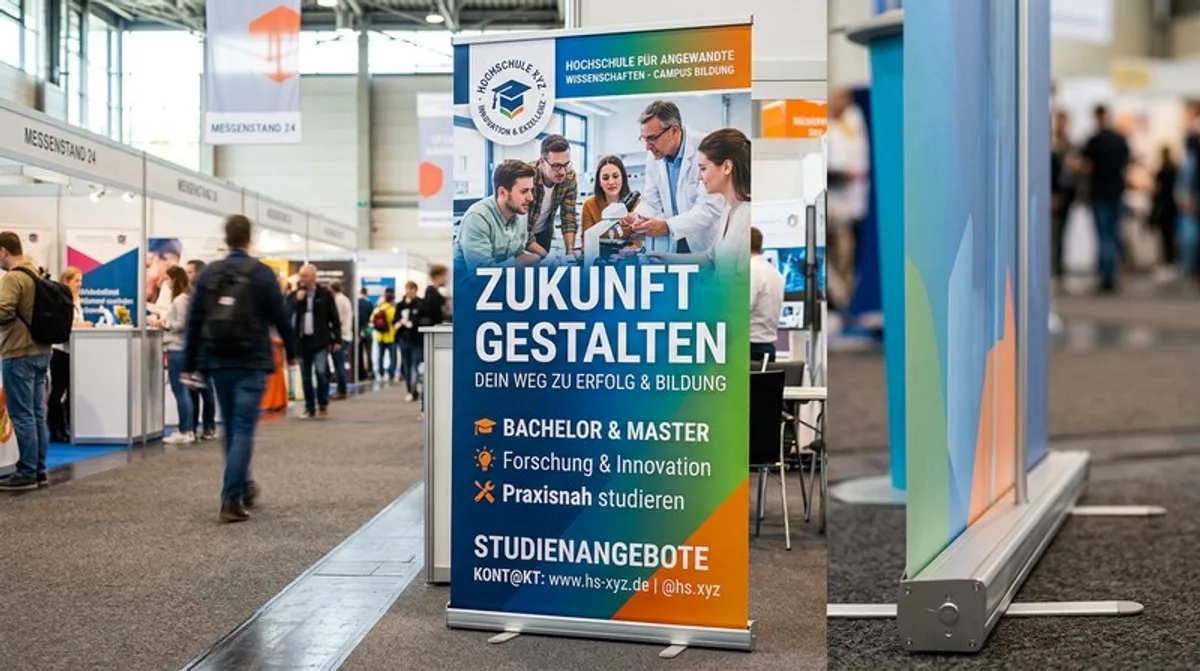
A successful trade show booth functions like a three-dimensional business card: It must make it clear from several meters away who is exhibiting there and why it’s worth a visit.
Based on experience from numerous trade show appearances: Fewer exhibits, presented clearly, attract more visitors than a crammed booth—from a distance, clutter almost always seems more off-putting than emptiness.
At the same time, it must guide foot traffic, facilitate conversations, and offer enough space for presentations and consultations without appearing cluttered. A stand that’s too densely arranged often has a deterrent effect because visitors subconsciously keep their distance from confusing environments.
- Visibility from several meters away
- Deliberately guide foot traffic
- Allow enough space for conversations
- Clutter is off-putting
Principles for Effective Trade Show Design
- Recognizable from a distance thanks to its clean lines
- The open booth structure doesn’t deter visitors
- Distinct zones for eye-catching displays and consultations
- Consistent brand elements across all surfaces
- Adequate lighting to showcase products

Running Routes and Standing Positions
In addition to the design, a booth’s location within the exhibition hall also determines its success. Corner locations along main walkways are naturally passed by more frequently than booths in peripheral areas, which is why the booth design should be adapted to its specific location. A booth at a heavily trafficked intersection requires different sightlines than a quieter booth where visitors need to be specifically guided.
- Prioritize corner locations along main walkways
- Adapt the booth design to the location
- Align sightlines specifically toward the intersection
Brand Consistency at the Booth
A trade show booth is one of the few opportunities where a brand can be experienced through direct, personal interaction. That’s why the booth design must consistently align with the existing corporate identity, so that visitors immediately recognize the brand rather than encountering a presentation that seems out of place and doesn’t match the brand’s other communications.
- Consistent with the corporate identity
- Immediate brand recognition
- No out-of-place appearance
Staff and Operations at the Booth
Even the best trade show design can only be effective if the booth staff is properly prepared. Clear responsibilities, a coordinated process for greeting visitors, and a system for capturing leads are therefore just as much a part of the planning as the design itself. A visually impressive booth where no one feels responsible for it wastes a large part of its impact.
- Clear Responsibilities at the Booth
- Coordinated procedure for welcoming visitors
- Plan for a lead-capture system
Exhibition Design as Part of the Overall Brand Image
A trade show booth rarely stands alone; rather, it is embedded in a larger event concept, as is also taken into account in event sponsorship. Anyone who plans trade show design in isolation from the rest of their brand communication misses out on the opportunity to gain lasting visibility for the brand from a one-time trade show appearance.
- Part of a Larger Event Concept
- Establishing a Connection to Brand Communication
- Lasting visibility beyond the event day
Follow-up: An Often-Overlooked Step
A great deal of effort goes into planning and setting up a trade show booth, but the impact doesn’t end on the last day of the show. Contacts made should be followed up on promptly, while the personal impression of the booth is still fresh, rather than getting lost in a generic mass email weeks later. Photos and impressions of the booth can also be used afterward for social media and further communication, ensuring that the investment in trade show design continues to pay off beyond the actual duration of the event.
- Follow Up on Contacts Promptly
- Capitalize on the fresh impression right away
- Use photos for social media
Reusability as a Cost Factor
A high-quality trade show design is usually not intended for a single event, but is meant to be reused across multiple trade shows. Modular booth systems that can be adapted to different booth sizes reduce costs in the long run compared to custom-built booths for each event. During the design phase, it’s therefore worth considering from the outset which elements can be reused and which can be flexibly adapted without having to completely redesign the booth for every event.
- Modular booth systems save costs
- Design for Multiple Trade Shows
- Separate reusable and flexible elements